Despite public assurances from Iran’s foreign minister that protesters would not be executed, the Islamic Republic’s judiciary has claimed many protesters are guilty of capital offenses, while human rights groups report sexual assault, torture, and the detention of children as part of an intensifying crackdown on nationwide demonstrations.
Judiciary spokesperson Asghar Jahangir said this week that some protesters had committed acts classified as mohareb, a charge that carries the death penalty under Iranian law and warned that the “severest punishment” would be imposed on those convicted.
His remarks appeared to contradict comments by Iranian Foreign Minister Abbas Araghchi, who told Fox News that executions were not planned. “There is not any hanging today or tomorrow or whatever… I’m confident about that. There is no plan for hanging at all,” Araghchi said.
Jahangir claimed protesters affiliated with “Mossad agents and terrorists” had already been identified, adding that Iranian law clearly defines punishments for those accused of cooperating with sworn enemies. Before the recent demonstrations, Iran had executed multiple individuals on accusations, often unproven, of collaborating with Israel.
Give the gift of hope
We practice what we preach:
accurate, fearless journalism. But we can't do it alone.
- On the ground in Gaza, Syria, Israel, Egypt, Pakistan, and more
- Our program trained more than 100 journalists
- Calling out fake news and reporting real facts
- On the ground in Gaza, Syria, Israel, Egypt, Pakistan, and more
- Our program trained more than 100 journalists
- Calling out fake news and reporting real facts
Join us.
Support The Media Line. Save democracy.
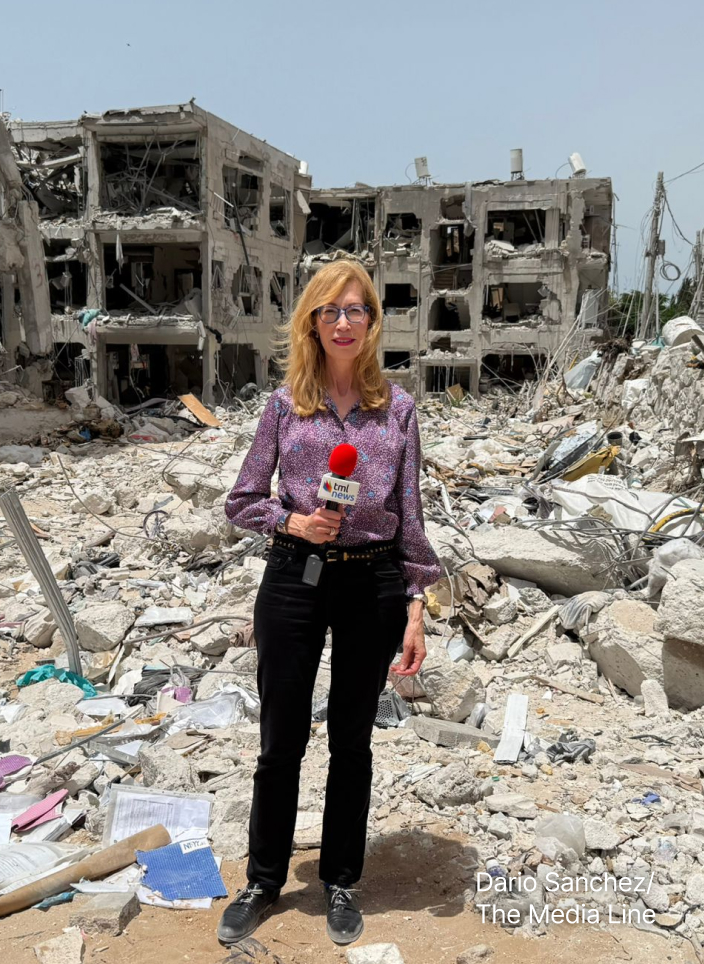
As officials issued conflicting signals, new allegations emerged from the Kurdistan Human Rights Network, a France-based NGO, which said two protesters previously detained in Kermanshah, including a child, reported being sexually assaulted while in custody. Rebin Rahmani of the group said security forces beat the detainees during transfers and pressed batons against their bodies, including the anal area, through their clothing.
Rights organizations have warned for years that Iranian authorities use sexual violence and torture as tools to suppress dissent. Following the 2022 “Women, Life, Freedom” protests, Human Rights Watch said rape and abuse were used to extract forced confessions and further marginalize ethnic minorities, describing the practice as systematic rather than isolated.
The Kurdistan Human Rights Network said it independently confirmed the identities of 20 children and adolescents arrested in Ilam, Kermanshah, and Kurdistan provinces. Separately, Iran’s Coordination Council of Teachers’ Trade Associations reported that at least 100 minors were detained in Kermanshah province alone. The network also published the names of 199 people whose whereabouts remain unknown, saying families reported violent arrests carried out without judicial warrants.
According to the group, protesters transferred from Ilam province to the central prison in Ilam city were denied access to lawyers and subjected to torture. The same province reportedly saw security forces raid a local hospital, detain wounded protesters, and remove the bodies of those killed. The organization said it is investigating multiple reports of detainees who died in custody.
Another rights group, Hengaw, said 40-year-old Soran Feyzizadeh was tortured to death while detained and that his family was forced to pay authorities to recover his body.
Efforts to document the scale of abuses have been hindered by widespread internet shutdowns imposed by Tehran.