Waseem Abu Mahadi opens in Sharm el-Sheikh with a handshake framed by flags: President Abdel Fattah el-Sisi greeting President Donald Trump as Egypt launches the most ambitious push yet to turn a fragile Gaza ceasefire into something durable. Inside the resort city’s tight security bubble, Abu Mahadi traces [1] how a US-brokered memorandum drew Egypt, Qatar, and Turkey into alignment while Israel and Hamas signaled assent through Egyptian intelligence—not attendance. The core vision that emerges is practical and tough: phased reconstruction tied to demilitarization, supervised crossings, and a limited Palestinian Authority role, with Cairo resisting any plan that shifts Gaza’s burden onto Sinai or reduces Palestinian agency to a fig leaf.
Give the gift of hope
We practice what we preach:
accurate, fearless journalism. But we can't do it alone.
- On the ground in Gaza, Syria, Israel, Egypt, Pakistan, and more
- Our program trained more than 100 journalists
- Calling out fake news and reporting real facts
- On the ground in Gaza, Syria, Israel, Egypt, Pakistan, and more
- Our program trained more than 100 journalists
- Calling out fake news and reporting real facts
Join us.
Support The Media Line. Save democracy.
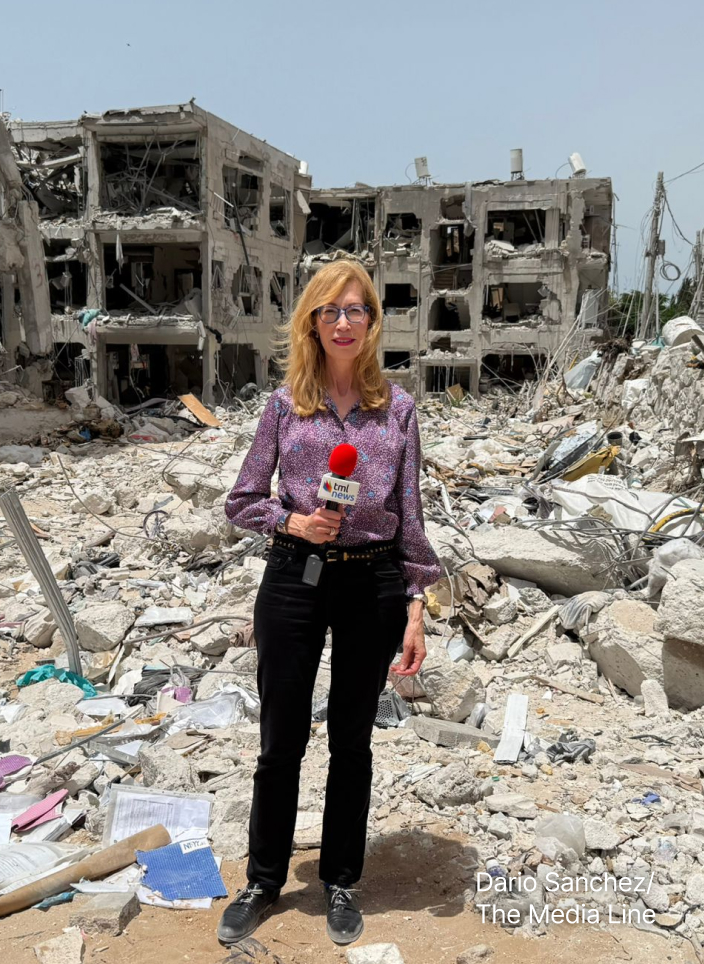
Analysts quoted by Abu Mahadi say the moment is real but brittle. Sayed Ahmed calls the Sharm el-Sheikh Declaration a needed show of international will and argues only the United States can press Jerusalem to comply. Others warn that leaked designs for a Gaza International Transitional Authority put too much power in foreign hands and risk decoupling Gaza from the West Bank. Gulf governments, including Saudi Arabia and the UAE, back Egypt’s stewardship even as they brace for the hardest lifts: disarmament, governance, and staged Israeli withdrawal.
The piece swings from grand ceremony—the Nile Collar presented to the American president, leaders including Recep Tayyip Erdoğan and Tamim bin Hamad Al Thani standing together—to on-the-ground demands: Involve Gazans in rebuilding, lock in funding, and set a legitimate transition that can actually govern. Read the full story [1] by Waseem Abu Mahadi for the inside details, the frictions over sovereignty, and the race to turn a photo op into a framework that lasts.