As Israeli troops continue operating in southern Lebanon, a harder question is taking shape behind the front lines: What would it actually take to make northern Israel safe again? In this sharp and deeply reported piece [1], Gabriel Colodro examines a growing debate inside Israel’s defense establishment over whether the campaign’s goal is to push Hezbollah back from the border or to break the group’s military power far more decisively.
Colodro frames the argument through two Israeli analysts who agree on the danger but part ways on the endpoint. Dr. Gabriel (Gabi) Siboni, a colonel in the Israel Defense Forces reserves and a senior researcher at the Jerusalem Institute for Strategy and Security, argues that Israel must hold territory in southern Lebanon, up to the Litani River and in some areas beyond it, until Hezbollah no longer exists as a military organization. He does not shy away from the term “occupation,” calling it a military reality rather than a slogan. In his view, anything less leaves the threat in place.
Give the gift of hope
We practice what we preach:
accurate, fearless journalism. But we can't do it alone.
- On the ground in Gaza, Syria, Israel, Egypt, Pakistan, and more
- Our program trained more than 100 journalists
- Calling out fake news and reporting real facts
- On the ground in Gaza, Syria, Israel, Egypt, Pakistan, and more
- Our program trained more than 100 journalists
- Calling out fake news and reporting real facts
Join us.
Support The Media Line. Save democracy.
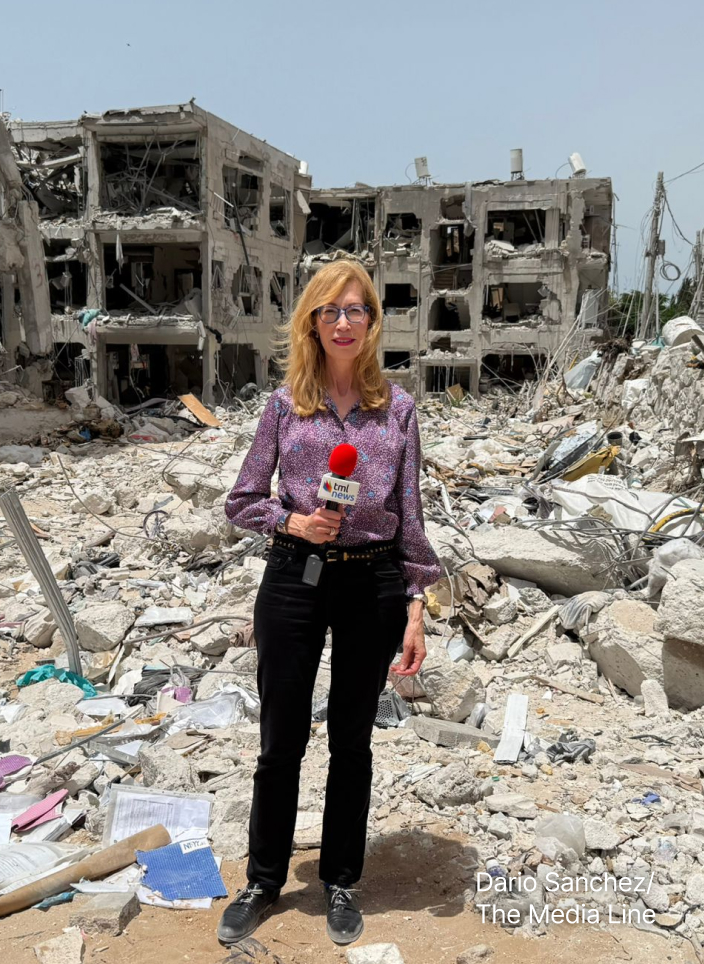

Dr. Harel Chorev of Tel Aviv University’s Moshe Dayan Center takes a more restrained view. He agrees that Israel may have little choice but to seize and control parts of southern Lebanon for some period of time. But he argues that hopes of fully destroying Hezbollah are unrealistic. The group, he says, is not just an Iranian proxy but also a deeply rooted Shiite Lebanese movement with political and social depth. That makes total eradication costly, prolonged, and likely unattainable.
What makes the piece compelling is that neither man is talking in abstractions. Both see the old deterrence model as broken after October 7. Both suggest that some kind of renewed Israeli presence in Lebanon may be unavoidable. The real divide is over whether this is a temporary security measure or an open-ended mission with no clear finish line. Colodro captures that tension cleanly and without drama for drama’s sake. For anyone trying to understand where Israel’s northern war could lead next, the full article [1] is well worth reading.