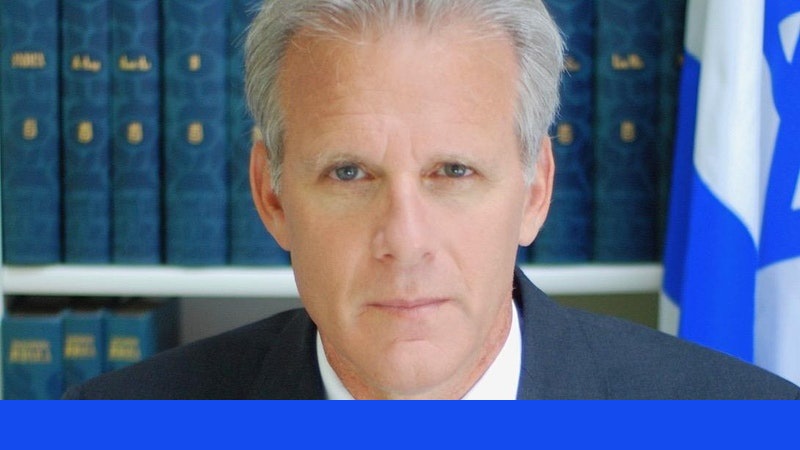
Oren: US-Israel Strike May Reshape Global Power
In an interview conducted before Iran’s missile attacks on US bases in Qatar and Iraq—and before the ceasefire that would temporarily halt the war—former Israeli Ambassador to the US Michael Oren sat down with The Media Line’s Felice Friedson to talk strategy, stakes, and survival. With the sound of Iranian cyberwarfare pinging in real time—yes, his phone was hacked during the interview—Oren painted a picture of a conflict that’s far from finished.
After President Donald Trump ordered coordinated US-Israeli strikes on Iran’s nuclear facilities, Oren said the world witnessed something historic: for the first time, the two allies hit a shared enemy in a joint offensive. But while sites like Fordo were damaged, Iran’s uranium was likely moved beforehand. “You can’t blow up the stockpile without risking mass casualties,” he warned, meaning the next chapter might require a return to diplomacy.
Give the gift of hope
We practice what we preach:
accurate, fearless journalism. But we can't do it alone.
- On the ground in Gaza, Syria, Israel, Egypt, Pakistan, and more
- Our program trained more than 100 journalists
- Calling out fake news and reporting real facts
- On the ground in Gaza, Syria, Israel, Egypt, Pakistan, and more
- Our program trained more than 100 journalists
- Calling out fake news and reporting real facts
Join us.
Support The Media Line. Save democracy.


He sees the strike as a potential global reset. Beijing and Moscow, he suggests, are likely rethinking their own moves. But he’s not naïve: Iran still has cards to play—from missile strikes on regional targets to terrorist attacks abroad. And American unity? Shaky. Oren calls out rising antisemitism from both political extremes in the US.
Still, in Israel, he sees remarkable cohesion. The war has brought abstract threats into sharp, terrifying focus. From his safe room, Oren tells Friedson, the booms grow louder—but Israelis are still going to the beach.
“We are tough as nails,” he says. “And we are here.”
