Giorgia Valente maps a US-Iran standoff [1] that plays out like a split-screen thriller: quiet diplomacy on one side, public pressure on the other, both moving at the same time. Since protests erupted in Iran in late December 2025, Washington and Tehran have kept channels open—from early contacts in Turkey to talks in Oman, then a Geneva round on Feb. 17—while using statements and posts on X to condition audiences for what might come next.
Ahead of Muscat, Iranian Foreign Minister Abbas Araghchi kept it procedural, posting the time and place for talks. Afterward, Iran’s Foreign Ministry account made a point of broadcasting how long negotiators stayed in the room. Valente argues the choreography matters: the process is meant to be seen, even when neither side wants to look hopeful.
Anita Gohdes, a professor at the Hertie School, frames this as coercive diplomacy with a modern twist: leaders now speak to multiple publics at once, including the people they are threatening. Irina Tsukerman, a national security and human rights lawyer, adds the domestic angle: neither side wants to look weak at home, so tough talk becomes a political necessity even while negotiators keep meeting.
Give the gift of hope
We practice what we preach:
accurate, fearless journalism. But we can't do it alone.
- On the ground in Gaza, Syria, Israel, Egypt, Pakistan, and more
- Our program trained more than 100 journalists
- Calling out fake news and reporting real facts
- On the ground in Gaza, Syria, Israel, Egypt, Pakistan, and more
- Our program trained more than 100 journalists
- Calling out fake news and reporting real facts
Join us.
Support The Media Line. Save democracy.
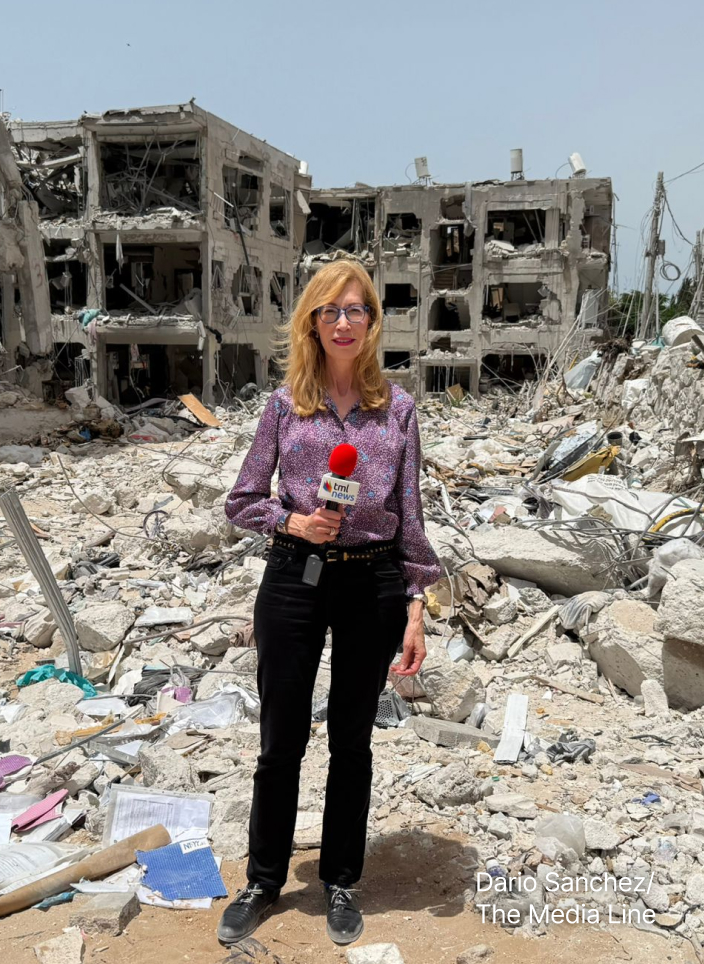
The Geneva round delivered what Araghchi called a “general understanding on a set of guiding principles,” a phrase roomy enough for both capitals to claim progress without conceding much. Then, on Feb. 19, the American president tightened the vise. Speaking in Washington, President Donald Trump said it would be clear within “probably 10 days” whether a deal was possible, later widened to 10 to 15 days, with “bad things” hinted if talks fail. Tehran answered with its own warning: any attack could make regional “bases, facilities, and assets” legitimate targets.
The climax lands in messaging warfare. After US Special Envoy Steve Witkoff said President Trump was surprised Iran had not “capitulated,” Araghchi fired back on X: “Curious to know why we do not capitulate? Because we are IRANIAN.” The Tehran Times piled on with a front page aimed straight at the White House.
Read the full piece [1] by Valente for the timeline, the expert breakdowns, and why the loudest part of this confrontation may be the uncertainty itself.