
A City in Silence: Tyre Empties as Israeli Strikes Loom Over Lebanon
Lebanon’s fourth largest city and one of the oldest continuously inhabited cities in the world, Tyre is home to ghosts of previous wars and displacements
[Tyre] The sun in Tyre, Lebanon is warm, and one must take shelter in the shade to avoid summer sweats. But there are no bars open in which to have a refreshing sip of juice in this popular Lebanese tourist destination. Because there are no bars, and there are no people. “In Tyre, there are only displaced people and medical personnel,” Mahmoud Latuf, a 26-year-old nurse from Tyre, told The Media Line. “Those who have stayed here are here because they cannot leave.”
Tyre no longer has any of the peace of a summer resort. The quiet sounds more like the prelude to tragedy.
On the way to Tyre, the smoke from an airstrike on a hill brings that sense even closer, just like the crater that welcomes you at the entrance to the southern city.
It is not the first time that the streets have emptied in one of the oldest continuously inhabited cities in the world. Tyre, Lebanon’s fourth largest city, has suffered modern and ancient wars, having been inhabited since the Bronze Age.
There is no one outside the building that houses the Amel Association, the organization where Latuf works. Israeli attacks have not yet reached the interior of Tyre, but they have shattered the lives of all those who live there, or rather, who lived there.
A few days ago, you couldn’t move around these streets because of all the cars, but now there’s not a soul left. We became another emergency room: we treated superficial wounds when the hospitals couldn’t cope, and even some displaced people stayed here to sleep. I don’t trust Israel or Hezbollah. We are alone in this.
“A few days ago, you couldn’t move around these streets because of all the cars, but now there’s not a soul left,” Latuf said, speaking from the Amel Association’s empty waiting room. “We became another emergency room: we treated superficial wounds when the hospitals couldn’t cope, and even some displaced people stayed here to sleep.”
Give the gift of hope
We practice what we preach:
accurate, fearless journalism. But we can't do it alone.
- On the ground in Gaza, Syria, Israel, Egypt, Pakistan, and more
- Our program trained more than 100 journalists
- Calling out fake news and reporting real facts
- On the ground in Gaza, Syria, Israel, Egypt, Pakistan, and more
- Our program trained more than 100 journalists
- Calling out fake news and reporting real facts
Join us.
Support The Media Line. Save democracy.
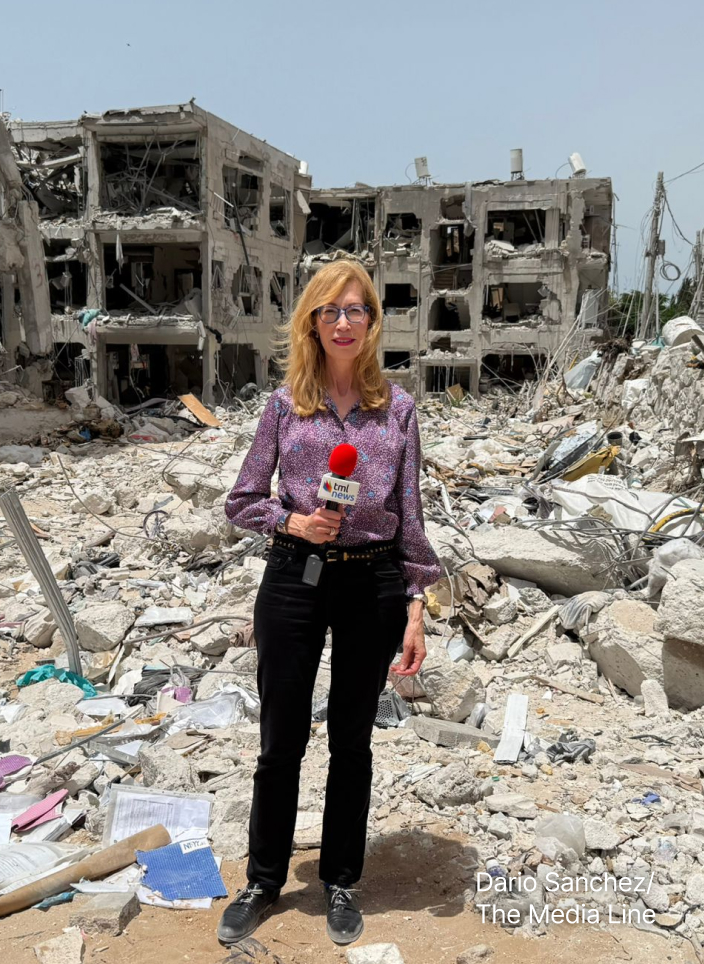
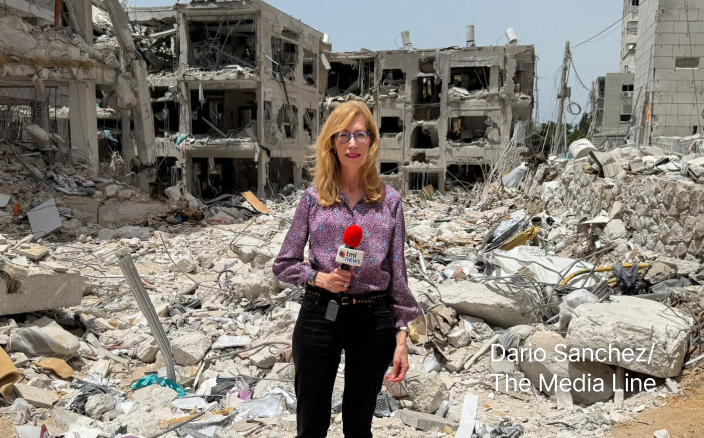
“I don’t trust Israel or Hezbollah. We are alone in this,” Latuf said.

Destruction in Tyre, Lebanon. (Andrea López-Tomàs/The Media Line)
These clinics have become bedrooms for the organization’s four medical workers still in Tyre. “The rest of the 25 employees have left, but they continue to work as volunteers in other regions of the country,” Mona Shaker, the center’s director in Tyre, told The Media Line.
Shaker, who has directed the center for three decades, is reminded of the 2006 war between Israel and Lebanon. During that war, she said, civilians didn’t know where to flee. “Nowadays, when someone is displaced, they already know where to go,” she said.
The medical supplies we have now are insufficient; we lack serums, sterilizations, bandages, creams for burns, or threads to sew up burns.
Residents of Tyre have had time to think about where to go over the past 11 months, as constant fighting between Israel and Hezbollah displaced tens of thousands. Now, the violence has escalated, with more than 750 Lebanese killed in days, and the fear is that it will continue to worsen. “The medical supplies we have now are insufficient; we lack serums, sterilizations, bandages, creams for burns, or threads to sew up burns,” Shaker said with concern.
As Shaker spoke, three recently displaced people entered the building, including Noura, a woman from the southern village of Jbal el Botm, five miles from the border with Israel. “We left with what we were wearing,” Noura told The Media Line. “I didn’t even take my ID.”
Wearing a black tracksuit and a sequined pink scarf, she told of the 16 family members buried underneath the rubble of her destroyed building.
“There were so many children!” she said.
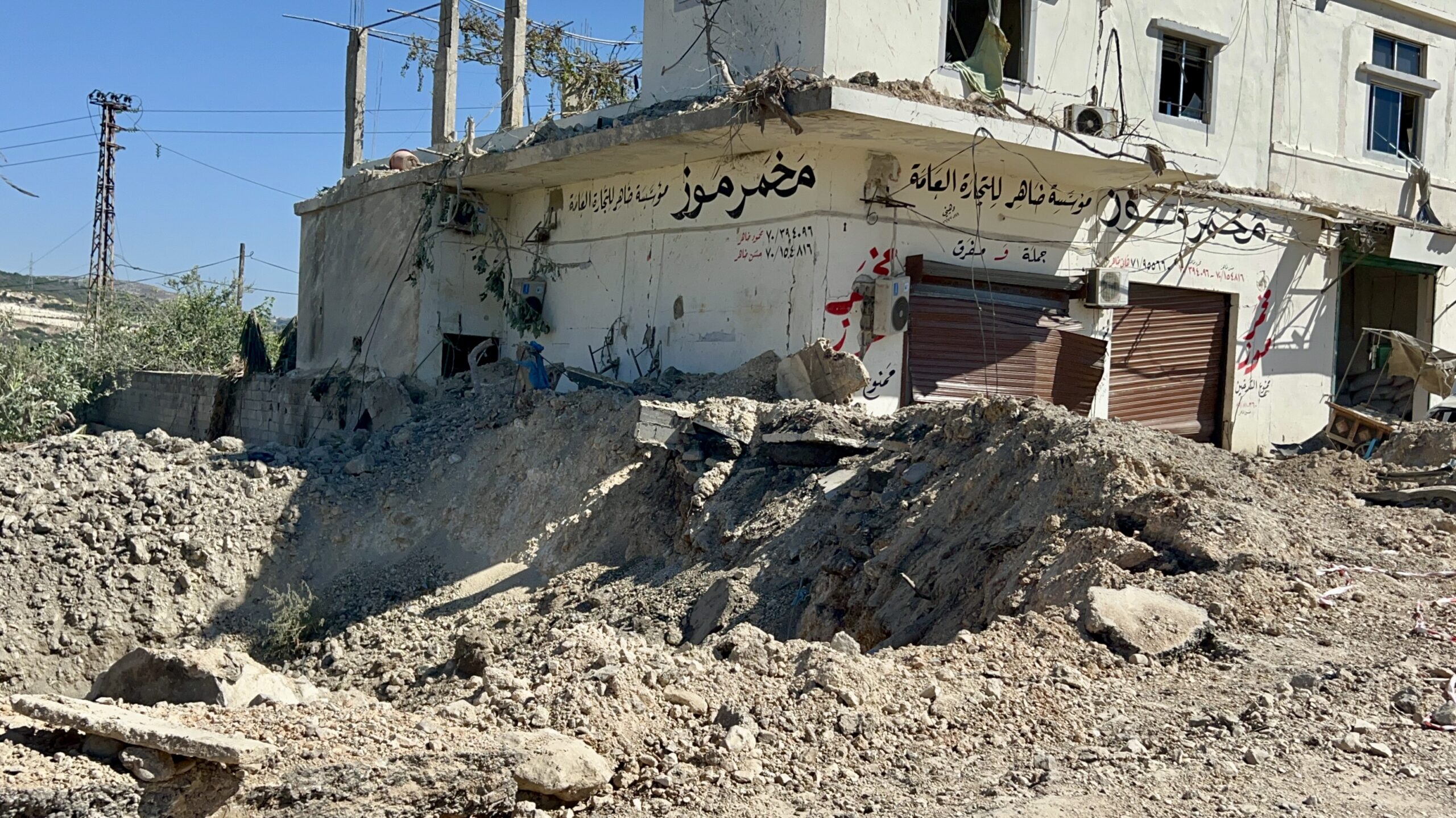
Destruction in Tyre, Lebanon. (Andrea López-Tomàs/The Media Line)
But many other displaced people looked away upon seeing a journalist passing by, preferring not to open their mouths or appear in photographs. In Tyre’s Catholic church, 150 people protecting themselves from the Mediterranean sun under the historic arches remained silent.
Donations of food, water, and mattresses consistently arrived at the church. “They are protected here today. Tomorrow, we don’t know,” Carole Rizk, who’s in charge, told The Media Line. Despite her shorts, she doesn’t receive a single reproachful glance from the dozens of veiled women who fled their homes.
We are all Lebanese. We have no choice but to help each other.
“We are all Lebanese,” Rizk said. “We have no choice but to help each other.”
