‘Armed Struggle Brings No Benefit’: Pope Leo XIV Bids Lebanon Farewell Under Fire
Calls for negotiation and dialogue ring out as Israeli strikes continue in the south and Lebanese communities brace for what comes after the papal visit
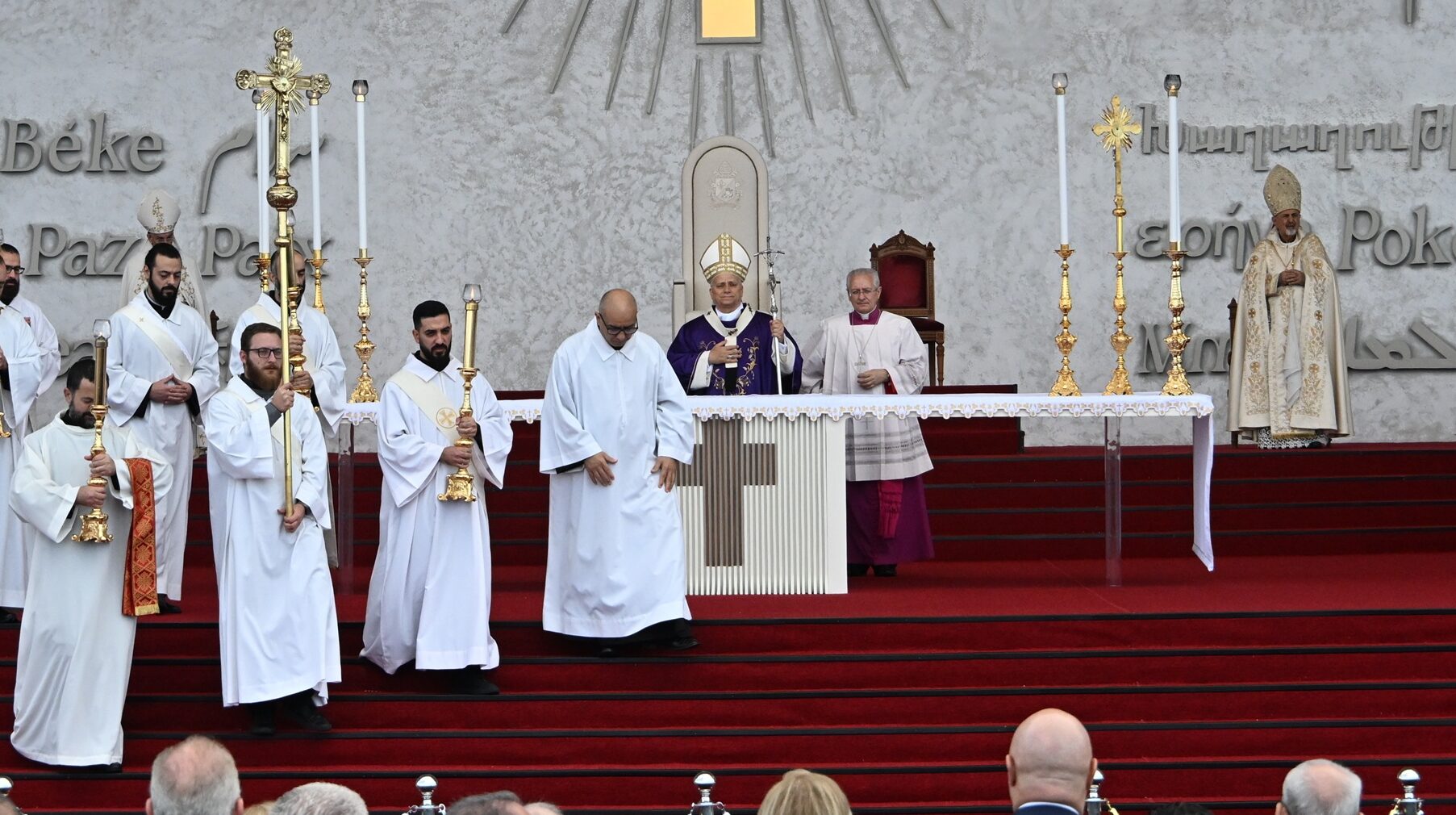
[BEIRUT] The arrival of Pope Leo XIV in Lebanon brought much-needed rain to a drought-stricken country. Yet the rain held off for the pontiff on his most special occasion. This Tuesday, before departing for the Vatican after his first international trip, the pope celebrated a large open-air Mass on the Beirut waterfront, near the Lebanese capital’s ruined port. The sky was clear, unlike his previous two days in Lebanon.
Liana is one of the 150,000 people who came to hear the pope. “It’s an honor to be in Lebanon and see him here at the same time because of all the crises we’ve been through,” the 22-year-old told The Media Line. “It’s really comforting to see a little bit of hope,” Liana added. Beyond the providential rain, the pope left behind a trail of hope that the country needed even more.
Before addressing the crowds, the pontiff asked them to fall silent. When live images of Pope Leo XIV meeting with the victims of the Beirut port explosion, which occurred more than five years ago and whose judicial investigation remains stalled, appeared on the screens, a hush fell over the crowd. Adding to the impact, the meeting took place at the very site where the tragedy began.
“After everything we’ve been through—the crises, the wars—his mere presence here is wonderful,” Liana remarked.
We need to change course, to educate our hearts for peace
During the Mass, the pope called on Lebanese leaders to listen to the people’s pleas for peace. “We need to change course, to educate our hearts for peace,” he said in English.
Mostly, he conducted the Mass in French, the language of the colonial power in Lebanon and the language of many Christians. Throughout the ceremony, he stressed that the Lebanese people need hope and gratitude. “From this esplanade overlooking the sea, I too can contemplate the beauty of Lebanon, which is sung of in the Scriptures,” he affirmed.
Give the gift of hope
We practice what we preach:
accurate, fearless journalism. But we can't do it alone.
- On the ground in Gaza, Syria, Israel, Egypt, Pakistan, and more
- Our program trained more than 100 journalists
- Calling out fake news and reporting real facts
- On the ground in Gaza, Syria, Israel, Egypt, Pakistan, and more
- Our program trained more than 100 journalists
- Calling out fake news and reporting real facts
Join us.
Support The Media Line. Save democracy.
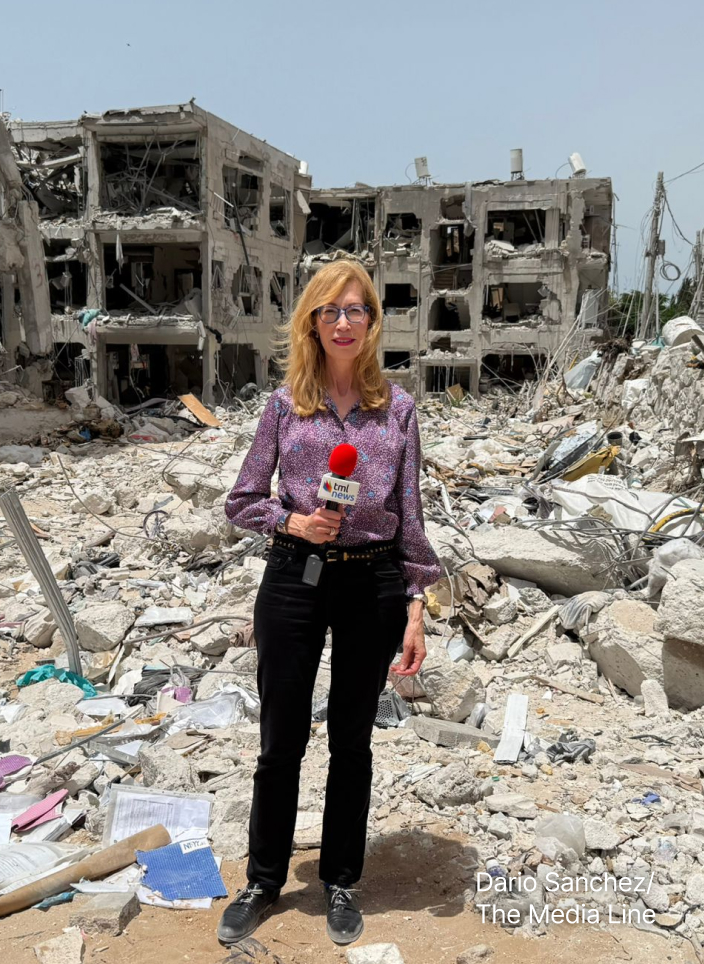
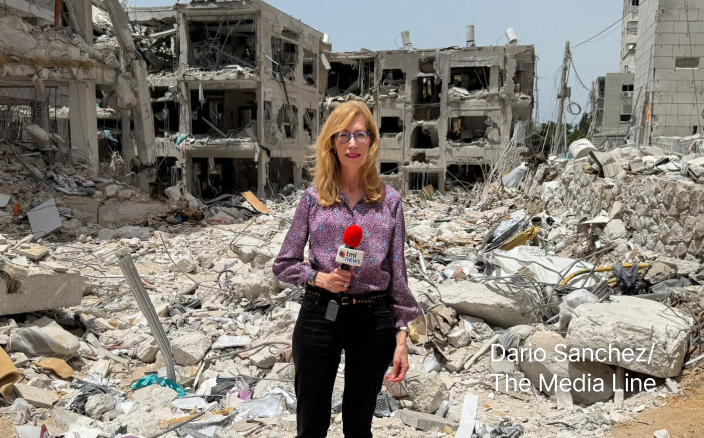
“This beauty, however, is overshadowed by poverty and suffering, the wounds that have marked your history, and by the numerous problems that afflict you: the fragile and often unstable political context, the dramatic economic crisis that weighs you down, and the violence and conflicts that have rekindled old fears,” he observed. Despite his presence in the country, the Israeli army has continued to bomb southern Lebanon.
Many people have also come from there, including dozens of soldiers from the UN Interim Force in Lebanon. “We’re not here working, but because we wanted to come; it’s a very special occasion,” a UN peacekeeper who prefers not to give his name told The Media Line. Yet they are all dressed in uniform with their traditional blue berets and their country’s flag on their arms.
“We don’t usually leave the base much because the situation there is very difficult now. Israel bombs every day, and many in the south believe that when the pope leaves, Israel will resume the attacks with even greater force,” he said. That fear has been spreading among the population for weeks, but today the revelry was so great that no one remembered it.
It’s the first time in my life I’ve seen the pope with my own eyes, not on television or anything, and it was a truly special occasion, for which I thank God
Lebanese army helicopters flying over the crowds were greeted with cheers and waving flags. “I feel the joy of everyone here,” said Sister Marie from Burkina Faso, who has been studying theology in Beirut for two years. “It’s the first time in my life I’ve seen the pope with my own eyes, not on television or anything, and it was a truly special occasion, for which I thank God,” the missionary told The Media Line.
During the service, several Christian leaders participated, reciting in various languages, including Greek, English, Syriac, Armenian, French, and Arabic. “The Mass was wonderful because it was very moving to see all the languages spoken in Lebanon represented,” Liana observed.
Despite its demographic decline, Lebanon has the largest Christian population of any Arab country. Christians make up about a third of the Lebanese people and hold positions of power.
“We are the original inhabitants, and his visit underscores the importance of our presence here, as we are the only Arab country with a Christian president,” Karen, another worshipper, told The Media Line.
Christianity’s presence in Lebanon dates back to the first century, and upon its founding as a state after gaining independence from French rule in 1943, Lebanon was conceived as a haven for Christians. Eighteen religious sects recognized by the constitution coexist in the country, twelve of which are Christian. The New Testament recounts Jesus’ visits to Sidon and Tyre, although his most significant episode likely took place in what is now the besieged south of Lebanon. In Qana, Jesus performed his first miracle by turning water into wine. During the last two years of regional conflict, this ancient village, located 12 kilometers from the Israeli border, has suffered massacres, bombings, and destruction.
On Monday, the pope held an interfaith meeting with leaders of the different faiths present in Lebanon’s multisectarian system. During the ceremony, only one speaker reminded Leo that, despite the concept of peace that had permeated his trip, many Lebanese remain under bombardment. “We believe in the need to establish a state, but in its absence, we were forced to defend ourselves by resisting the occupation that invaded our land, and we do not like to bear arms or sacrifice our children,” argued Ali al-Khatib, vice president of the Supreme Shiite Islamic Council.
When the pope landed, Lea had one hope: “a surprise visit to the South.” “It would send a clear message to the Israelis and to all of those that want us to think that it is a hostile area,” she told The Media Line. “His visit is really more of a message than a trip to a country, because he is trying to tell us that Lebanon is very special and that it must be preserved in all its aspects,” she added. Before boarding the plane, in a moving closing ceremony, the pontiff lamented the regions he had not been able to visit, “especially the south, which lives in instability,” and expressed his hope that “the hostilities and attacks will cease.”
Armed struggle brings no benefit
“As I leave this land, I carry you in my heart; we will continue working together for peace throughout the Middle East, and I leave with the pain and the search for truth for all these families,” he added, referring to the victims of the Beirut port explosion. “Armed struggle brings no benefit,” he insisted. “While weapons are lethal, negotiation, mediation, and dialogue are constructive; let us choose peace as a path and not just as a goal,” Pope Leo XIV offered as his final message to the Lebanese people.
With his departure, the joy fades, and reality begins to set in. This morning, an Israeli drone dropped explosive canisters on a house in the southern town of Aitaroun, and, while he was addressing 150,000 worshippers, Israeli military aircraft were conducting low-altitude flights over the skies of the Bekaa Valley region in eastern Lebanon.
