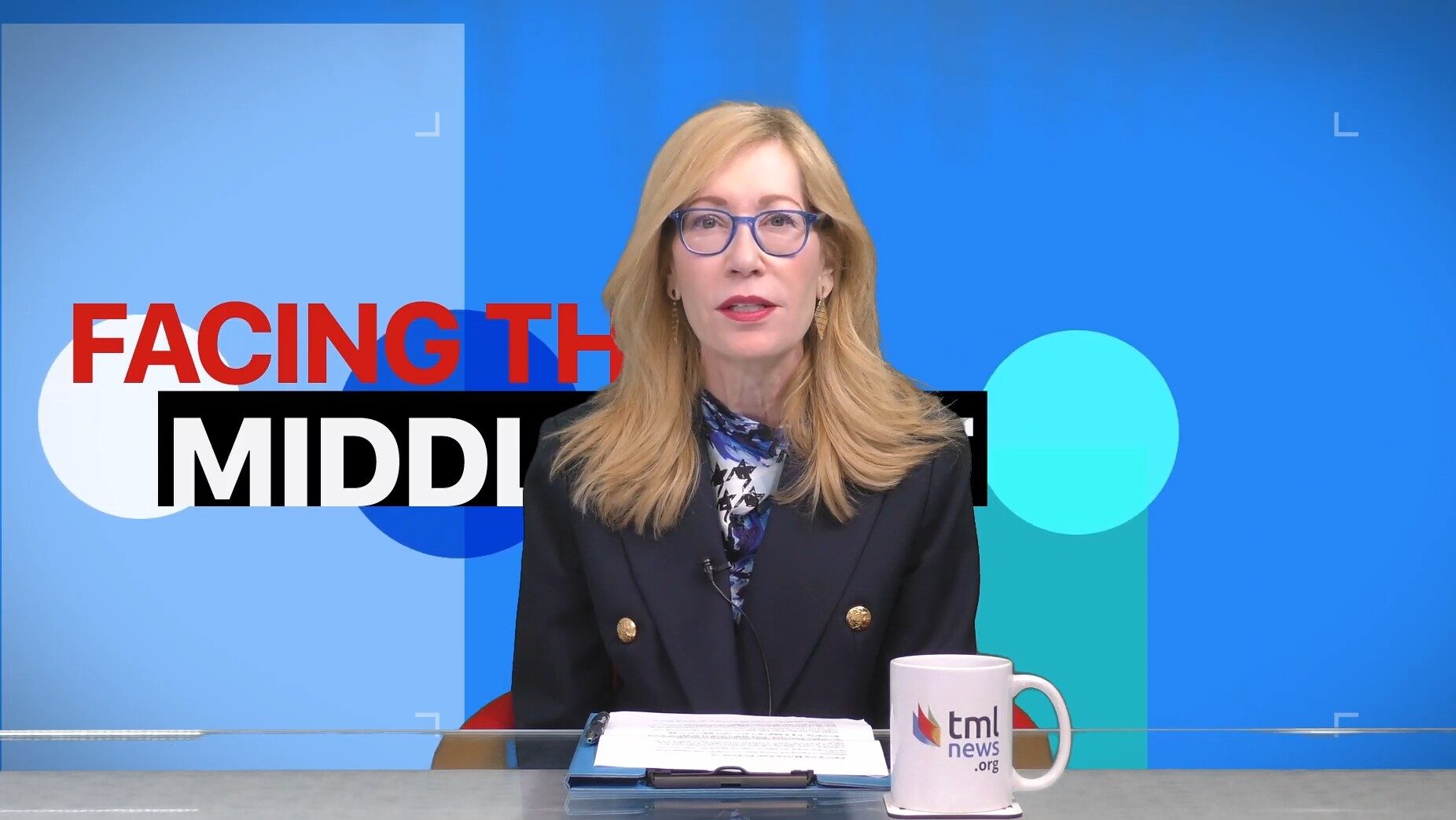
Facing the Middle East, Episode 16: Israel-Saudi Relations a Little Less Hush-Hush
Christian media leaders, Muslim clerics, and quiet Saudi-Israeli business ties reveal how new alliances are reshaping the Middle East’s political and moral landscape
Facing the Middle East opens this episode in Jerusalem, where the fight over narratives is nearly as fierce as the battles on the ground. At the Christian Media Summit, Government Press Office Director Nitzan Chen says that while Israel excels in technology and military prowess, it is losing ground in the digital arena, where Hamas and its supporters have learned to dominate social media feeds. Chen sees Christian broadcasters and journalists as crucial partners, “ambassadors” who can carry Israel’s story to congregations and audiences worldwide.
From that stage, we widen the lens to a broader storm of antisemitism. I describe a world where attacks on synagogues, boycotts of Israeli goods, and physical assaults on Jews are becoming socially acceptable in cities from New York and Toronto to Milan and Prague. One chilling example is the group Punishment for Justice, which has posted bounties and personal data for Israeli academics. Naming the threat is only a first step; I call for leadership, education, and civil courage to push back against a resurgent hatred.
The episode then shifts to a very different response to that hatred: a solidarity mission of Muslim faith leaders who chose to travel to Israel when others loudly refused. Sheikh Musa Drammeh from New York frames their visit as an “unbreakable bond” between his city and the Holy Land, a direct answer to anti-Israel politicians at home. Imam Nuriddin Shakir Mustafaa of Dallas speaks of decades of interfaith work and recalls gatherings where Jews, Christians, and Muslims study the figure of Moses from their sacred texts and discover how much they share.
Give the gift of hope
We practice what we preach:
accurate, fearless journalism. But we can't do it alone.
- On the ground in Gaza, Syria, Israel, Egypt, Pakistan, and more
- Our program trained more than 100 journalists
- Calling out fake news and reporting real facts
- On the ground in Gaza, Syria, Israel, Egypt, Pakistan, and more
- Our program trained more than 100 journalists
- Calling out fake news and reporting real facts
Join us.
Support The Media Line. Save democracy.


On the ground at the Nova music festival site, survivor Niv Reuveni recounts the October 7 massacre and the Bedouin Muslim, Yusuf Ziadna, who risked his life to hide and protect Jews from terrorists. Ziadna brushes off praise—“I did what needed to be done”—but his story anchors the episode’s theme of quiet heroism. Sharaka educator Alyssa Annis urges Israelis and Jews abroad to notice the growing circle of Muslim allies, not just the loud voices of rejection, while Bronx educator Shireena Drammeh insists that Muslims are called to stand for peace and the sanctity of every human life.
From interfaith outreach, the program turns to geopolitics and business. Yariv Becher of Startup Nation Central explains why Saudi Arabia’s Vision 2030 and Israel’s innovation ecosystem are such a natural match. He points to Saudi Arabia’s drive to move 50% of its economy away from oil, its heavy investment in artificial intelligence and data-driven sectors, and the quiet but real deals already in motion in energy, water, health technology, and agriculture. Becher argues that economic partnerships often pave the way for deeper ties, even as questions about Gaza and a Palestinian state continue to shape the timetable for full normalization.
The final segment takes viewers inside ASIO’s “Tech for Defense” revolution, where battlefield software and compact navigation units put war room capabilities into the hands of platoon leaders. Co-founder and CEO Tomer Malchi shows how drones, 3D mapping, and edge-operated systems allow Israeli soldiers to plan missions in hours instead of days, even without GPS or constant communications. For Malchi, the point is not abstract innovation; it is getting soldiers home alive and bringing some order to the chaos of combat.
Taken together, the episode traces a single thread through very different stories: In a region under pressure, alliances—between media and state, between Muslims and Jews, between Saudi planners and Israeli engineers, between soldiers and technologists—are being tested and remade in real time.
