At the height of Israel’s war in Gaza, and while tens of thousands of reservists are being mobilized to the front, another kind of mobilization is underway: the stream of worshippers preparing to leave for the Ukrainian city of Uman.
Each year on Rosh Hashanah, tens of thousands of Jews gather at the grave of Rabbi Nachman of Breslov, a tradition that has grown from clandestine trips during the Soviet era into a mainstream phenomenon. This year, the pilgrimage has ignited a political storm over military draft evasion, the use of public funds, and the fragile balance between religious devotion and civic responsibility.
“It is shameful that we have reached a situation where, within the state of Israel—ruled by Jews—there are those acting to harm Torah scholars,” MK Meir Porush of United Torah Judaism told The Media Line, responding to reports that military police intend to arrest ultra-Orthodox men with outstanding draft orders as they attempt to fly to Uman. “I hope there will be a quick reversal of this before the world begins to wonder whether the Jewish people have lost their mind.”
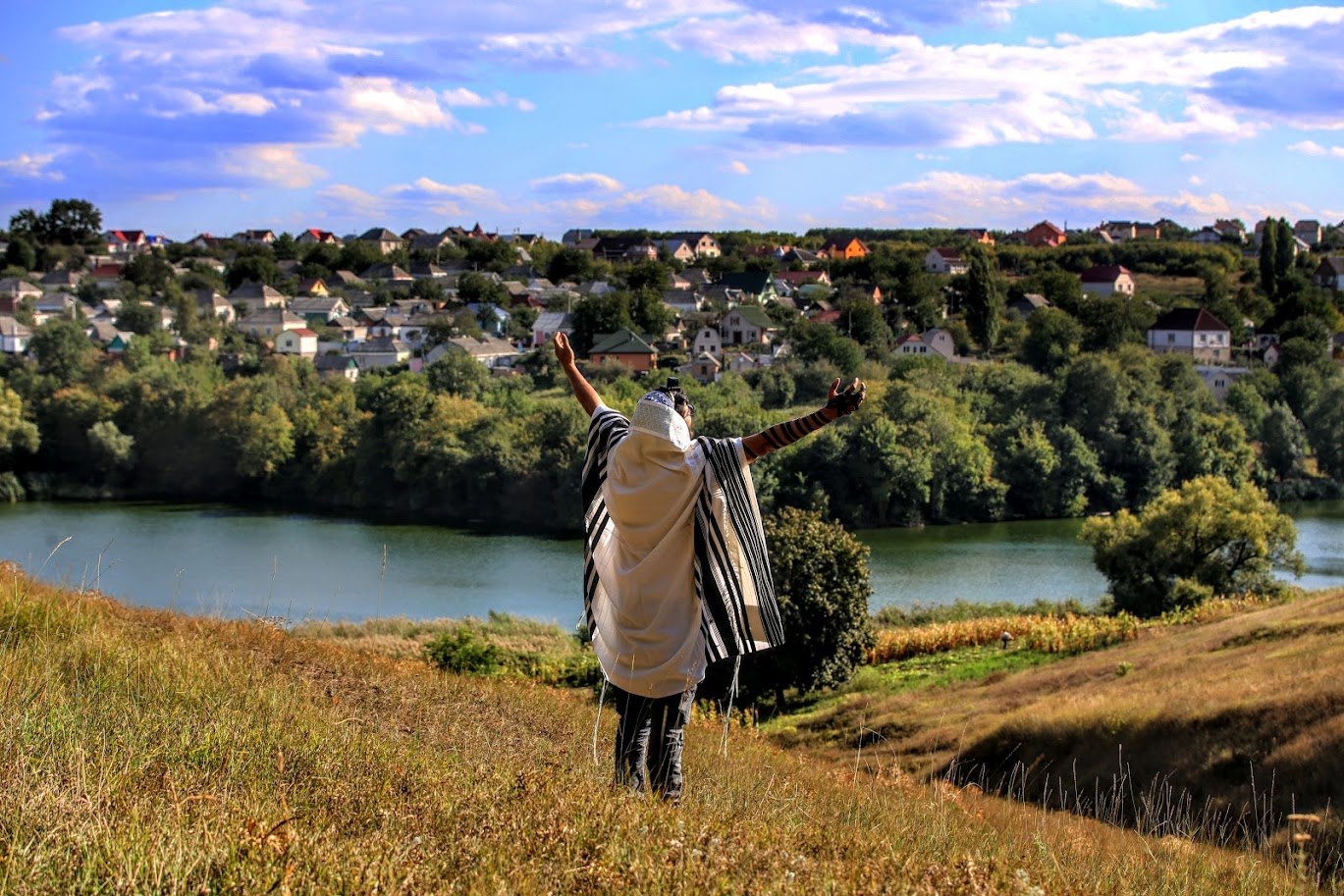 [1]
[1](Courtesy Yosef Chaim Goldshmid)
For Porush and the community he represents, the journey is not merely a trip abroad but a spiritual obligation. “On the last Rosh Hashanah of his life, in the presence of hundreds of followers, the holy Rabbi Nachman of Breslov declared the importance of being with him on Rosh Hashanah, saying in his holy words: ‘Let no man be missing,’ and, ‘Rosh Hashanah is my entire mission,’” Porush explained. “Since then, every year—despite years of great hardship—many travel to pray at his sacred gravesite in Uman. The pilgrimage continued even clandestinely during the Soviet regime. There is no doubt that Rabbi Nachman’s spirit continues to influence generations after his passing, and that the annual gathering unites wide sectors of the Jewish people.”
In a normal year, we estimate around 50,000 people attend, and in some years even more
The scale of that gathering has become impossible to ignore. “In a normal year, we estimate around 50,000 people attend, and in some years even more,” Porush said. “Most come from Israel, with another 10,000 arriving from the United States and other countries.”
The devotion is deeply personal for many of the Hasidim who make the trip. Yosef Chaim Goldshmid, a Breslov devotee who has been traveling to Uman since childhood and who has published a book of photographs documenting the pilgrimage, described it as an act of sacrifice. “Ninety percent of Breslov Hasidim are poor people who barely have enough to eat,” he told The Media Line. “They do not buy a new suit for 20 or 30 years, but they will take loans, say Kaddish for strangers, or work in humiliating jobs just to pay for Uman. This is called mesirut nefesh—self-sacrifice. We do not go there for vacation or five-star hotels. We go because Rabbi Nachman promised that if you come to him, he will be your advocate on the Day of Judgment.”
Give the gift of hope
We practice what we preach:
accurate, fearless journalism. But we can't do it alone.
- On the ground in Gaza, Syria, Israel, Egypt, Pakistan, and more
- Our program trained more than 100 journalists
- Calling out fake news and reporting real facts
- On the ground in Gaza, Syria, Israel, Egypt, Pakistan, and more
- Our program trained more than 100 journalists
- Calling out fake news and reporting real facts
Join us.
Support The Media Line. Save democracy.
These obstacles only increase the sense of merit in arriving. If we overcame all that, what are a few draft summons compared to that
For Goldshmid, the hardships are themselves part of the spiritual journey. “During the coronavirus years, we slept in sleeping bags at border crossings or walked for days through forests when it was impossible to pass between countries. These obstacles only increase the sense of merit in arriving. If we overcame all that, what are a few draft summons compared to that?”
To invest 10 million shekels in this while so many people are in need—reservists who lost their jobs, families displaced from the north and south—is barbaric
But while the Hasidim emphasize faith and sacrifice, critics see politics and inequality. Rabbi Mauricio Balter, executive director of Masorti Olami, rejected the notion that the state should subsidize the pilgrimage. “Liberal streams do not receive any state funding at all,” he said. “To invest 10 million shekels [around $3 million] in this while so many people are in need—reservists who lost their jobs, families displaced from the north and south—is barbaric. This is a political expense, not a religious one. It is about sustaining a coalition, not spirituality. I respect anyone who wants to travel at their own expense. But for the state to subsidize it in these circumstances is completely out of place.”
The Torah says that in a milchemet mitzvah, a defensive war, everyone must go out, even the groom from under his chuppah
Balter was even more critical of the draft exemptions long enjoyed by ultra-Orthodox men. “It is only the ultra-Orthodox who do not serve in the army. That is barbaric because it goes against what the Torah itself teaches. The Torah says that in a milchemet mitzvah, a defensive war, everyone must go out, even the groom from under his chuppah. Everyone must defend, not just part of the people. There are no excuses.”
The army itself has signaled it will take a tougher line. Military police are preparing to deploy at Ben Gurion Airport and other border crossings during the High Holidays, aiming to arrest those evading service. Those absent for up to 540 days may be required to begin the enlistment process, while those who have evaded for longer periods are expected to face prison sentences. Some ultra-Orthodox families have already reconsidered travel plans amid fears of mass arrests.
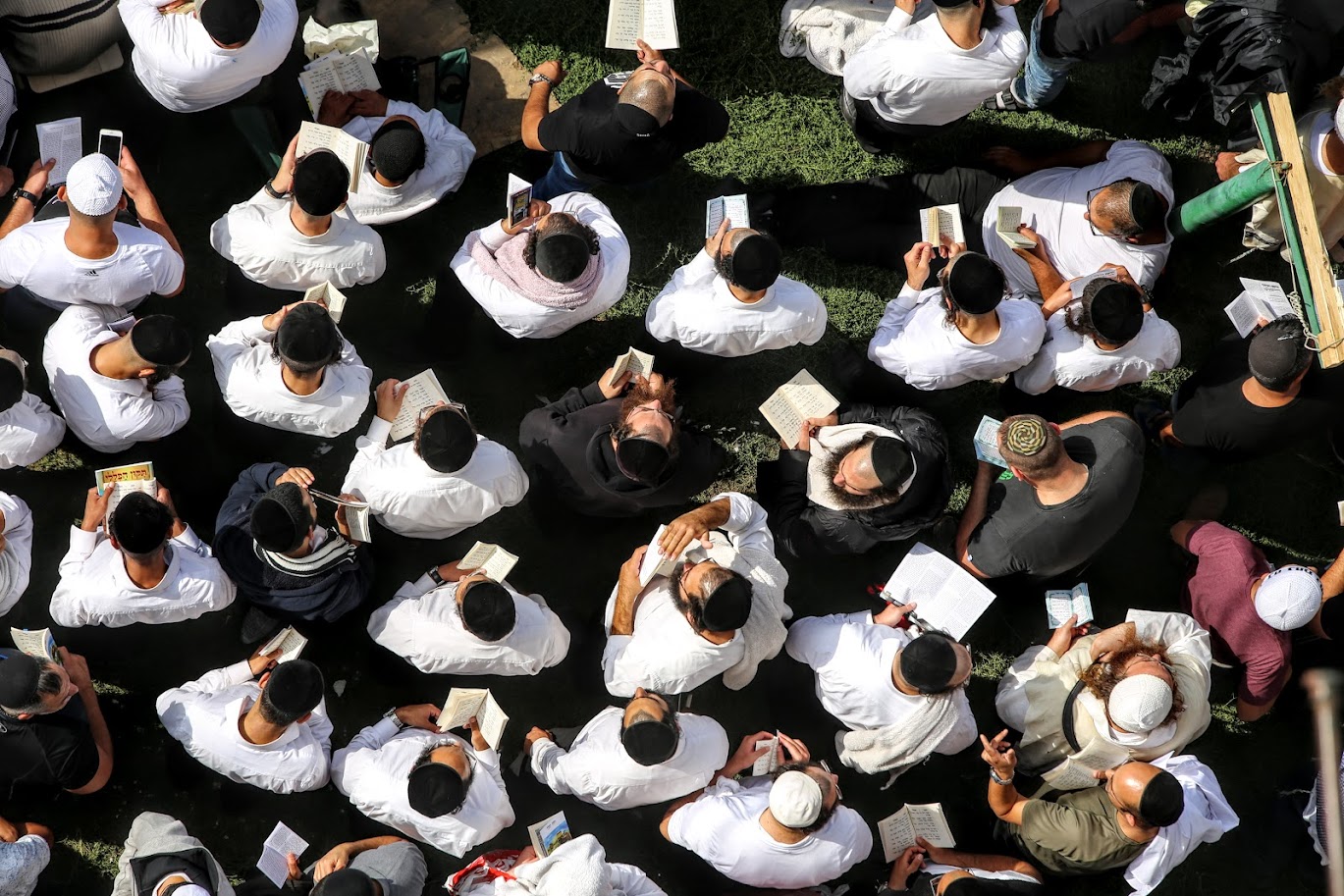 [5]
[5]Ultra-Orthodox Jews at the grave of Rabbi Nachman of Breslov, in Uman, Ukraine. (Courtesy Yosef Chaim Goldshmid)
Against this backdrop, Porush defends the government’s role in ensuring safe passage. “During most of the two years of this war, I served as minister of Jerusalem and tradition,” he said. “Due to budgetary needs, we redirected significant funds toward the war effort. But I did not see that Israel stopped funding culture, building parks or expanding air routes for tourism. Just as the state continued supporting its ongoing functions, it is only fitting that if 40,000 Israelis seek to practice their faith, the state should take responsibility to ensure they do so safely.”
The pilgrimage to Uman has always been about more than logistics. In the words of Goldshmid: “Rabbi Nachman said: If you come to me, I receive great strength, and then I can give you strength. He said he was given a gift—the power to repair the entire world, not only his Hasidim but every Jew, even those who do not believe in him. This is why we go. Because we want him to be our advocate, in this world and the next.”
Between the faithful who see a promise of redemption, the politicians who defend them as a constituency, and the critics who denounce public money and draft evasion, the annual journey to Uman has become a mirror of Israel’s deepest divisions. In a nation at war, where equality in sacrifice has become the defining question, Rabbi Nachman’s words—“Let no man be missing”—resonate in ways he could never have imagined.