Tens of thousands of people across Iran came out in recent days to commemorate those killed in last month’s mass killing of protesters by the Islamic Republic’s military and security forces. In Abdanan, where violent clashes between protesters and security forces last month left many demonstrators killed, the Islamic Revolutionary Guard Corps (IRGC) opened fire on civilians once again.
 [1]
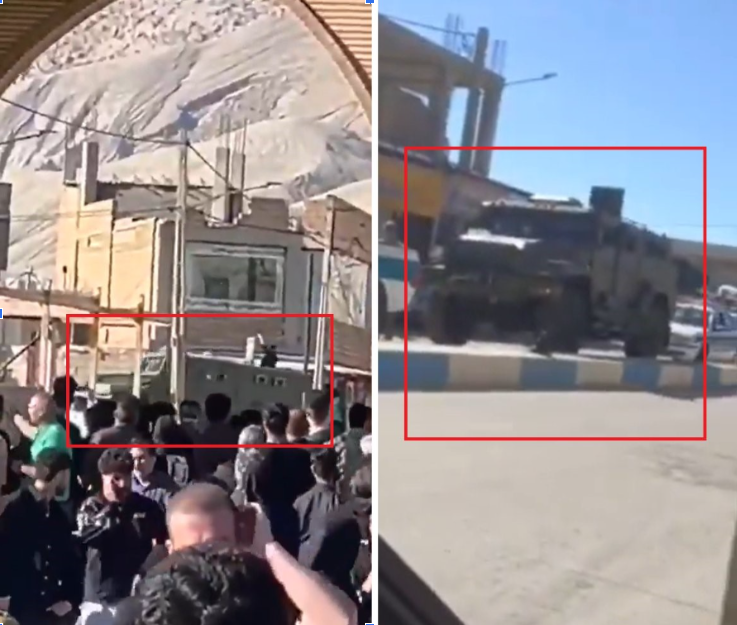
[1]Security and military forces once again opened fire on protesters in Abdanan during memorial ceremonies for those killed. The forces used an armored vehicle equipped with a mounted machine gun. The Russian-made armored vehicle is reportedly a recent addition to the equipment provided to the military forces. (Social Media)
A family member of one of the victims in Kerman told The Media Line that authorities attempted to prevent memorial ceremonies by deploying armored vehicles and detaining, in some cases, effectively taking hostage, members of grieving families. However, despite six weeks of repression, arrests, and what amounted to martial law conditions, the large turnout at the memorials rendered these efforts unsuccessful.
 [2]
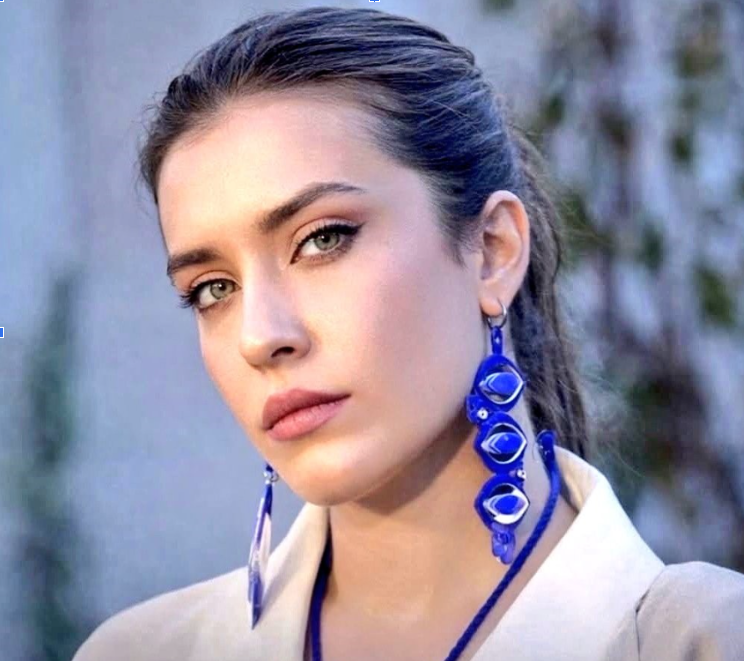
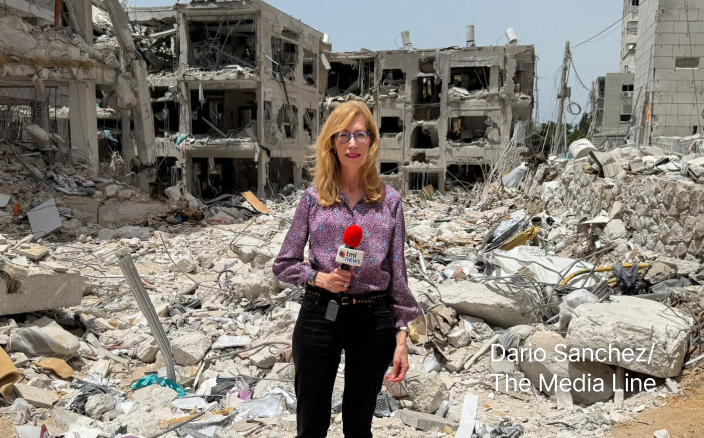
[2]Shakila Ghasemi, a young member of Iran’s Baha’i community, is among those arrested following last month’s bloody crackdown in Kerman. She is reportedly being forced to make a confession, and protesters in Kerman have expressed serious concern about her condition under torture and pressure in detention. (Social Media)
On the 8 and 9th of January, military forces in Kerman opened fire on protesters, killing and injuring dozens. They also raided the homes of wounded protesters and abducted them. In response, protesters tried to set fire to statues of Qassem Soleimani and targeted certain security sites. Soleimani, the former commander of the IRGC’s Quds Force, was born and buried in Kerman after being killed by the United States. Among many Iranians, he is widely viewed as one of the most reviled figures of the IRGC.
Security forces have also carried out raids on the homes of protesters in Kerman, reportedly building legal cases against some and attempting to link them to foreign actors. In recent days, state television “interrogator-reporters” have broadcast what appear to be forced confessions, widely seen as a prelude to harsh judicial action. Iranian human rights organizations have expressed serious concern about reports of torture, coercive interrogations, and pressure placed on families. They have also warned that death sentences are being issued against some protesters in the Islamic Revolutionary Courts across the country.
 [3]
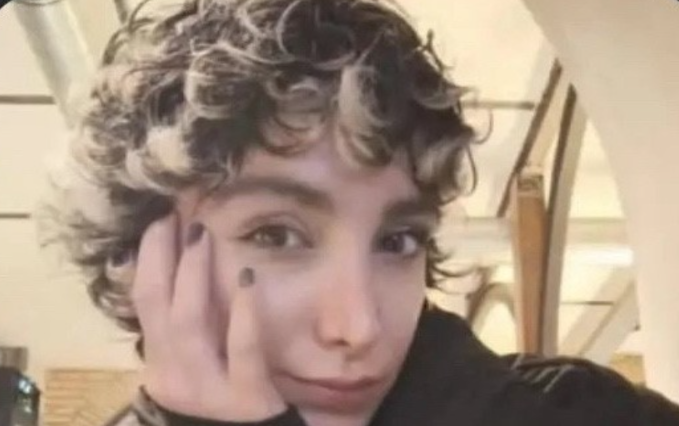
[3]Kimia Davoudi was violently arrested by security forces along with her sister, Tara. According to those close to her, the prosecutor has requested the maximum penalty in her case. (Social Media)
One individual reportedly at risk of a death sentence is Kimia Davoudi, who, along with her sister Tara, was violently arrested at her home in Tehran days after the nationwide crackdown.
Since then, the family has received only one brief phone call. A source close to Davoudi told The Media Line that their case is being overseen by Judge Abolqasem Salavati, known for issuing numerous death sentences against protesters and often referred to as the “Butcher of Tehran.”
Give the gift of hope
We practice what we preach:
accurate, fearless journalism. But we can't do it alone.
- On the ground in Gaza, Syria, Israel, Egypt, Pakistan, and more
- Our program trained more than 100 journalists
- Calling out fake news and reporting real facts
- On the ground in Gaza, Syria, Israel, Egypt, Pakistan, and more
- Our program trained more than 100 journalists
- Calling out fake news and reporting real facts
Join us.
Support The Media Line. Save democracy.
Davoudi’s primary charge is reportedly “leading protests,” and prosecutors are said to be seeking the maximum penalty. The student publication Amirkabir Newsletter reported that the sisters were severely beaten during arrest, and other student media have reported torture and pressure to extract false confessions.
University students have emerged in recent weeks as a driving force behind the continued protests. Calls by student groups nationwide for a general strike and memorial ceremonies have received widespread support. Student associations, along with several left-leaning and feminist groups, including Students for Progress (Daneshjoian Pishro) and the nationwide Woman, Life, Freedom Network, have played a key role in mobilizing participation. Many of those killed, including Aida Heidari, Raha Behloulipour, Faezeh Hosseinnejad, and Negin Ghadimi, were university students.
 [5]
[5]
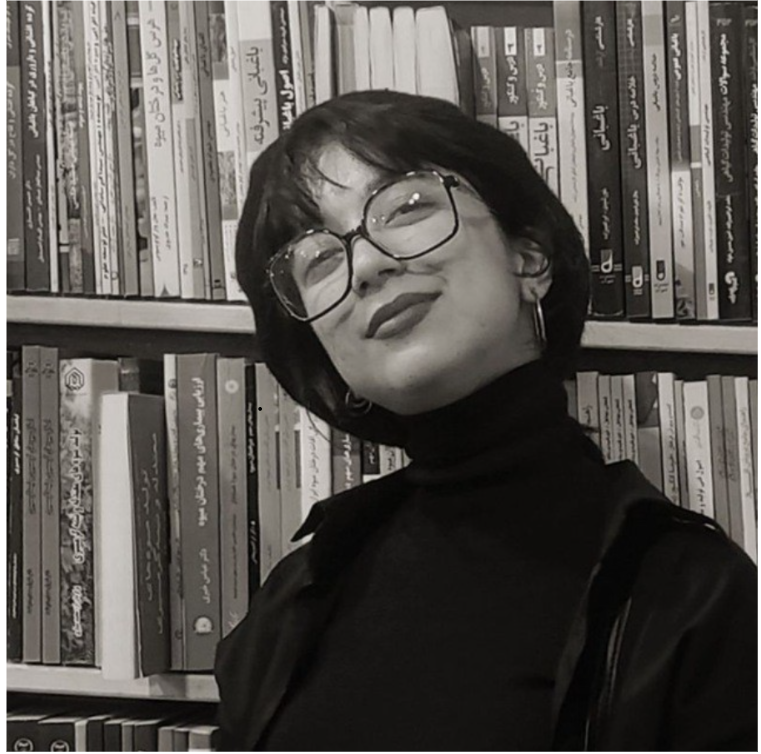
Raha Behloulipour, a student at the University of Tehran, was directly targeted and shot in the head and killed on the night of January 8 near Fatemi Square in central Tehran. (Social Media)
A member of a student organization told The Media Line on Thursday, as memorials continued, “The current struggle is a continuation of the Woman, Life, Freedom revolution. Despite Khamenei’s brutality, it will continue until this regime is overthrown and replaced by a republic led by women inside the country.”
Despite Khamenei’s brutality, it will continue until this regime is overthrown and replaced by a republic led by women inside the country
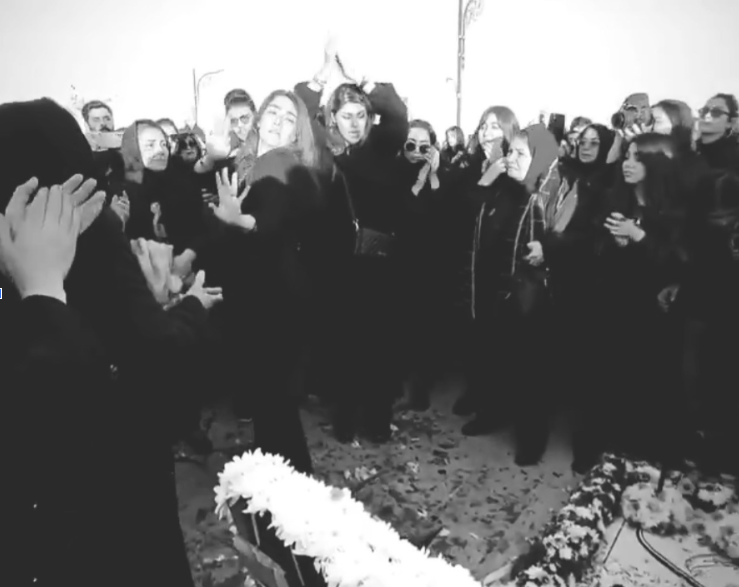
Memorial ceremonies held nationwide, which have frequently transformed into anti-regime demonstrations, continued through Thursday evening. Among the victims was Farid Ramazani. At his memorial, as at many others, traditional religious mourning rituals were replaced with music. In numerous ceremonies over the past three days, crowds chanted slogans against Khamenei or adopted new forms of mourning, including dance, rhythmic clapping, and the use of drums such as the damameh, traditionally associated with battle and revenge.
 [6]
[6]The use of mourning dances and celebratory music, along with the deliberate avoidance of traditional religious ceremonies at memorials for the victims, reflects the anger and deep resentment felt by the families of those killed during the protests. (Social Media)
Farid Ramazani was wounded during IRGC gunfire in Ariashahr, western Tehran, on the night of January 8. According to relatives, an Islamic Revolutionary Guard fired a fatal shot to his forehead at close range. Some reports indicate that his family was forced to pay for the three bullets used against him in order to obtain permission for burial.
Meanwhile, Javad Tajik, director of Tehran’s Behesht-e Zahra cemetery, confirmed reports of “coup de grâce” shots fired at wounded protesters on January 8 and 9, claiming that “terrorists and armed individuals” were responsible and that more than 70 percent of the bodies had been shot by such elements.
The Islamic Republic continues to deny that the IRGC, Basij forces, and other armed units, reportedly operating under shoot-to-kill orders, were responsible for the massacre. The Media Line previously published an exclusive report exposing the unprecedented practice of executing wounded protesters or placing injured individuals in body bags while still alive. [9]
Fearing the confiscation of their loved ones’ bodies, some families have buried victims in their own gardens.
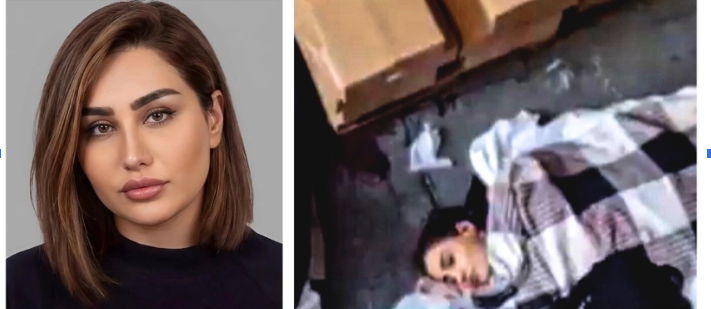
Public outrage intensified following the release of a video showing wounded protesters abandoned to die in the courtyard of Al-Ghadir Hospital-East Tehran on the morning of January 9. Among them was Aida Aghili. The 34-year-old social activist from the HaftHoz area of eastern Tehran had been shot with live ammunition and transferred to the hospital. Eyewitnesses say she was alive upon arrival. After days of searching, her family found her body among thousands of others at the forensic medical centre in Kahrizak.
 [10]
[10]A video recently released from the rear courtyard of Al-Ghadir Hospital in eastern Tehran has once again reignited the anger and outrage of grieving families. One of the women identified in the footage was Aida Aghili, a social activist who was among those killed. (Social Media)
A spokesperson for a student organization in Tehran told The Media Line: “One of the slogans heard at protests and memorials these days is: “For every one person killed, one hundred will rise.” That is the reality of Iran today — a country filled with anger and rage.”
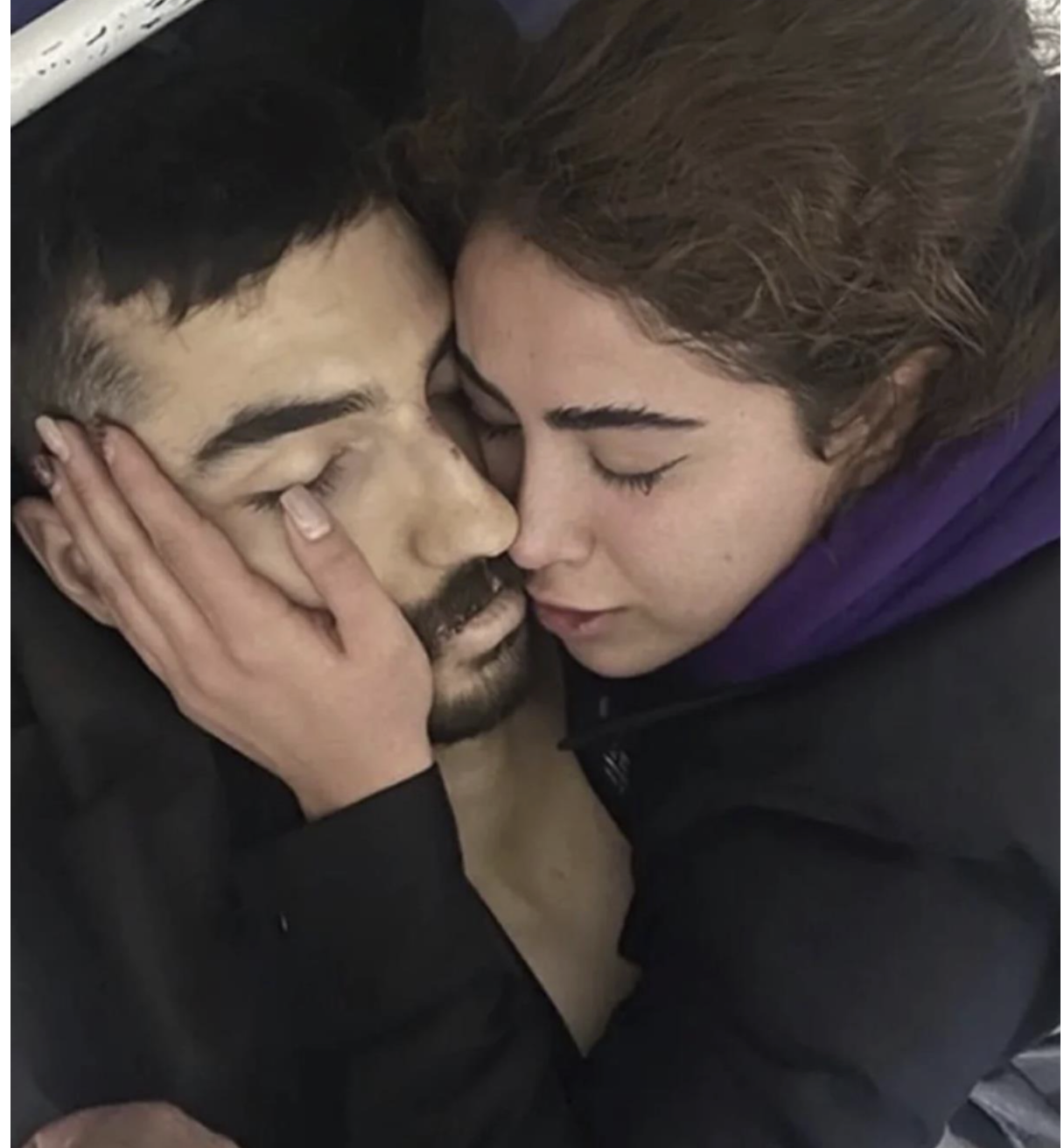 [11]
[11]The lifeless body of Matin Ghorbani, a protester killed by security forces, is embraced by his fiancée, Mahsa. (Social media)
Meanwhile, an eyewitness in Najafabad, a city that witnessed bloody clashes, reported Thursday evening that memorial gatherings had turned into massive anti-regime demonstrations, with crowds chanting for revenge.