In Episode 18 of Facing the Middle East [1], Felice Friedson delivers a stark portrait of Iran at a boiling point, portraying nationwide protests as a crisis that stretches far beyond the country’s borders. Reporting by Felice Friedson presents a movement that began with economic grievances but has grown into a broader push for freedom and political change. With inflation reaching 42.2% by the end of 2025 and the Iranian rial continuing to weaken, demonstrations have spread across hundreds of cities, bringing millions into the streets despite an aggressive security crackdown.
Friedson describes a climate of fear fueled by internet shutdowns, disputed casualty figures, and sweeping arrests that limit outside access to reliable information. The geopolitical stakes rise sharply after President Donald Trump warns that the United States could intervene if protesters are violently targeted. As tensions escalate, US naval forces, including the USS Abraham Lincoln, move into the Gulf, while China deploys a warship of its own. Iranian President Massoud Pezeshkian responds with a warning that any strike on the country’s leadership would be treated as an act of war, leaving the region bracing for unpredictable developments.
Give the gift of hope
We practice what we preach:
accurate, fearless journalism. But we can't do it alone.
- On the ground in Gaza, Syria, Israel, Egypt, Pakistan, and more
- Our program trained more than 100 journalists
- Calling out fake news and reporting real facts
- On the ground in Gaza, Syria, Israel, Egypt, Pakistan, and more
- Our program trained more than 100 journalists
- Calling out fake news and reporting real facts
Join us.
Support The Media Line. Save democracy.
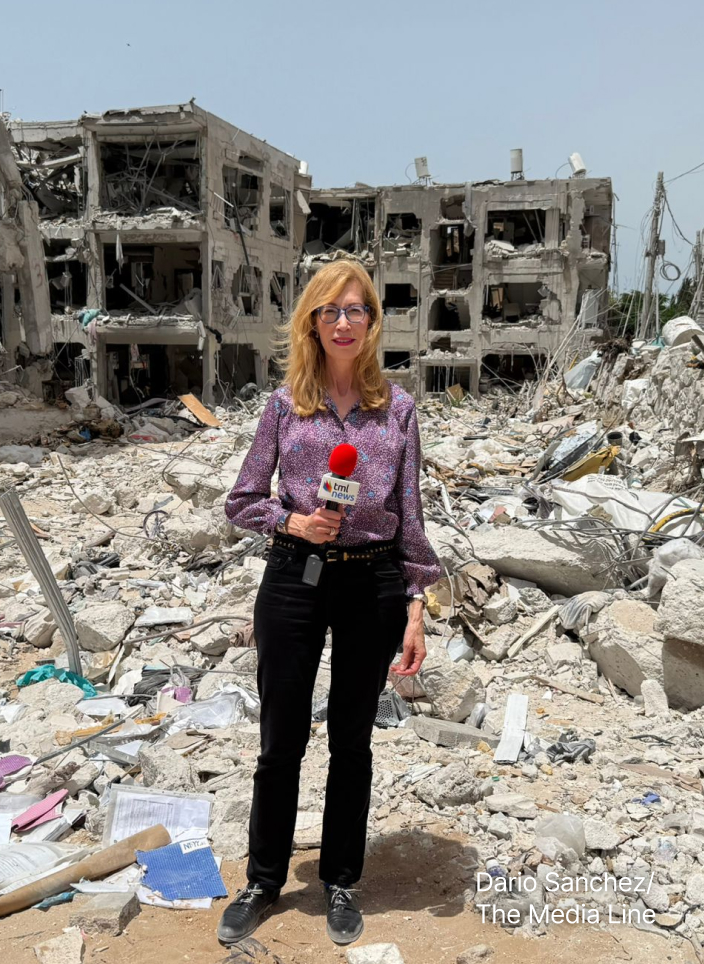
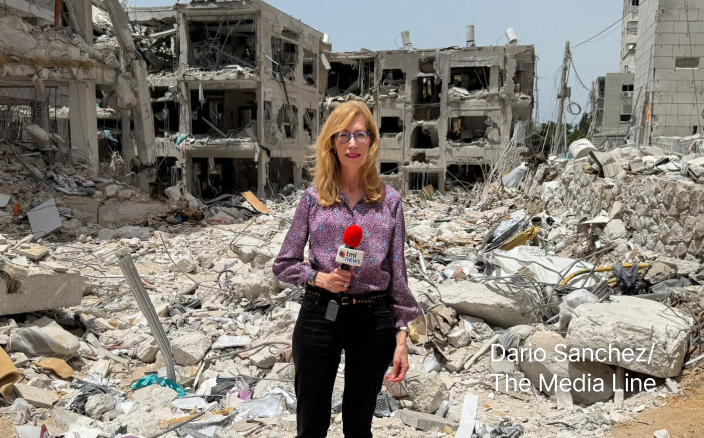
The episode features interviews with opposition figures connected to the New Iran organization and SOS Iran. Dr. Iman Foroutan describes activists communicating through encrypted channels while security forces use water cannons and mass detentions to break up gatherings. Protesters chanting the name of Crown Prince Reza Pahlavi emerge as a recurring image, reflecting the search for a unifying symbol. The discussion also examines a clandestine organizing network that distributes lion-and-sun flags and coordinates messaging inside Iran despite heavy surveillance.
In the closing segment, I join Friedson to analyze potential scenarios ranging from a limited show of force to a broader regional confrontation, with the Strait of Hormuz looming as a critical economic pressure point. Friedson previews an investigation by Omid Habibinia alleging that wounded demonstrators were transported to morgues alive, raising urgent questions about human rights abuses and the dangers journalists face when verifying such claims. As Felice Friedson concludes, the episode [1] challenges viewers to confront why global outrage can be so selective.