One of the gravest dangers now facing the Palestinians in their long and bitter struggle with Israel is the possibility that, amid the current negotiations, they may once again repeat the mistakes of the past: surrendering, under political pressure, the very international tools that have historically served as their strongest leverage.
In previous rounds of diplomacy, the Palestinians have at times relinquished key United Nations resolutions and investigative reports, effectively disarming themselves of powerful legal and moral instruments.
Today, they stand on the brink of an even greater setback if they agree to forgo their right to pursue cases against Israel and its senior officials before the world’s two foremost judicial bodies—the International Court of Justice and the International Criminal Court. Both tribunals have already charged Israel and several of its leaders with grave violations of international law, including the most severe accusation of all: genocide in Gaza.
Arrest warrants have been issued for Prime Minister Netanyahu and former Defense Minister Yoav Gallant, placing Israel in an unprecedented and precarious position. The ICC recently reinforced this pressure by reminding its member states of their legal duty to execute arrest warrants for the accused if they enter their territory, or even their airspace.
Give the gift of hope
We practice what we preach:
accurate, fearless journalism. But we can't do it alone.
- On the ground in Gaza, Syria, Israel, Egypt, Pakistan, and more
- Our program trained more than 100 journalists
- Calling out fake news and reporting real facts
- On the ground in Gaza, Syria, Israel, Egypt, Pakistan, and more
- Our program trained more than 100 journalists
- Calling out fake news and reporting real facts
Join us.
Support The Media Line. Save democracy.
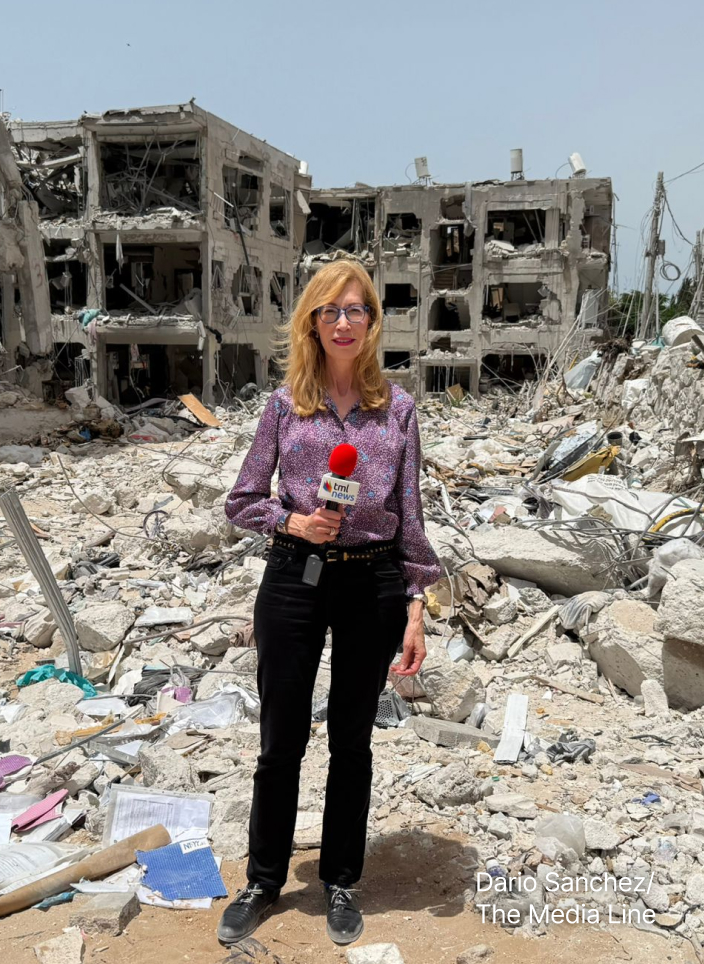
Reports in Western media suggested that this unusual clarification was aimed specifically at several European governments that had failed to uphold this obligation when they allowed Netanyahu’s aircraft to cross their skies en route to New York just three weeks ago, without taking any action.
The Palestinians, more than ever, must remember how dearly they have paid in the past for surrendering their most effective means of leverage in exchange for hollow promises. History offers painful lessons: In 1991, to secure Israel’s participation in the Madrid Peace Conference, the Palestinians accepted the repeal of the landmark 1975 UN resolution that defined Zionism as a form of racism and racial discrimination.
The resolution was indeed rescinded, and the Madrid Conference delivered nothing tangible for the Palestinian cause. The same pattern of concession repeated itself in October 2009, when the Palestinian Authority, under intense U.S. and Israeli pressure, agreed to delay a UN Human Rights Council vote on the Goldstone Report, a document that had concluded Israel committed potential crimes against humanity during its military operations in Gaza.
The justification then was that proceeding with the vote might jeopardize the peace process. But peace never came, and the Goldstone Report’s impact evaporated when its author later retracted key findings. Once again, a critical moment of accountability slipped away.
Today, as the Palestinians navigate delicate talks with Israel, they must resist the temptation to trade justice for short-term political optics. The legal momentum they currently hold is not merely symbolic—it is perhaps their last remaining instrument of genuine power in the international arena.
To give it up now would not only betray their past sacrifices but also mortgage their future.
Ahmed Abdel-Tawwab (translated by Asaf Zilberfarb)