PKK Announces End to Armed Struggle, Raising Questions About Peace and Power
The Kurdish group's move to lay down arms could reshape regional dynamics—but without concessions from Turkey, critics say it may lack substance
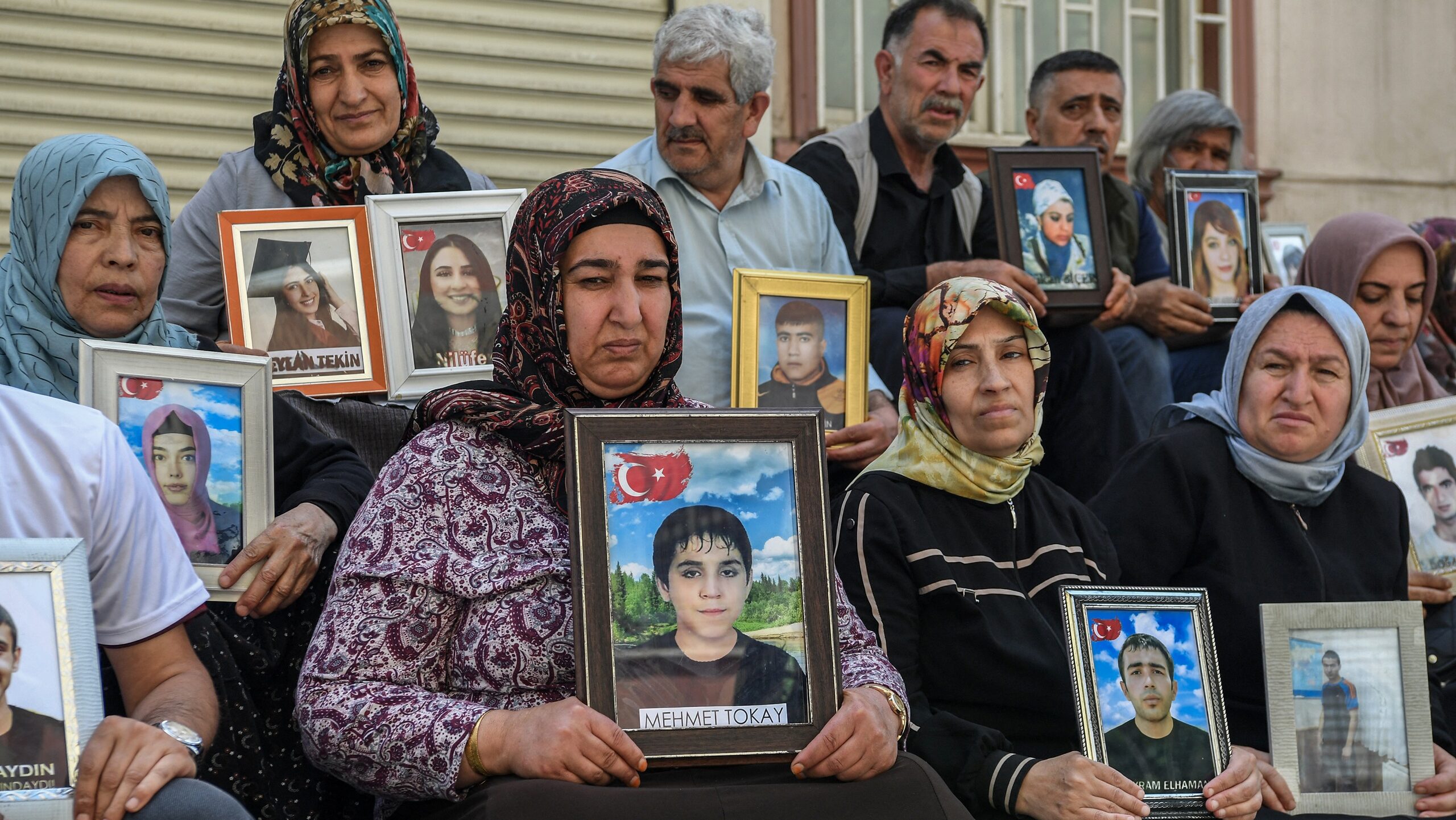
After more than four decades of armed struggle, the Kurdistan Workers’ Party (PKK) has announced its intention to lay down arms. The move, declared unilaterally and without negotiations or concessions from Ankara, has generated mixed reactions among Kurdish communities and political observers. Some view it as a potential breakthrough for peace, while others worry it is a premature concession made without structural guarantees.
The PKK’s decision to disband is a potentially transformative step—if it leads to resolving the Kurdish issue in Turkey
“The PKK’s decision to disband is a potentially transformative step—if it leads to resolving the Kurdish issue in Turkey,” Kawa Hassan, a nonresident fellow in the Middle East and North Africa Program at the Stimson Center, told The Media Line. “But this isn’t the end of a conflict. It marks the start of a long, complex, and challenging journey,” he added.
Founded in 1978, the PKK has long advocated for Kurdish rights and autonomy within Turkey. Its insurgency has claimed over 40,000 lives and extended into Iraq and Syria. Now, from its leadership base in the Qandil Mountains along the Iran-Iraq border, the group says it will shift from armed struggle to democratic participation—a change that comes amid shifting regional dynamics.
“There is a changing regional context. After decades of stalemate, both sides recognize that this war has no military solution,” Hassan said. “[Turkish President Recep Tayyip] Erdoğan realizes it, PKK leaders realize it, and so do others across the region. We are stuck in a vicious cycle. This may be a moment to try something different.”
That shift reflects a broader realignment, according to Berlin-based political analyst Hozan Ibrahim. “This didn’t happen overnight. Discussions have been ongoing for at least a year and a half,” he told The Media Line. “The PKK’s move is a natural result of Turkish military pressure in northern Iraq and Rojava, combined with domestic political shifts. Erdoğan’s government is losing ground and looking for new allies.”
Erdoğan, who launched a brief peace process with the PKK between 2013 and 2015, has acknowledged receiving the disarmament message but has not responded publicly. “They will likely keep silent and wait,” said Ibrahim. “They can’t pivot openly because it would look like a concession, so expect them to move cautiously and in phases.”
The asymmetry in this process worries Syrian Kurdish political activist Juan Saadoun, who fears the PKK may be disarming without receiving anything in return. “The Kurdish people sacrificed tens of thousands of lives to resist Turkish oppression and demand recognition,” he told The Media Line. “Now the PKK is disarming without any constitutional or political changes from Turkey.”
Give the gift of hope
We practice what we preach:
accurate, fearless journalism. But we can't do it alone.
- On the ground in Gaza, Syria, Israel, Egypt, Pakistan, and more
- Our program trained more than 100 journalists
- Calling out fake news and reporting real facts
- On the ground in Gaza, Syria, Israel, Egypt, Pakistan, and more
- Our program trained more than 100 journalists
- Calling out fake news and reporting real facts
Join us.
Support The Media Line. Save democracy.
Saadoun believes Ankara’s strategy is less about peace and more about limiting Kurdish influence. “I believe Turkey’s real goal is to undermine the gains Kurds have made in Rojava. There are still PKK-linked fighters in northeast Syria. Turkey wants to weaken the idea of federalism and autonomy in Syria by dismantling its symbolic backers,” he said.
Still, many Kurds in Syria and Iraq cautiously welcome the development. “In Iraqi Kurdistan, people are relieved. If the fighting ends, maybe Turkish airstrikes and incursions will stop too,” said Ibrahim. “And in Syria, this could give the PYD [Democratic Union Party, the Syrian affiliate of the PKK] more room to negotiate with Damascus without Turkish obstruction.”
Hassan agreed. “Should the process in Turkey be successful, the impact will be regional. Syrian Kurds want peace. I speak to people in Qamishli and Kobane often. They’re tired. They want dignity and rights, not endless war.”
But the prospects for peace in Syria remain grim. The country is divided among regime forces, Turkish-backed fighters, Kurdish-led administrations, and extremist groups. Saadoun criticized Turkey’s role. “Turkey supported factions that carried out massacres against Alawites on the coast, hoping to trigger a Turkish intervention. That plan failed, but it shows their real ambitions.”
He also voiced concern over extremist expansion. “Al-Jolani [Syrian President Ahmed al-Sharaa] is creating a Sunni Islamist statelet. He’s offering Syrian citizenship to over 80,000 foreign jihadists. This is not the Syria we fought for.”
For Kurds, the fear is not just about Turkey or Assad, but the erasure of Syria’s multi-ethnic identity. “We are open to federalism with Druze, Alawites, and moderate Sunnis. But the jihadist influence is crushing moderate voices. Shops are closing. Festivals are banned. Christian neighborhoods are being harassed. It’s a dark transformation,” Saadoun said.
Meanwhile, the mechanics of disarmament remain unclear. “This is perhaps the hardest part,” Hassan admitted. “How do you disarm a transnational guerrilla movement? Where? Under whose supervision? What will be the role of the UN or international mediators? It will require time for sure”, he said.
Ibrahim drew a parallel with the Revolutionary Armed Forces of Colombia (FARC) disarmament in 2017. “The FARC disarmed under international supervision with a clear amnesty law and reintegration program. Something similar could be imagined here, but the Middle East lacks those institutions and trust,” he noted.
“No one is throwing away their weapons overnight,” he added. “Everyone has a plan B. If Turkey fails to meet its promises, many Kurds are ready to resist again.”
No one is throwing away their weapons overnight. Everyone has a plan B.
Foreign powers remain key players. The US, a long-time backer of Syrian Kurdish forces and Iraqi Kurds, is watching closely. “Washington has seen the Kurds as a stabilizing force against ISIS and extremism,” said Ibrahim. “But they’ve also seen the Kurdish ambition for autonomy as a diplomatic headache. This move may make things easier—but only if Ankara doesn’t overreach.”
Saadoun was less hopeful. “Turkey has always used the PKK as a pretext to bomb Iraq and Syria. I suspect they will now claim that some PKK faction is still active, to justify continued attacks.”
Still, some believe change is possible. “The PKK says it wants to engage in peaceful democratic politics,” said Hassan. “There are already Kurdish political parties in Turkey, like the DEM [Peoples’ Equality and Democracy] Party, that are trying. But unless Turkey removes the barriers—legal, linguistic, cultural—there won’t be a real change.”
We can accept federalism as a minimum. But we must not be erased in the name of a so-called peace.
Saadoun concluded: “We can accept federalism as a minimum. But we must not be erased in the name of a so-called peace.”
