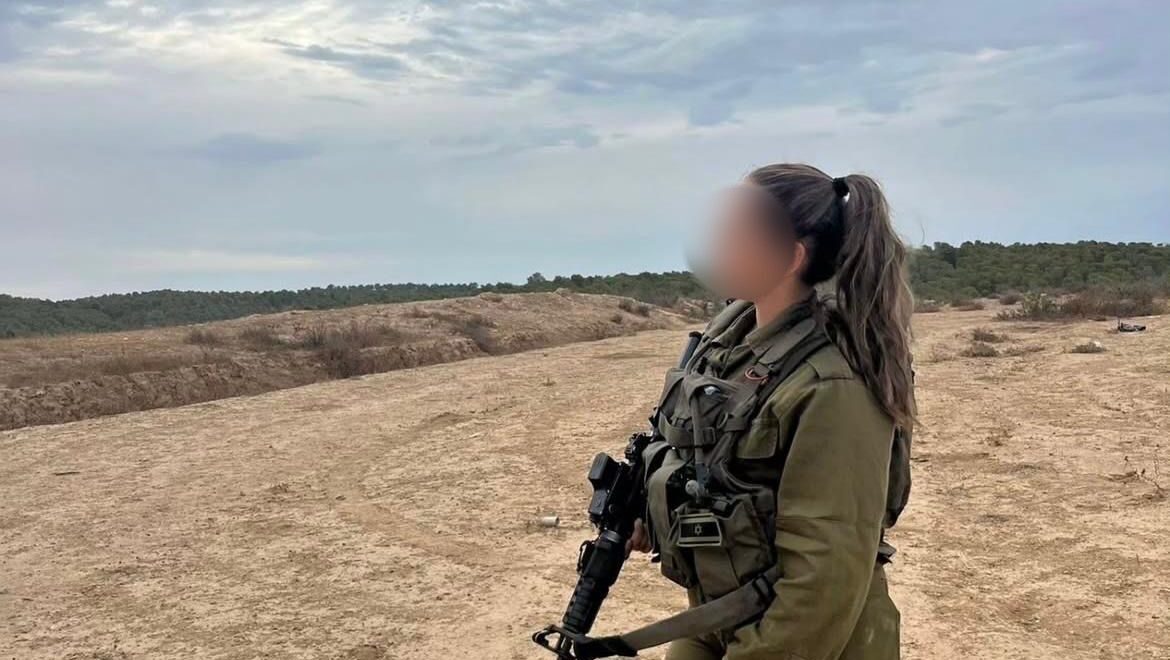
Women in Uniform Face PTSD in Unique Ways, Leaders Say Support Systems Must Catch Up
With tens of thousands of women serving in frontline roles, speakers at the ICAR Collective Summit urged better data, tailored treatment, and institutional change
Aviv Shapira, the oldest daughter of Avital and Moti Shapira, was diagnosed with post-traumatic stress disorder (PTSD) in early 2023 after a strenuous military service that ended before the October 7 massacre and the war that followed.
As their daughter struggled, her parents realized that, like Aviv, many women dealing with military-related PTSD were not getting the help they needed.
So, they decided to change that reality.
They dreamed up Arim Roshi (which roughly translates as “I shall rise”), an organization for community support for women with combat PTSD, which was planned to launch in 2024. But when the massacre happened, the Shapiras accelerated their plans and opened the organization earlier than expected, creating a space specifically designed to help women heal.
Speaking on Sunday at the ICAR (Israel’s Collective Action for Resilience) Summit, Avital Shapira said her daughter did not want any of the support options that were being offered. At first, she did not understand why. Then she realized those programs simply were not meeting her daughter’s needs.
Just like physical health is different for men and women, so is mental health
“We realized women’s needs are very different from men’s,” Shapira said. “Just like physical health is different for men and women, so is mental health.”
For years, women fought for equality in the Israel Defense Forces (IDF). Today, they serve in combat and police roles alongside men. Just as they are treated the same in the field, the army’s approach to preventing and treating PTSD often does not account for gender differences.
According to figures recently published by Ynet, women made up around 20% of the IDF’s combat forces during the recent war, totaling more than 65,000 women. They served in border defense, counterintelligence, and other frontline units. And like their male counterparts, many are now coping with post-trauma.
The most recent report by the rehabilitation department at the Ministry of Defense shows that of the more than 82,000 wounded men and women under its care, 31,000 are dealing with psychological injuries and post-trauma.
Arim Roshi was built around four pillars: community, therapeutic workshops, personal guidance, and research.
“Many women think they’re the only ones dealing with this,” Shapira explained. Arim Roshi creates a safe space where members can connect, share their experiences, and support one another.
Many women think they’re the only ones dealing with this
The organization also runs workshops that use movement, art, water-based, and equine therapy to help women process trauma in ways that go beyond traditional talk therapy.
In addition, Arim Roshi provides one-on-one guidance to help women navigate bureaucracy, manage family dynamics, and go through the recognition process with the Ministry of Defense.
Give the gift of hope
We practice what we preach:
accurate, fearless journalism. But we can't do it alone.
- On the ground in Gaza, Syria, Israel, Egypt, Pakistan, and more
- Our program trained more than 100 journalists
- Calling out fake news and reporting real facts
- On the ground in Gaza, Syria, Israel, Egypt, Pakistan, and more
- Our program trained more than 100 journalists
- Calling out fake news and reporting real facts
Join us.
Support The Media Line. Save democracy.
Finally, the organization tracks outcomes and gathers data on what approaches are effective, with the goal of contributing to broader research and improving care for women with military-related PTSD.
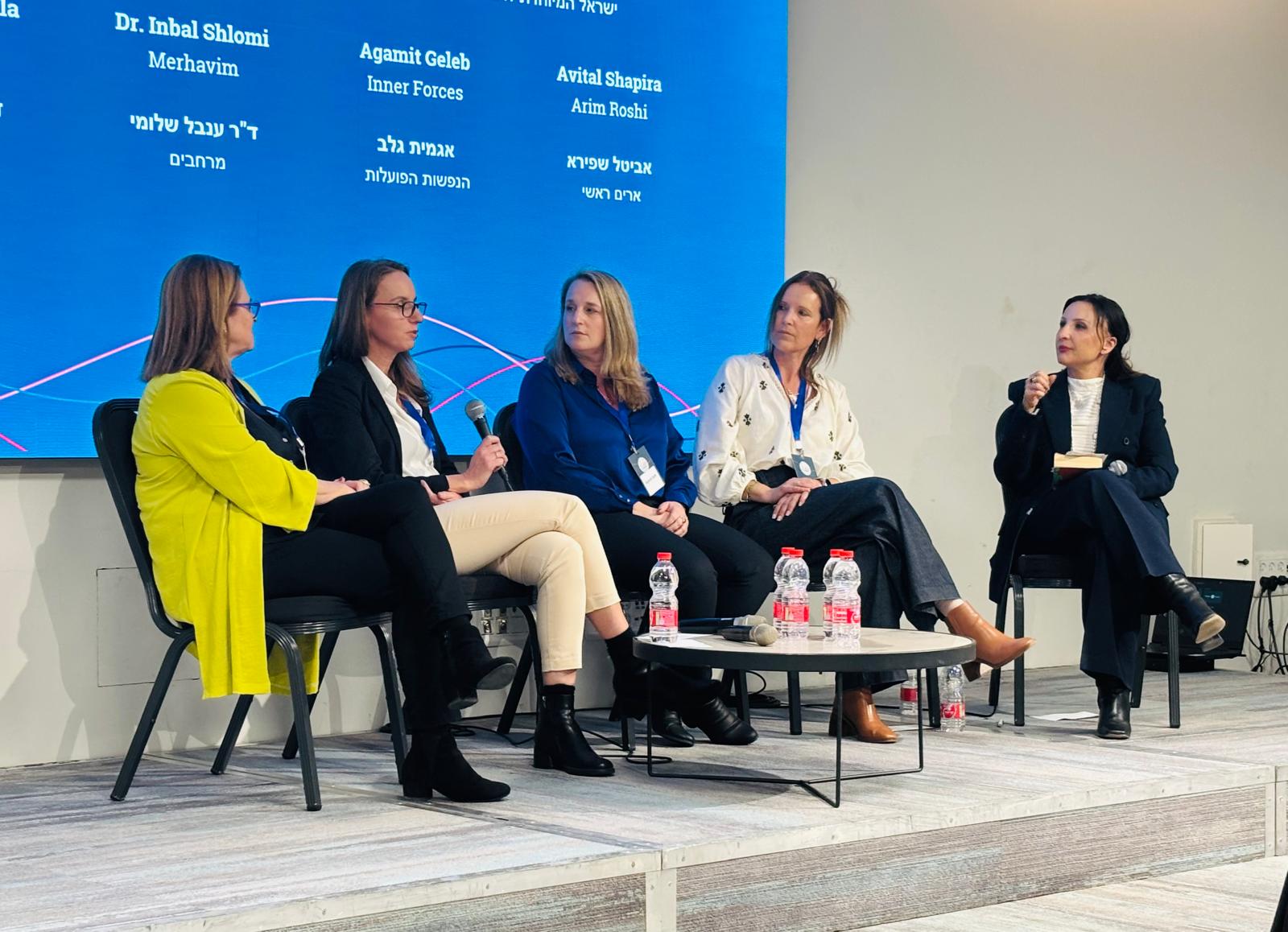
From left: Dr. Michal Sela, Dr. Inbal Shlomi, Agamit Gelb, Avital Shapira, and Fleur Hassan-Nahoum. (Maayan Hoffman/The Media Line)
Shapira was one of several speakers who addressed the issue of women and war on a panel moderated by Israel’s special envoy for trade and innovation, Fleur Hassan-Nahoum. The session focused on the unique challenges women face during wartime and how institutions can better serve them.
“The health of women is not just related to gynecology,” said Dr. Michal Sela of NOGAFem, a center for health innovation and policy. “We are different in every way.”
Yet despite this understanding, Sela said there is still limited research and data on what women fighters endure during war.
“The information is lacking,” Sela said.
And the impact extends far beyond women on the front lines.
Dr. Inbal Shlomi of the Merhavim Medical Center for Brain and Mind Care said that the level of trauma experienced across the country is “unbelievable.”
Even though most of us were not in Gaza or on the frontline, we all experienced unbelievable levels of trauma
“Even though most of us were not in Gaza or on the frontline, we all experienced unbelievable levels of trauma,” Shlomi explained. Social media exposure and constant interaction with people directly affected by the attacks contributed to widespread secondary trauma.
Moreover, hundreds of Israeli women were sexually assaulted and abused by Hamas terrorists on October 7 and while in captivity. Shlomi said that women who had previously experienced sexual abuse could have seen their symptoms intensify, experienced renewed flashbacks, or found their PTSD worsening as a result of learning what happened to their peers that day.
She described one patient who said that before October 7, she viewed the world as evil but believed she might be mistaken and tried to challenge that perception. After October 7, she said no one could convince her otherwise.
The trauma was also deeply felt by mothers.
Agamit Gelb, founder of Inner Forces, described how on October 7, she became the mother, sister, and aunt of fighters. As she sent her loved ones into battle, she realized she was experiencing something complicated that no one seemed to recognize.
At the time, few imagined the war would stretch on for nearly two years, with loved ones remaining on the front lines for extended periods. Yet prolonged wars are not new to Israel. Gelb noted that her 70-year-old mother has been the mother of a fighter, the grandmother of a fighter, and the aunt of fighters. Still, she remained invisible in the national conversation.
Gelb realized that mothers and other female family members needed support and clear answers. But they were unrecognized as in need of these answers by the State.
In response, she launched Inner Forces, a program tailored to female family members of fighters. In collaboration with Ruppin Academic Center, she conducted research involving 400 mothers. The findings showed that many women labeled as simply anxious or worried were, in fact, experiencing trauma. Approximately 20% of those surveyed had lost their jobs due to the challenges of being the mother of a soldier during wartime.
“The family is what provides resilience,” Gelb said, noting that keeping these women strong was essential.
Gelb said that when she would ask mothers how they were coping, many would begin to cry. Yet they often felt guilty expressing distress, because their sons had not been killed or kidnapped.
“I was just a mom of someone in the field,” Gelb said, describing how she felt lost because she viewed her own trauma as less significant than others’.
Through Inner Forces, she built a community that offers resilience programming, psychoeducation, and most importantly, a place for mothers to come together and support one another throughout the war.
As more women take on combat roles and serve in key IDF positions, it is becoming increasingly important to understand how to protect their mental health, Shapira said. She noted that many women serve in frontline positions that are not officially classified as combat, yet potentially expose them to the same levels of trauma.
Still, she said, there is reason for hope.
Her own daughter, who had been suffering deeply, recently gave birth to her second child. In fact, she noted that many of the women who experienced trauma early in the war are now part of what she described as a “baby boom.”
“There is hope,” she told the room. “You can live with PTSD,” she added, “and it can even be transformed into post-traumatic growth. That is our hope.”
You can live with PTSD, and it can even be transformed into post-traumatic growth. That is our hope.
This report is part of Traumatech, a series developed and created by Maayan Hoffman and debuting on The Media Line. The series explores how Israel is building and exporting breakthrough mental health technologies that can transform life at home and bring hope to communities worldwide.
