‘Our Responsibility Is To Be Careful’: Venezuelan Jews Return to Routine After Maduro’s Arrest
Daily life resumes across Venezuela as Jewish institutions reopen and community leaders report calm despite political upheaval
Only days after the US military incursion and the arrest of Nicolás Maduro, Venezuela is beginning to return to routine. Shops are open, institutions are resuming activity, and within the country’s Jewish community, leaders say daily life is gradually normalizing.
The operation triggered a brief wave of uncertainty across the country. As news spread, families stocked up on food and household supplies, and social media filled with images of long lines outside supermarkets and small neighborhood shops. For a population long accustomed to instability, precautions came naturally.
Inside the Jewish community, leaders describe a similar instinctive response followed by a measured reopening. Activities were suspended on Jan. 3 as a preventive step. Over the next days, institutions reopened gradually, and by Jan. 5, synagogues, clubs, and community organizations were functioning again, with other activities prepared to resume. Leaders say the pause and restart were practical decisions shaped by experience and a desire to keep daily life moving.
In situations like this, our responsibility is to be careful
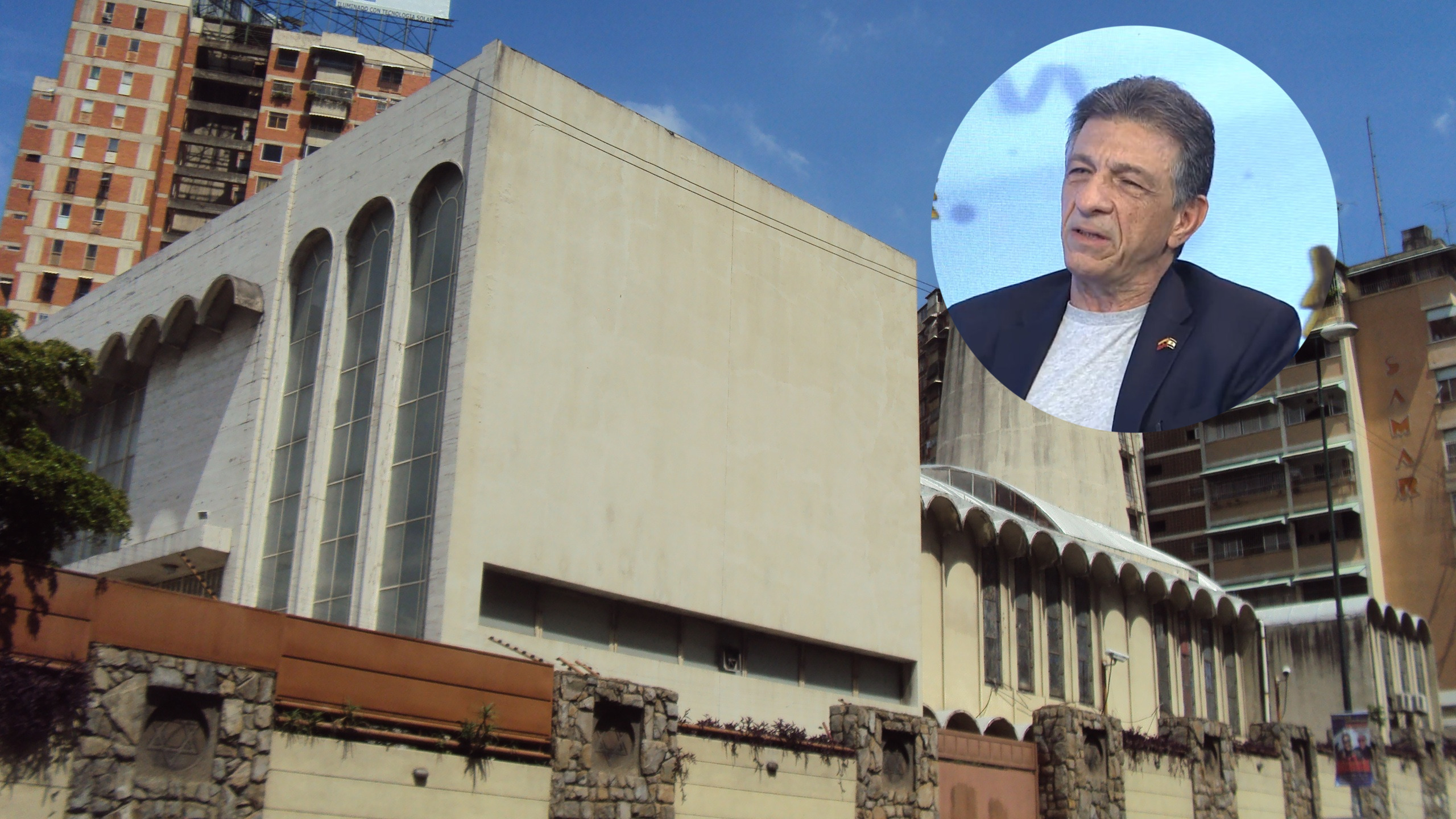
Miguel Truzman, one of the recognized voices of Venezuela’s Jewish community, was outside the country when the events unfolded. Speaking with The Media Line, he stressed the need for caution during moments of heightened attention. “In situations like this, our responsibility is to be careful,” he said.
Truzman described that approach as longstanding. The Jewish community, he said, has prioritized civic life and institutional continuity, with synagogues and community organizations operating openly for decades and religious life continuing without formal restrictions. Public political visibility, he added, has never been a priority.
He also pointed to the community’s relations with its surroundings, saying it lives in harmony with other religious groups and maintains routine coordination with state authorities on security-related matters—an arrangement he said helps sustain normal activity even during periods of intense international focus.
Give the gift of hope
We practice what we preach:
accurate, fearless journalism. But we can't do it alone.
- On the ground in Gaza, Syria, Israel, Egypt, Pakistan, and more
- Our program trained more than 100 journalists
- Calling out fake news and reporting real facts
- On the ground in Gaza, Syria, Israel, Egypt, Pakistan, and more
- Our program trained more than 100 journalists
- Calling out fake news and reporting real facts
Join us.
Support The Media Line. Save democracy.
After Maduro’s arrest, Venezuelan authorities moved to preserve what they described as administrative continuity, with the National Assembly convening to swear in Vice President Delcy Rodríguez as the interim president. Truzman referred to the developments factually and emphasized that communal life operates separately from the political arena.
We haven’t had incidents
On security, Truzman said current concerns inside the Jewish community are not tied to immediate threats. He said there has been no increase in antisemitic incidents, even amid heightened global tensions since Oct. 7, 2023, and that daily communal life has continued without interruption. “We haven’t had incidents,” he said.
He added that any unease is driven more by uncertainty than by specific dangers, and he voiced concern about people outside Venezuela publicly speaking on behalf of the Jewish community or attributing sentiments to it without direct connection to daily life inside the country.
Truzman said attentiveness, not alarm, guided the community’s response: institutions adjusted schedules temporarily, communications focused on coordination and reassurance, and families made individual decisions based on personal circumstances. As information became clearer, those temporary measures were lifted and communal spaces reopened.
Over the past two decades, Venezuela’s Jewish population has fallen significantly alongside the broader national exodus driven by economic hardship and prolonged uncertainty. Jewish families, Truzman said, left for the same reasons as millions of other Venezuelans.
Those who remain, he said, tend to have strong personal, professional, and institutional ties to the country—older residents, families with deep communal roots, and others closely connected to local institutions. For them, returning to routine after extraordinary moments is less a strategy than a daily reality.
A related perspective comes from Venezuelans now living abroad. Samy Yecutieli, a Venezuelan who has lived in Israel for eight years, spoke with The Media Line about following developments in Venezuela from a distance, often through family conversations rather than political debate.
Before leaving Venezuela, Yecutieli said, a series of conversations left a deep impression on him. He recalled speaking with people roughly a decade older than him, many with similar professional and family backgrounds, whose families had gradually scattered across different countries. Those conversations revealed a recurring pattern of children growing up in different parts of the world and families increasingly separated by distance.
The pattern troubled him. “One in Miami, another in Madrid, another in Israel,” he said. “And when I saw that conclusion, I said, ‘This is probably what will happen to me if I stay. That each of my daughters, when they finish school, will go to a different place in the world, and I’ll have my children dispersed.’”
That realization shaped a decision he took years before the current events. “I didn’t want that future for my family,” Yecutieli said. “I wanted to find a place where I could raise my daughters and where my family could continue growing together.”
Watching recent developments from Israel, Yecutieli described explaining what was happening to his daughters, who have spent most of their lives outside Venezuela. He said he tries to be honest without transmitting anxiety, particularly when speaking with children, and that physical distance changes how events are felt even when emotional ties remain.
You leave the country, but you don’t leave the country emotionally
Being far from Venezuela, he added, does not mean emotional detachment. “You leave the country, but you don’t leave the country emotionally,” he said. “You’re still connected, through family, through memories, through concern.”
For many Venezuelans in the diaspora, he said, events at home are filtered less through ideology than through questions of family, continuity, and belonging. And for those still in Venezuela, community leaders describe a familiar impulse: Pause when necessary, coordinate quietly, then get back to life as soon as it is reasonably safe. The broader national picture is still evolving, but for now, the priority—inside the Jewish community and beyond it—has been simple: reopen, regroup, and keep moving.
