
Budget Issues Worsen Shortages in Northwest Syria
As the flow of international funding dries up, more than 5 million people living in Syria’s north and northwest border region are suffering shortages and lack of access to other essential services, the United Nations said Wednesday.
Populated largely by individuals displaced from other parts of Syria over the last 13 years of civil war, the region’s refugee camps, which fall largely outside the control of Syrian President Bashar Assad’s Damascus-based government, continue to survive on foreign aid.
The recent funding crisis has cut down basic services related to water, waste disposal, and sanitation.
Give the gift of hope
We practice what we preach:
accurate, fearless journalism. But we can't do it alone.
- On the ground in Gaza, Syria, Israel, Egypt, Pakistan, and more
- Our program trained more than 100 journalists
- Calling out fake news and reporting real facts
- On the ground in Gaza, Syria, Israel, Egypt, Pakistan, and more
- Our program trained more than 100 journalists
- Calling out fake news and reporting real facts
Join us.
Support The Media Line. Save democracy.
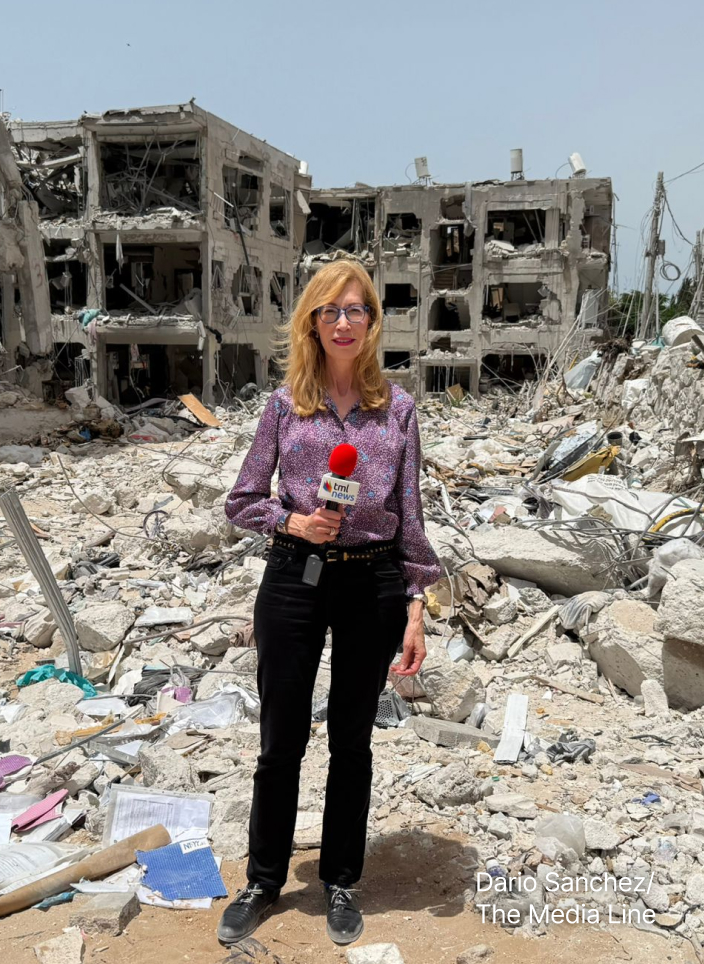
At least 80% of Syrians living in the country’s northwest rely on international organizations to access these services.
One resident of a camp near the Turkish border told AFP that his family has to share a water tank with three other families to conserve and reduce costs.
Waste also continues to pile up, worrying health care groups concerned about an outbreak of disease.
In Syria’s Idlib region, which is held by the predominantly Kurdish US-aligned Syrian Democratic Forces, some 460 displacement camps host around 571,000 people who lack humanitarian support from the UN’s partner organizations, according to the UN Office for the Coordination of Humanitarian Affairs (OCHA).
The agency stated that without increased funding, it would have to close 111 additional camps housing nearly 165,000 people.

