Iran Judiciary Signals Swift Trials, Executions as Protest Death Toll Estimated at 2,500 to 20,000
Warning: Some images in this story are graphic and show scenes of death and injury that readers may find disturbing.
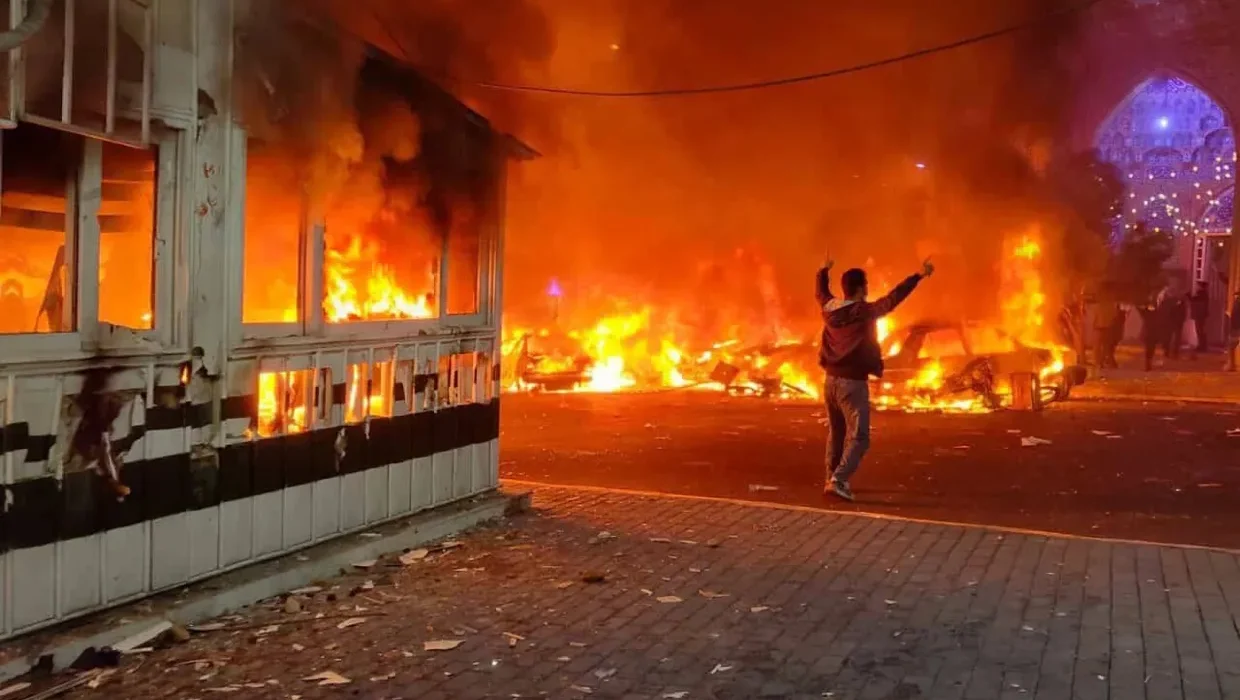
Iran’s top judicial official signaled on Wednesday that authorities plan rapid trials and possible executions for thousands detained in nationwide demonstrations, setting up a direct confrontation with President Donald Trump, who has warned Tehran against hanging protesters as Washington weighs diplomatic, economic, cyber, and military options in response to a crackdown whose death toll is now estimated, by multiple reputable sources, to range from roughly 2,500 to as high as 20,000.
In video distributed by Iranian state media, judiciary chief Gholamhossein Mohseni-Ejei argued for speed in punishing those arrested. “If we want to do a job, we should do it now. If we want to do something, we have to do it quickly,” he said. “If it becomes late, two months, three months later, it doesn’t have the same effect. If we want to do something, we have to do that fast.”

Rooms at the Pathology Institute in Kahrizak, south of Tehran, are crowded with the bodies of protesters. (Used in accordance with Section 27a of the Copyright Law)
President Donald Trump, speaking in an interview aired Tuesday, threatened consequences if Iran carries out executions. “We will take very strong action,” he said. “If they do such a thing, we will take very strong action.” He added, “We don’t want to see what’s happening in Iran happen. And you know, if they want to have protests, that’s one thing, when they start killing thousands of people, and now you’re telling me about hanging—we’ll see how that works out for them. It’s not going to work out good.”
The unrest began in late December as demonstrations over the sharp fall of the rial and soaring prices, then widened into overt anti-government protests across Iran’s 31 provinces, according to the US-based Human Rights Activists News Agency (HRANA). Lower-end figures come from established human rights monitoring groups, including HRANA, which said Wednesday the crackdown has killed at least 2,571 people and led to more than 18,000 detentions, while acknowledging that Iran’s communications restrictions make verification difficult and the true figures could be higher. Official Iranian statements and government-linked media have acknowledged figures in the low thousands, often citing totals in the 2,000–3,000 range, generally combining protesters and security personnel. Opposition-aligned outlets and exile-based media, citing their own investigations, networks inside Iran, hospital information, and video evidence, have claimed much higher numbers, with some estimates putting the death toll at around 12,000 and others suggesting it may reach 20,000 or more.
Iranian officials have framed the protests as foreign-driven violence. Public Security Police chief Seyed Majid Feiz Jafari told state media that police detained hundreds of alleged “thugs” tied to “Israel- and US-affiliated organizations,” and claimed weapons and explosives were seized during arrests. State media have also sought to portray many of the dead as non-protesters caught up in unrest, blaming “rioters” for killings as the government warns citizens to avoid demonstrations.
Human rights organizations dispute the state narrative and say security forces have used lethal force broadly. Michael Page, deputy director of Human Rights Watch’s Middle East and North Africa division, said Iranian authorities have never drawn a real line between peaceful protesters and those accused of violence: “They’ve treated any type of large-scale protest as a threat to their rule and have used force in accordance with that view.”
Give the gift of hope
We practice what we preach:
accurate, fearless journalism. But we can't do it alone.
- On the ground in Gaza, Syria, Israel, Egypt, Pakistan, and more
- Our program trained more than 100 journalists
- Calling out fake news and reporting real facts
- On the ground in Gaza, Syria, Israel, Egypt, Pakistan, and more
- Our program trained more than 100 journalists
- Calling out fake news and reporting real facts
Join us.
Support The Media Line. Save democracy.
The intensity of this crackdown, analysts say, reflects the regime’s fear that the demonstrations have become an existential challenge rather than a contained economic protest. Ali Vaez, Iran project director for the International Crisis Group, said: “The regime felt an existential angst and brought down the iron fist, so I feel this round is probably done. But since the regime can only suppress and not address the underlying causes, it is only buying time until the next round of confrontation between the state and society.”
Videos circulating on social media show protesters shot dead in the streets. (Used in accordance with Section 27a of the Copyright Law)
A central obstacle to outside assessment has been Iran’s communications blackout, which monitoring groups and news organizations describe as severe and prolonged. Independent outage trackers have described the disruption stretching into the past week, with information moving through smuggled devices, satellite links, and intermittent access when authorities allow limited connectivity.
Against that backdrop, Starlink has emerged as a key tool for bypassing state controls. US and regional reporting has described Starlink service functioning inside Iran despite the blackout, while Iranian security services have reportedly searched for terminals and rooftop equipment as part of efforts to cut remaining channels to the outside world.
The domestic crisis is unfolding just months after a major regional escalation. Reporting from US and international outlets has noted that the Trump administration is weighing next steps in the shadow of a June conflict that included US strikes on Iranian nuclear-related sites following a short war launched by Israel, a backdrop that has sharpened Tehran’s claims that Washington and Israel are seeking to destabilize the Islamic Republic.
At the United Nations, Iranian officials have argued that Washington’s statements amount to incitement and threats to sovereignty. Iran’s diplomacy has also emphasized that order is returning and that the state can contain unrest, even as foreign governments warn their citizens about arbitrary detention and the collapse of consular services during a crisis.
Several governments have urged nationals to leave Iran if it is safe, pointing to land exits through Turkey and Armenia as air travel becomes unreliable. These advisories reflect widening concern that the crackdown and the international standoff could produce a new escalation, including retaliatory action by Iran or further Western sanctions.
Behind the scenes, regional partners appear divided over timing and tactics, even where interests overlap. Reporting has said Israeli and Arab officials have advised the Trump administration to delay major strikes for now, arguing that the regime may not be weakened enough for external force to achieve decisive political change and warning that premature action could consolidate support for the government inside Iran. The same reporting described discussions of alternative measures—helping Iranians communicate, tightening sanctions, cyber operations, and more targeted actions—while Gulf states weigh risks to oil markets and their own internal stability.
Internationally, the crisis is also colliding with economic pressure campaigns. Reporting has said President Donald Trump has paired public warnings with new economic measures intended to isolate Tehran’s revenue channels. These steps have prompted criticism from some major trading partners and raised questions about enforcement and spillover effects.
For Iran’s leadership, the immediate priority appears to be deterrence: restoring street control, punishing organizers, and cutting the connective tissue that turns localized anger into a national movement. Mohseni-Ejei’s call for speed signaled that authorities believe delay blunts fear, a logic seen in prior crackdowns but now aimed at a protest wave that has spread geographically and, in many accounts, hardened politically.

Rooms at the Pathology Institute in Kahrizak, south of Tehran, are crowded with the bodies of protesters. (Used in accordance with Section 27a of the Copyright Law)
Still, even analysts skeptical of near-term collapse describe a regime facing deep structural problems—sanctions, inflation, corruption perceptions, and a widening legitimacy gap between the state and a younger population with less attachment to the Islamic Revolution’s promises. Vali Nasr, an Iran expert at Johns Hopkins School of Advanced International Studies, said: “The protests were extremely significant, and even if they dissipate, the anger that they produced has not gone away.”
For Washington, the next move carries high stakes: Calibrate pressure to avoid a regional war, avoid steps that hand Tehran a rally-round-the-flag moment, and decide how far the US is prepared to go to deter mass executions and respond to mass-casualty repression. President Donald Trump’s public posture has been blunt; when asked about “the end game,” he told CBS: “The end game is to win. I like winning.”

