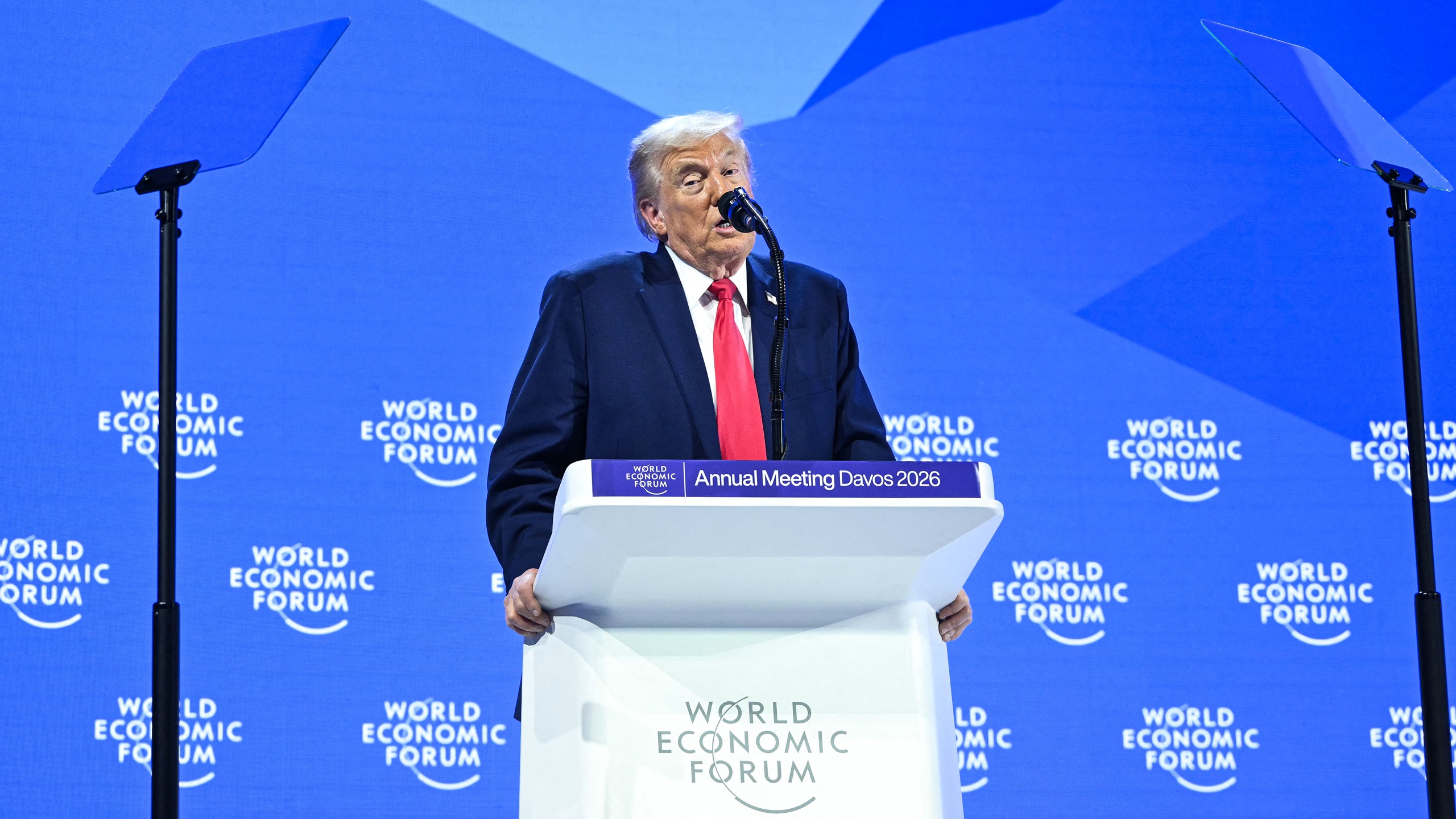
President Trump Gives Iran ‘10-15’ Days To Accept a Deal, Avoid Military Strike
US President Donald Trump warned Thursday that the United States could move toward military action against Iran within 10 to 15 days if negotiations over Tehran’s nuclear program fail to produce an agreement, as Israel raised its own level of preparedness amid growing regional tensions.
Speaking in Washington at the inauguration of the Board of Peace, President Trump said talks with Iran were progressing but stressed that Tehran must reach a “meaningful” deal. He reiterated that Iran “can’t have a nuclear weapon,” saying such a scenario would undermine stability across the Middle East. “You can’t have peace in the Middle East if they have a nuclear weapon,” he added.
President Trump warned of consequences if negotiations collapse. “They must make a deal. If that doesn’t happen … bad things will happen,” he said. He later expanded on the timeline while speaking to reporters aboard Air Force One. “I would think that would be enough time— 10, 15 days, pretty much maximum,” Trump said. “We’re either going to get a deal, or it’s going to be unfortunate for them.”
The president framed the choice for Tehran as alignment with US demands or a sharply different outcome. “Now is the time for Iran to join us on a path that will complete what we’re doing,” President Trump said. “If they join us, that’ll be great. If they don’t join us, that’ll be great too. But it’ll be a very different path.” He added that Iran could not continue to threaten regional stability.
Give the gift of hope
We practice what we preach:
accurate, fearless journalism. But we can't do it alone.
- On the ground in Gaza, Syria, Israel, Egypt, Pakistan, and more
- Our program trained more than 100 journalists
- Calling out fake news and reporting real facts
- On the ground in Gaza, Syria, Israel, Egypt, Pakistan, and more
- Our program trained more than 100 journalists
- Calling out fake news and reporting real facts
Join us.
Support The Media Line. Save democracy.
Trump’s comments came amid a significant US military buildup in the Middle East, which has fueled concerns about the risk of a wider conflict. The president has repeatedly threatened military action against Iran, initially over a deadly crackdown on anti-regime protesters last month that killed thousands, and more recently over the nuclear issue. Until now, he had avoided publicly setting a specific deadline.
The remarks followed a warning from Israeli Prime Minister Benjamin Netanyahu, who said, “If the ayatollahs make a mistake and attack us, they will receive a response they cannot even imagine.”
Separately, officials told Kan news on Thursday that Israel is preparing for the possibility of an attack “within days” and is bracing for a scenario that could escalate into a conflict lasting several weeks.
Indirect US-Iran nuclear talks have been held in two rounds, first in Oman earlier this month and then in Geneva on Tuesday, Feb. 17, with Oman mediating by shuttling messages between the delegations. I
In Geneva, US envoys Steve Witkoff and Jared Kushner held indirect discussions with Iranian Foreign Minister Abbas Araghchi, and both sides signaled progress but did not suggest a deal was imminent, Reuters reported.
After the Geneva meeting, Araghchi said the sides reached a general understanding on “guiding principles” and indicated there were “clear next steps,” according to Reuters. However, Iranian officials pushed back on restrictions on Tehran’s nuclear program as Deputy Foreign Minister Majid Takht-Ravanchi told the BBC that “the issue of zero enrichment” was not on the negotiating table for Iran.
