President Trump Says Washington Will Run Venezuela During Transition
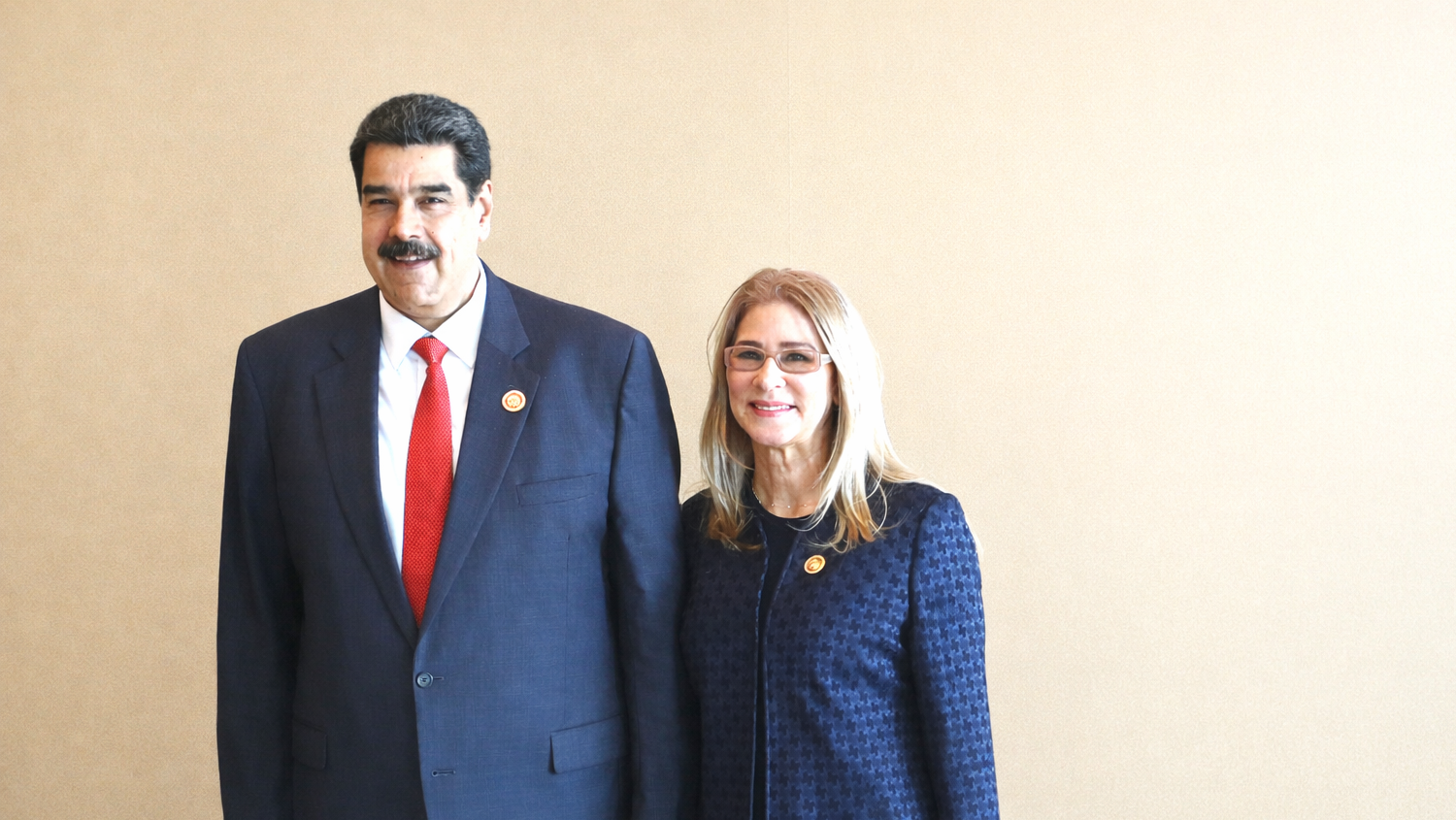
After overnight US airstrikes across Venezuela and the confirmed capture of dictator Nicolás Maduro, President Donald Trump said the United States will assume direct control of the country until what he described as a “safe, proper and judicious transition” can be secured. The announcement marks an unprecedented moment in hemispheric politics, combining regime removal with an openly declared US-led interim administration.
Trump described the operation as an “extraordinary” military assault conducted overnight by air, land and sea, using what he called overwhelming American force. “No nation in the world could achieve what America achieved yesterday,” he said, adding that Venezuelan military capabilities were rendered powerless within hours. He said the operation targeted heavily fortified sites in and around Caracas and was completed without the loss of a single US servicemember or piece of equipment.
In subsequent remarks, Trump explained why Washington intends to remain in control during the immediate aftermath. He said the United States is “going to run” Venezuela for an interim period, arguing that a rapid withdrawal would guarantee chaos and institutional collapse. “If we just left, it has zero chance of ever coming back,” he said, stressing that US involvement would continue until stability and a transition framework are in place.
Operational details were later provided by Gen. Dan Caine, who said the mission—dubbed Operation Absolute Resolve—was the result of months of intelligence gathering and coordination across all branches of the US military, intelligence agencies and law enforcement.
Give the gift of hope
We practice what we preach:
accurate, fearless journalism. But we can't do it alone.
- On the ground in Gaza, Syria, Israel, Egypt, Pakistan, and more
- Our program trained more than 100 journalists
- Calling out fake news and reporting real facts
- On the ground in Gaza, Syria, Israel, Egypt, Pakistan, and more
- Our program trained more than 100 journalists
- Calling out fake news and reporting real facts
Join us.
Support The Media Line. Save democracy.

He described a synchronized extraction involving more than 150 aircraft, with Venezuelan air defense systems dismantled before US forces isolated Maduro’s compound. According to Caine, Maduro and his wife surrendered and were taken into custody before being transferred aboard the USS Iwo Jima.
Trump confirmed that Maduro and his wife now face US justice, saying both have been indicted in the Southern District of New York on narco-terrorism charges. He accused Maduro of overseeing drug trafficking networks and described Venezuela as a major source of narcotics entering the United States. Maduro has long denied those allegations, but Trump said the legal process would now proceed on US soil.
Inside Venezuela, official reactions highlighted the depth of the regime’s collapse. Venezuelan Vice President Delcy Rodríguez, speaking in a national broadcast, accused the United States of launching a “brutal air attack” and admitted authorities did not know Maduro’s whereabouts, demanding immediate proof of life. Shortly afterward, Defense Minister Vladimir Padrino López declared a nationwide state of external emergency and ordered the full mobilization of Venezuela’s armed forces, effectively placing the military at the center of governance.
Colombian President Gustavo Petro published a list of locations reportedly struck during the operation, including Fuerte Tiuna, La Carlota air base, Maiquetía International Airport, and radar and communications systems across several states. While the list was not independently verified, it points to a strategy aimed at establishing full air superiority and paralyzing command-and-control infrastructure.
International reactions reflected sharp geopolitical divisions. China, Russia, Iran and allied militant groups including Hamas condemned the US action, while Brazil, Mexico and Chile urged respect for international law and restraint. Several European governments called for dialogue, while Argentina and Ecuador supported Maduro’s removal as an opportunity for democratic change.
For now, Venezuela enters an uncertain phase defined by military control on the ground and an openly declared US-run interim administration, with the path forward hinging on how long Washington remains in charge and how a political transition is ultimately structured.
