The IRGC’s Economic Lifeline in the World’s Largest Gas Field Comes Under Fire
An oil and gas sector professional who worked on South Pars projects told The Media Line that full reconstruction of the site could take as long as two to three decades.
On Wednesday, Israeli fighter jets struck gas-processing facilities at South Pars, the world’s largest gas reservoir. Images circulating on social media indicate extensive explosions at the site. The Islamic Revolutionary Guard Corps (IRGC), through its engineering arm, Khatam al-Anbiya, serves as a principal executor of numerous gas, oil, and petrochemical projects tied to South Pars and Asaluyeh in southern Iran.
The destruction of these facilities could inflict a major blow on one of the IRGC’s most important economic lifelines.

Gas facilities at South Pars—the development project over the world’s largest gas reserve, for which the IRGC is the principal executor—have come under attack, raising growing concern over the safety of workers and staff there. (Social media)
While some reports suggested that certain personnel had been evacuated earlier over fears of an attack, a local informed source told The Media Line that the majority of workers and staff remain on site. He warned that their lives could be at risk in the event of further strikes, adding that much of the footage circulating online was recorded and shared by South Pars employees themselves.
Fars News Agency, affiliated with the IRGC, reported that “personnel at the targeted facilities have been relocated to a safe area.” Meanwhile, other reports indicated that fires across various phases of the gas installations continued for several hours.
Across the various projects in South Pars, more than 80,000 workers, engineers, specialists, and employees are engaged. It remains unclear how many have been evacuated from these highly sensitive facilities with vast gas reserves. Mizan News Agency, affiliated with the regime’s judiciary, reported that South Pars petrochemical facilities were also attacked on Wednesday afternoon (Tehran time).
Related story: Inside Iran’s Gas Hub, Detained Workers Vanish Into IRGC Facilities
In recent weeks, labor activists have reported the arrest of hundreds of striking workers, allegedly detained in IRGC-owned warehouses under harsh and inhumane conditions, deprived of contact with their families. Due to a near-total communications blackout, it remains unknown whether these workers have since been released.

More than 80,000 people work at South Pars, the hub of Iran’s gas industry. (IRNA)
South Pars—whose development projects are overseen by the IRGC’s Khatam al-Anbiya Construction Headquarters—constitutes the economic heart of Iran’s gas industry. It encompasses the largest gas reservoir in the world, shared with Qatar, and supplies the bulk of Iran’s domestic gas consumption and gas exports. Its production capacity has now reached nearly 10 trillion cubic feet per year.
In addition to meeting domestic demand, this strategic complex exports to Turkey, Armenia, Azerbaijan, Iraq, and other countries. The Persian Gulf Star (Setareh Khalij-e Fars) Refinery, located in Bandar Abbas, processes condensates from South Pars. The IRGC has also served as a principal contractor in this refinery project. In 2016, Khatam al-Anbiya’s commander at the time, Ebadollah Abdollahi, stated that the combined cost of developing phases 13, 22, 23, and 24 of South Pars, along with the Persian Gulf Star Refinery, amounted to $25 billion, with an additional $2.5 billion required for completion.
Give the gift of hope
We practice what we preach:
accurate, fearless journalism. But we can't do it alone.
- On the ground in Gaza, Syria, Israel, Egypt, Pakistan, and more
- Our program trained more than 100 journalists
- Calling out fake news and reporting real facts
- On the ground in Gaza, Syria, Israel, Egypt, Pakistan, and more
- Our program trained more than 100 journalists
- Calling out fake news and reporting real facts
Join us.
Support The Media Line. Save democracy.
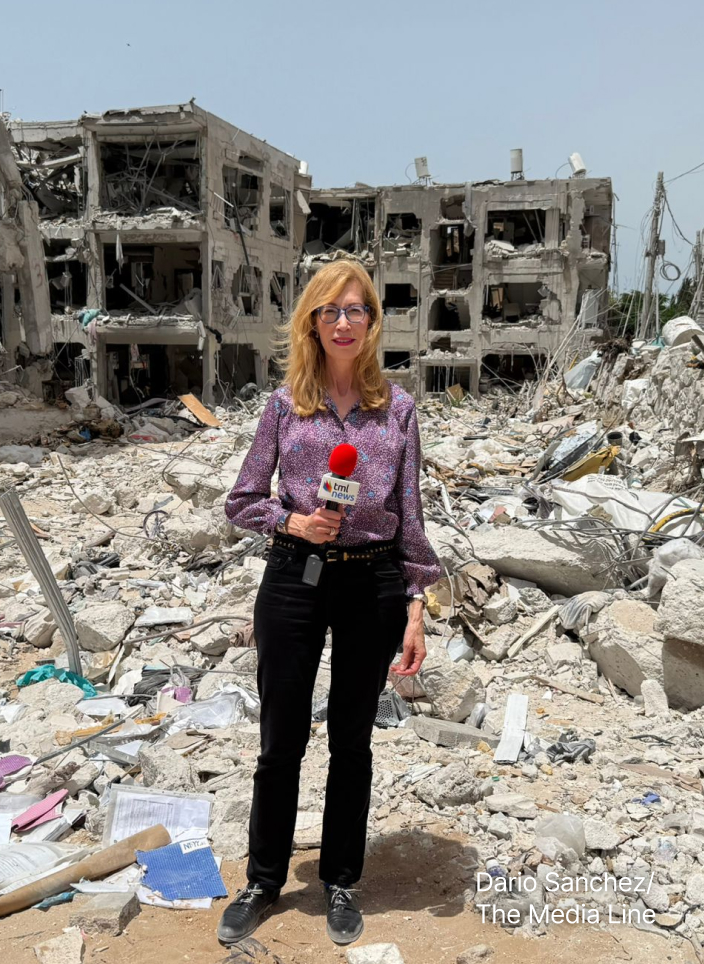
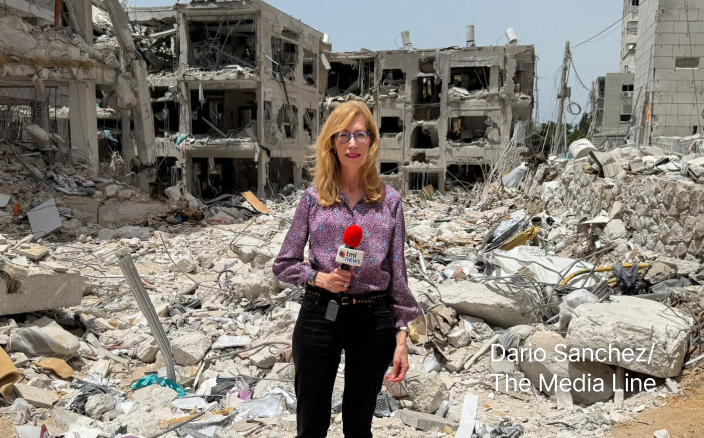
Tina, an oil and gas sector professional who worked on South Pars projects, told The Media Line that the projects were developed over more than two decades under sanctions, relying on domestic expertise and procurement of equipment through the United Arab Emirates.
Following the partial destruction of the complex and the exodus of many specialists, as well as the significantly inflated costs incurred under sanctions, full reconstruction could take years—possibly even two to three decades under current conditions, Tina explained.
The destruction of core facilities at South Pars—Iran’s largest gas hub—has inflicted “immense damage on the country,” Tina said.
According to Israeli media, the strikes on South Pars were carried out in coordination with US President Donald Trump. They say the attack was launched in response to President Trump’s demand that Iran clear naval mines from regional waters and cease threatening maritime traffic in the Strait of Hormuz, and that this demand is ignored, further Iranian energy infrastructure may be targeted.
Amid the Islamic Republic’s continued retaliatory strikes on regional energy infrastructure on Thursday, including attacks on Qatar’s LNG facilities at Ras Laffan and Saudi Arabia’s energy sites, President Trump warned Tehran of devastating consequences while distancing Washington from Israel’s strike on South Pars.
The president claimed that “the United States had no knowledge of this particular attack, and the country of Qatar had absolutely nothing to do with it, and knew nothing about it.” He issued a stark ultimatum, warning that if the regime strikes Qatar again, “the United States of America, with or without the help or approval of Israel, will obliterate the entire South Pars gas field in such a massive way that Iran has never seen or witnessed anything like it before.”
An industrial hygiene specialist told The Media Line that, beyond fires and explosions, the attack on South Pars gas facilities has resulted in the release of toxic gases, placing workers at serious risk. Should these emissions spread across the broader southern region, they could lead to a major environmental disaster.
With growing concern over continued attacks on Iran’s primary gas production hub, the safety of personnel in the area appears increasingly precarious. Previously, following US strikes on military sites on Kharg Island, oil industry workers there had requested evacuation, but their appeals were reportedly rejected by authorities.
Related story: Regime Blocks Technical Staff From Evacuating Kharg Island
In response to the attack on South Pars, the regime’s war command has threatened retaliatory strikes against energy and gas infrastructure in the United Arab Emirates, Saudi Arabia, and Qatar. In the early hours of Thursday, Khatam al-Anbiya headquarters announced it had targeted “oil facilities linked to the United States in the region,” while Qatar reported a fire at Ras Laffan facilities. Doha also issued a warning invoking its right to self-defense and called on the Islamic Republic’s military and security personnel at its embassy in Qatar to leave the country.
As foreign ministers from Arab and Islamic countries convene in Riyadh to discuss the Iran war, Saudi Arabia’s foreign minister, Faisal bin Farhan, has stated that the kingdom reserves the right to respond militarily to Iranian attacks. Should strikes on critical Iranian energy infrastructure intensify, and Iran respond with missile attacks against Gulf states, the conflict risks rapidly engulfing the entire region.
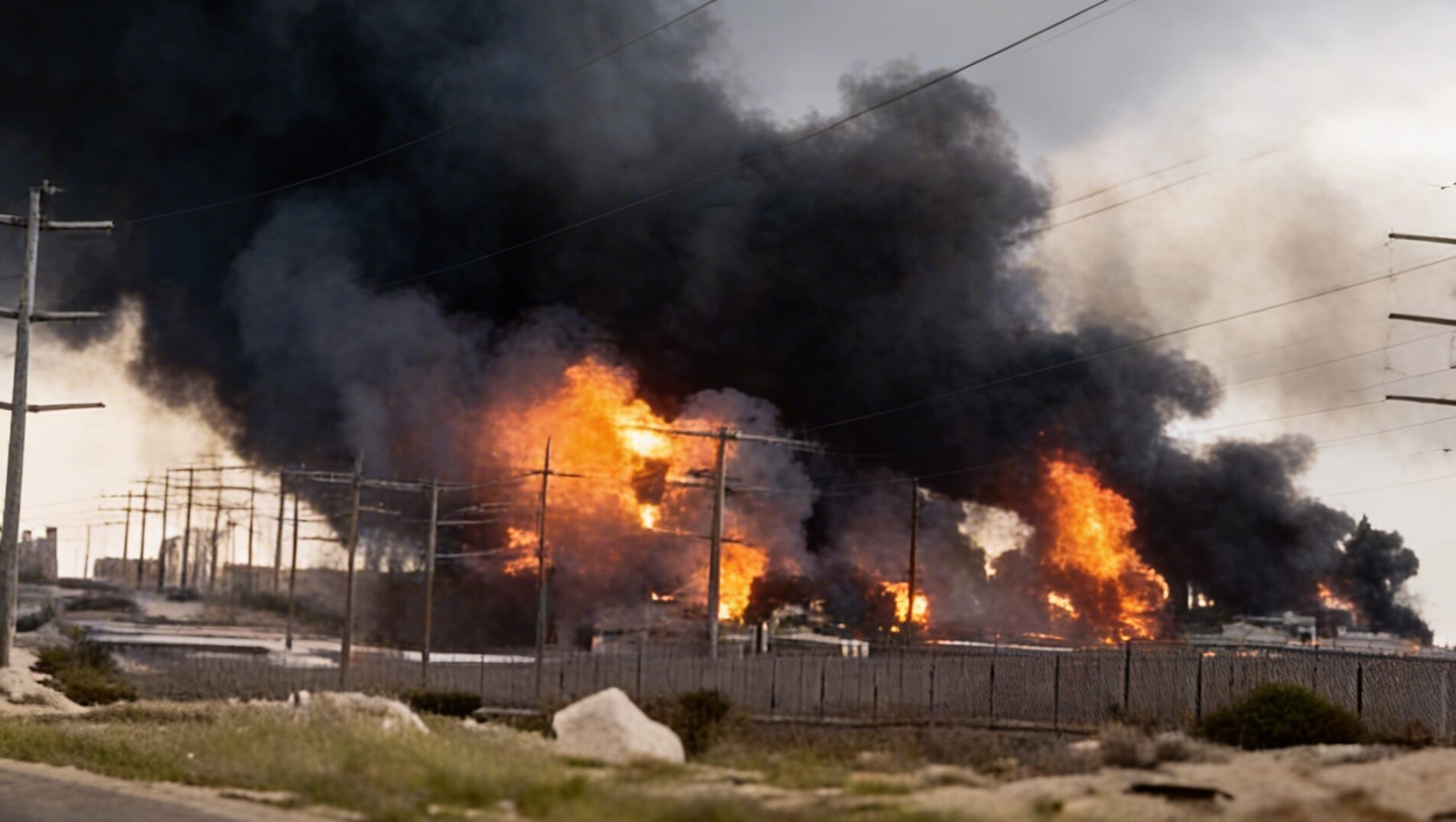
Fires in several areas of South Pars continued for hours. (Social media)
Meanwhile, the Iraqi government has stated that following the attack on South Pars, Iran has halted gas exports to Iraq in order to prioritize domestic consumption. Iraq relies on Iran for more than one-third of its gas supply. At the same time, Kuwait announced the arrest of a second ten-member Hezbollah-linked cell allegedly planning to target critical infrastructure in the country.
According to a gas industry expert, the Israeli strike on South Pars appears to have been primarily a warning operation; core gas-processing facilities may still continue operating, albeit at reduced capacity. This comes as a significant portion of Iran’s electricity generation remains dependent on gas supply.
