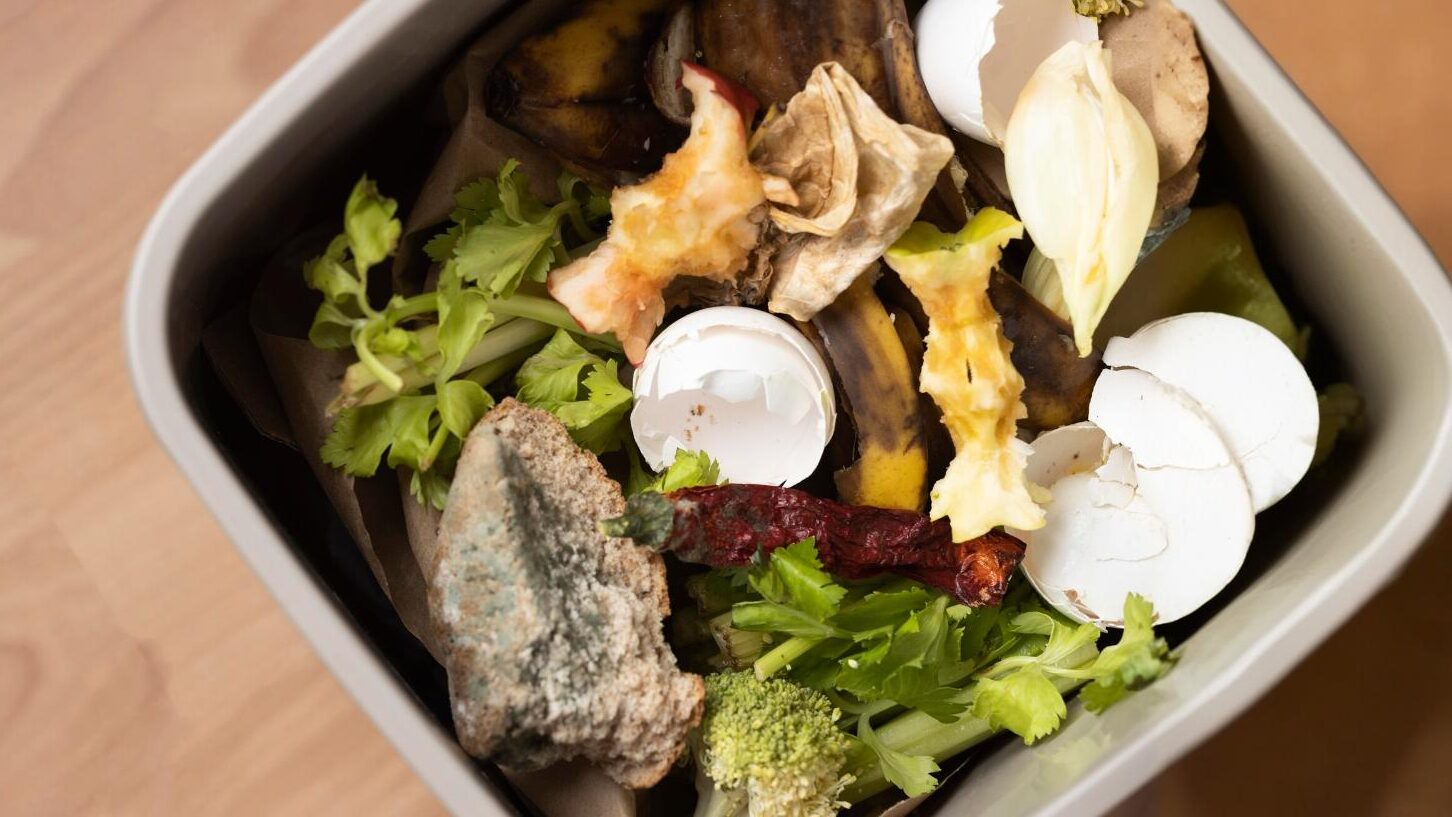
Israel Wasted 2.6 Million Tons of Food in 2023—Nearly Half Was Edible
A new Leket report finds that 1.5 million Israelis face food insecurity as experts urge investment in food rescue to save billions on health and environmental costs
A newly published report on food waste in Israel reveals that 2.6 million tons of food were discarded in 2023—the equivalent of 20% of Israel’s defense budget. Of that amount, 1.2 million tons were edible and could have been saved. The ninth annual Food Waste and Rescue Report, published by Leket Israel and the accounting firm BDO in collaboration with the Health and Environmental Protection ministries, found that 32% of Israel’s agricultural land lies in conflict zones. Farmers were unable to access their fields due to military restrictions and security threats, contributing to decreased supply and higher grocery prices.
This year’s report shows a 1.6 billion shekel increase in food waste due to the war
As a result, 1.5 million Israelis now face food insecurity, which has driven up health-related costs by 5.5 billion shekels, roughly $1.5 billion—plus an additional 4.1 billion shekels in associated economic damage. “This year’s report shows a 1.6 billion shekel increase in food waste due to the war,” Chen Herzog, chief economist at BDO and editor of the report, told The Media Line. “And that waste isn’t just a farmer’s problem—it hits every Israeli, especially the most vulnerable.”
We’re throwing away 2.6 million tons of food a year, while 1.5 million Israelis live in food insecurity. That’s a huge market failure.
Leket Israel’s CEO, Gidi Kroch, says the numbers alone make a strong case for action. “We’re throwing away 2.6 million tons of food a year, while 1.5 million Israelis live in food insecurity. That’s a huge market failure,” he told The Media Line.
Give the gift of hope
We practice what we preach:
accurate, fearless journalism. But we can't do it alone.
- On the ground in Gaza, Syria, Israel, Egypt, Pakistan, and more
- Our program trained more than 100 journalists
- Calling out fake news and reporting real facts
- On the ground in Gaza, Syria, Israel, Egypt, Pakistan, and more
- Our program trained more than 100 journalists
- Calling out fake news and reporting real facts
Join us.
Support The Media Line. Save democracy.


Kroch said the government could address the issue with relatively modest investment. “If the government invests 1 billion shekels in food rescue infrastructure, it would save 5.5 billion shekels in health costs and another 4.1 billion in environmental damages. That’s nearly 10 billion shekels in savings,” he said. “We’re rescuing 30,000 tons of fresh produce annually, but 800,000 tons are being thrown away. We could do so much more if we had more trucks, cold storage, and workers. But right now, we’re just scratching the surface.”
The report emphasized that nearly half of all wasted food was edible and could have been redirected to vulnerable populations. Leket Israel, which rescued 71 million pounds of food last year, is calling on the government to implement a national food rescue strategy. “Food rescue isn’t just charity. It’s smart economics.” Herzog also pointed to a broader impact: as food prices rise and incomes fall, families cut back on healthier foods. “We saw a 6% drop in fruit and vegetable consumption. Malnutrition increased,” he said.
For Israeli farmers like Yossi Naim of Moshav Pri Gan—located just 4 kilometers from Gaza—the war has devastated agricultural production and helped push food prices higher. “Before the war, I farmed 500 dunams. This year, I planted just 94,” he told The Media Line. “Whole fields of cabbage and fennel were left to rot.”
Naim’s story is not unique. Across the country, loss of access to farmland and the departure of agricultural workers led to an estimated loss of 228,000 tons of produce. “This is hitting the farmers directly,” said Herzog. “But it’s also hitting the consumers. Prices went up. And when food prices rise, lower-income families reduce their food consumption, especially healthy food. That deepens food insecurity and malnutrition.”
According to the report, strengthening farmers must also be part of the solution. “This isn’t just about financial logic but about national resilience. Israel is a geopolitical island. If we can’t rely on neighboring countries during wartime to supply us with produce, we need to be self-sufficient,” Herzog explained. During the war, imports from Turkey and Jordan were halted, while foreign workers either left or were barred from entering due to security concerns. “Just in agriculture alone, we’re missing 30,000 to 40,000 workers from Gaza and the West Bank,” he said. “That’s around 30–40% of the workforce.”
The report also documented the environmental toll of food waste, including the loss of natural resources, greenhouse gas emissions from rotting produce, and rising landfill costs. The Ministries of Environmental Protection and Health contributed to the report and are now advocating for an inter-ministerial task force to draft a national food rescue plan. Such a plan would set national benchmarks, define measurable goals, and promote policies to reduce waste across the food supply chain.
“We need structural change,” said Kroch. “Food security isn’t just about access to food. It’s about creating a resilient, sustainable food system that works for everyone. It’s smart economics. It’s national security. And it’s basic human dignity.”
We need more than aspirin. We need a solution.
For farmers like Yossi Naim, systemic reform is a matter of survival. “We’re still waiting for real support from the government,” he said. “What we got at the beginning was just enough to keep our heads above water. But we need more than aspirin. We need a solution.”
