Israeli Medical Genetics Specialist Rethinks Testing After Rare Twin Blood Case
The Brazilian chimerism case is prompting Israeli doctors to ask whether hidden genetic surprises could affect transplant compatibility and prenatal testing decisions
A case in Brazil involving a woman whose blood carried one genetic code while the rest of her tissues carried another has prompted at least one Israeli physician to consider the implications.
Professor Idit Maya, a senior physician and manager of the Nephrogenetic Clinic and Genomic School for Physicians at Rabin Medical Center, told The Media Line that understanding this genetic abnormality is important and could lead to advanced medical processes that prevent transplant rejection without relying heavily on immunosuppressants.
Israel performs hundreds of organ transplants each year, including live kidney transplants. According to the Health Ministry’s National Transplant Center, a total of 656 organ transplants were carried out in 2024. Official figures for the total number of transplants performed in Israel in 2025 have not yet been published.
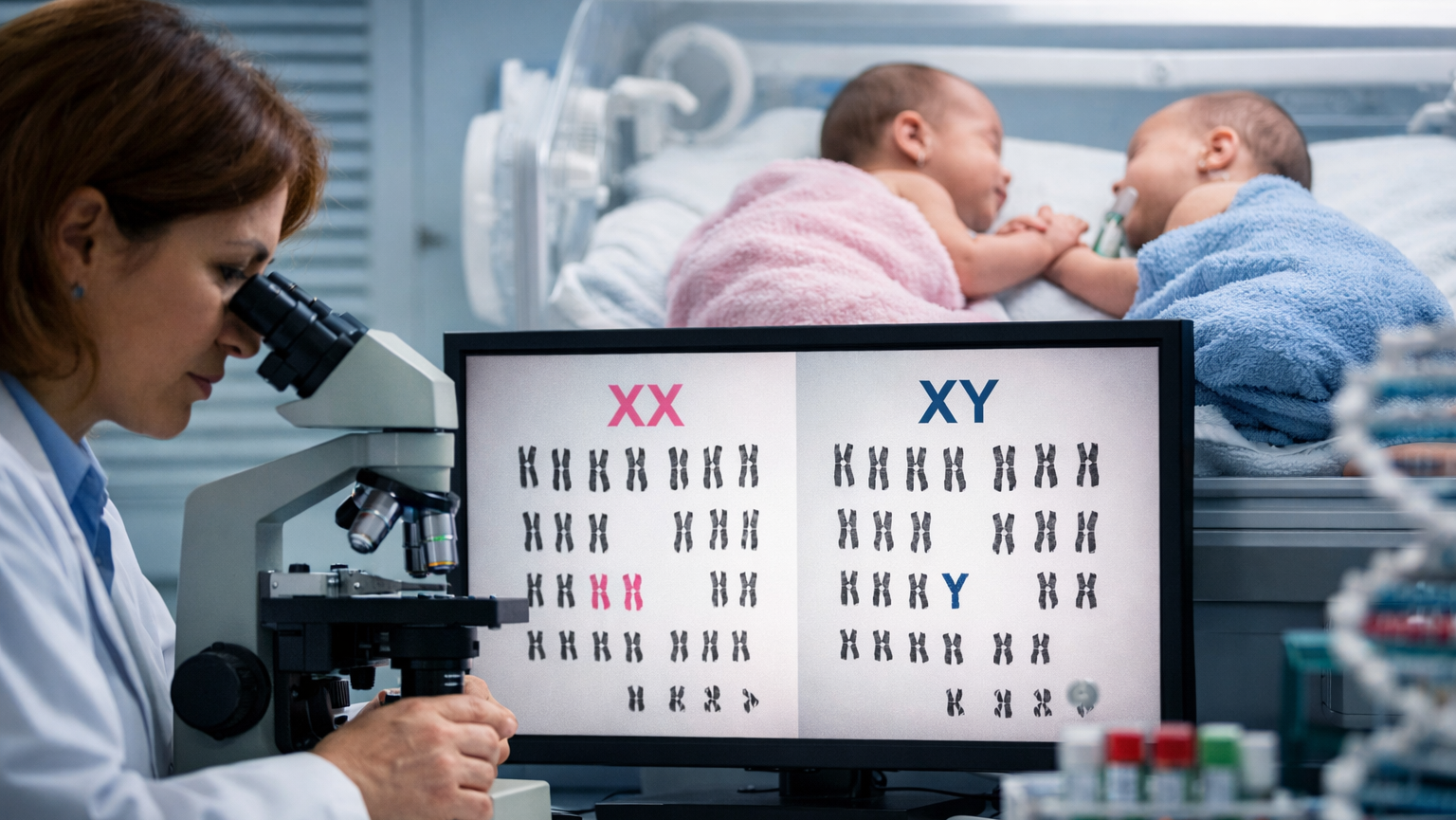
The Brazil case involved a 35-year-old woman whose blood showed male chromosomes, even though she appeared entirely female. After doctors performed a karyotype test, an analysis used to check chromosomes for abnormalities, they found evidence of two distinct genetic lineages in her tissues. This pointed to chimerism, a rare condition in which a single person carries two different sets of DNA, or genomes.
In simple terms, different cells of her body were not genetically identical to each other.
Unusually, doctors ordered the karyotype after only a single early pregnancy loss. But most people never have karyotyping done, Maya said, meaning that cases like this often remain undetected, even in Israel, where genetic testing is relatively available for other reasons.
The woman had typical female anatomy and hormone levels, and reported normal puberty, with regular menstruation beginning at age 13.
Her blood results were male-typical and showed a 46, XY karyotype. In contrast, her skin, buccal, and other cells that were tested carried the usual female chromosomes, 46, XX. Because all tissues originate from the same zygote—the first cell that starts the embryo—doctors generally expect sex-chromosome type to be consistent across blood, skin, and saliva samples.
Chimerism is most commonly expected after a bone marrow transplant, when donor stem cells begin producing blood cells with the donor’s DNA. In this case, though, the woman had never received a transplant. She did, however, have a twin brother, and further evaluation revealed that the specific genetic code in her blood matched his, suggesting her bloodstream was effectively “running” on her brother’s genetic material.
Maya said that, in general, genetic mosaicism is a more likely explanation when an unusual genetic pattern turns up in a blood test. Mosaicism is another rare condition in which not all of a person’s cells are genetically identical, even though they originate from the same original zygote.

Professor Idit Maya. (Shlomi Yosef)
In this situation, some cells may carry an extra chromosome while others do not—a pattern doctors can detect by examining many cells under a microscope (as in karyotyping) or by using more advanced genetic tools. These tests can help identify conditions such as mosaic Down syndrome. In mosaicism, only a portion of the genome differs rather than the entire genomic material. That contrast is part of what made the Brazilian case so unusual.
Maya explained that when male and female twins are conceived, two different zygotes are formed from separate eggs and sperm.
Give the gift of hope
We practice what we preach:
accurate, fearless journalism. But we can't do it alone.
- On the ground in Gaza, Syria, Israel, Egypt, Pakistan, and more
- Our program trained more than 100 journalists
- Calling out fake news and reporting real facts
- On the ground in Gaza, Syria, Israel, Egypt, Pakistan, and more
- Our program trained more than 100 journalists
- Calling out fake news and reporting real facts
Join us.
Support The Media Line. Save democracy.


“They are like two siblings sharing in the same womb,” she said. “They have the same mother and father, so their genomes are 50% similar.”
However, during pregnancy, it can sometimes happen that the twins share a blood supply. In fraternal twins, there are two placentas. Because the space in the womb is limited, those placentas can occasionally connect.
This is like two gas stations, one next to the other, that are delivering all the good things that the mother has to bring to the fetuses. But we know that many times they are connected, they are very close together, and then they can be mixed.
“This is like two gas stations, one next to the other, that are delivering all the good things that the mother has to bring to the fetuses. But we know that many times they are connected, they are very close together, and then they can be mixed,” Maya explained. In the Brazilian case, the male fetus’ stem cells entered the female fetus’ blood stem cell system and apparently took over. The cells implanted themselves in her bone marrow and began producing blood cells. As a result, Maya explained, all of the woman’s tissues came from one zygote with one DNA profile, but her blood cells came from another.
In other words, her body developed as a female, but her blood was genetically tied to her male twin.
The woman lived this way without any complications for 35 years. If she had not miscarried, it is possible she would never have discovered the condition.
“She had nothing outside or inside to say that her blood cells are from her brother,” Maya said.
According to Maya, the Brazilian’s unusual biology could work in her favor if she ever needed a transplant. Under normal circumstances, she would need to take lifelong immunosuppressive drugs to prevent her immune system from rejecting the new organ. Alternatively, in a more recent procedure now done in Israel, she could receive, for example, a kidney transplant alongside a bone marrow transplant from the same donor to develop immune tolerance and potentially eliminate the need for anti-rejection drugs.
She had nothing outside or inside to say that her blood cells are from her brother
In her case, though, the situation might be even simpler, because her blood cells already match her brother’s genetic profile. That kind of built-in match could lower the risk of rejecting an organ from him—possibly without needing the added bone-marrow procedure.
Genetic testing is more common in Israel than in many other countries, mainly because certain inherited diseases—such as Tay-Sachs—are well known in specific communities and because couples often seek screening before planning a pregnancy.
Israel also conducts genetic testing in a small number of specialized laboratories to help establish family relationships, such as parent-child links, for legal or administrative purposes.
One of the most common genetic tests done in Israel is amniocentesis, which analyzes fetal DNA during pregnancy. It is also frequently considered in twin pregnancies, which are relatively common in Israel, in part because of the high rate of in vitro fertilization.
“Many times, we have to make a decision, do we test both if we think they are identical twins? Sometimes we test only one. Why? Because we say it’s the same DNA. Why should we test it?” Maya said.
Many times, we have to make a decision, do we test both if we think they are identical twins? Sometimes we test only one. Why? Because we say it’s the same DNA. Why should we test it?
The case of the Brazilian woman may be one reason to reconsider that approach, according to Maya, suggesting that even when twins appear straightforward on paper, biology can surprise doctors.
Maya explained that there are intrauterine procedures designed to stop extensive blood sharing between twins, because this kind of connection can be harmful. In some cases, she said, one twin may receive too much blood while the other receives too little, making separation medically necessary.
When she read about the Brazilian case, she began to wonder how often similar situations occur without doctors ever knowing.
“Maybe it happens more frequently, and we don’t know,” Maya said.
She added that, with the rapid development of new technologies and diagnostic methods, doctors should be thinking more carefully about what needs to be tested and how many knowledge gaps might still exist that could be addressed.
In the end, shortly after her miscarriage, the Brazilian woman became pregnant again and gave birth to a healthy child.
