Israel’s ‘Traumatech’ Sector Surges as Mental Health Funding Jumps 150%
Matalon noted a shift away from “nice apps” toward evidence-based therapeutics and managed care, along with a move toward not only artificial intelligence but also deeper and more mature technologies
Israel’s “Traumatech” industry saw a 150% increase in funding last year, with $352 million invested compared to $138 million in 2024, according to the updated Mental Health Innovation Map 2026.
The report was released earlier this month at HealthIL Week.
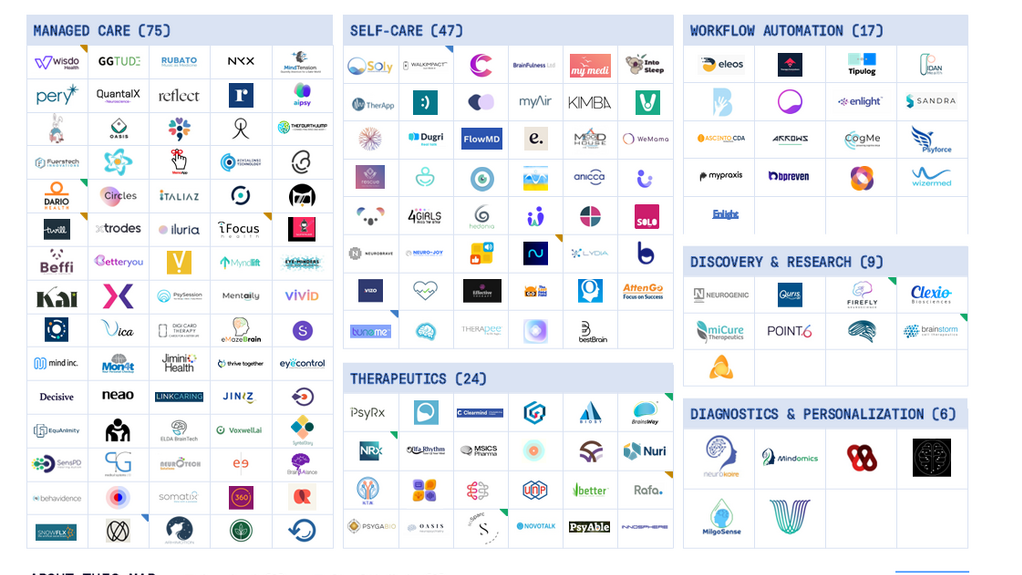
The map, produced by Startup Nation Central, the ICAR Collective, the 8400 Health Network, and Bezyl, highlights 178 companies operating in the field, up from 124 the previous year, marking a 50% increase.
“A lot of companies showed up,” Adi Ostry Matalon told The Media Line. “Mental health is no longer emerging. It’s entering its next phase.”
Mental health is no longer emerging. It’s entering its next phase
A catalyst behind creating the map, Matalon is a leading voice in Israel’s mental health innovation ecosystem, and is currently building a new impact-driven investment vehicle focused on mental health technologies. She said that while total capital increased, the number of investment rounds fell from 20 in 2024 to 13 in 2025. Four large deals, ranging from $45 million to $65 million, played a dominant role. Moreover, the top five health tech companies raised $532 million overall, with three mental health companies accounting for $297 million of that total.
Matalon said this trend reflects growing demand for clinical depth, measurable outcomes, and real-world validation, driven by health systems, regulators, and payers.
The top four companies to receive investments included Syremis Therapeutics ($165 million), a clinical-stage biopharmaceutical company developing novel medicines for mental health; Empathy ($72 million), an Israeli bereavement support company; Eleos ($60 million), which provides AI-powered documentation automation to ease the operational burden on behavioral healthcare providers; and Sensi.AI ($45 million), a company that describes itself as a “24/7 strategic care co-pilot.”
Matalon noted a shift away from “nice apps” toward evidence-based therapeutics and managed care, along with a move toward not only artificial intelligence but also deeper and more mature technologies.
Give the gift of hope
We practice what we preach:
accurate, fearless journalism. But we can't do it alone.
- On the ground in Gaza, Syria, Israel, Egypt, Pakistan, and more
- Our program trained more than 100 journalists
- Calling out fake news and reporting real facts
- On the ground in Gaza, Syria, Israel, Egypt, Pakistan, and more
- Our program trained more than 100 journalists
- Calling out fake news and reporting real facts
Join us.
Support The Media Line. Save democracy.


“It’s more about B rounds and C rounds, which means that the investors really believe in this area,” Matalon said. “It’s really showing confidence in this field.”
It’s more about B rounds and C rounds, which means that the investors really believe in this area. It’s really showing confidence in this field.
She added, “This is really a strategic growth engine. We see more and more investors looking for a solution. The market is huge in Israel, but it’s even more important globally.”
Esther Barak Landes, a local leading investor, philanthropist, and Matalon’s partner, echoed Matalon’s vision.
“What we are looking for is to build an industry of very, very successful ventures,” she told The Media Line.
At the policy level, the American Food and Drug Administration has recently been warming to digital healthcare solutions in mental health, including clearing several prescription digital therapeutics for mental health conditions.
Israel’s Ministry of Health is also working to advance these policies, including integrating digital therapeutics into the public health system and creating funding tracks for these technologies.
“I think these are really important steps, and even more needs to be done in this area,” Matalon said. “When the hospitals and the health funds will pay for digital therapeutics, that will make a really big change for these companies to stay in Israel and scale.”
She added that there is already a shift from B2C to B2G, with more hospitals and organizations willing to adopt new technologies, putting the local industry on the right track.
Still, around 80% of the ecosystem remains in the startup or early development phase, according to the report. The companies are divided into subcategories: managed care (75), self-care (45), therapeutics (24), workflow automation (17), and discovery and research (9).
“Technology is no longer just an enabler, it’s the intervention,” Matalon said. “AI, diagnostics, data-driven personalization, and biologically grounded approaches are shaping entirely new categories in mental health.”
She said, “What’s really unique in Israel, and it’s an advantage, is that we are kind of a beta site. A lot of hospitals are willing to try and research different technologies. It’s not just about building startups and good ideas, but testing them in real time and fast.”
Israel didn’t choose to be a living lab, reality made it one
Matalon said that October 7 brought together many experts and innovators to find solutions.
“It’s something in the Jewish Israeli spirit,” she said, describing a desire to turn tragedy into triumph. At the same time, while Israel has become a “living lab” for testing these treatments and technologies, depression is rapidly increasing worldwide.
According to the World Health Organization, depression affects more than 300 million people, nearly 5% of the global population, based on 2024–2025 estimates.
Matalon concluded, “Israel didn’t choose to be a living lab, reality made it one.”
This report is part of Traumatech, a series developed and created by Maayan Hoffman and debuting on The Media Line. The series explores how Israel is building and exporting breakthrough mental health technologies that can transform life at home and bring hope to communities worldwide.
