UAE’s Groundbreaking Asteroid Belt Mission: A New Era for Space Startups
The United Arab Emirates has announced the Emirates Mission to the Asteroid Belt, a pioneering multi-asteroid tour and landing mission set to spur the development of Emirati space startups
The United Arab Emirates announced on Sunday its pioneering mission, the Emirates Mission to the Asteroid Belt (EMA). This unprecedented multi-asteroid tour and landing mission to the primary asteroid belt is projected to stimulate Emirati space startups.
Innovation and a strong vision built our nation, lie at the heart of human development and form the foundation of our future. We will never cease to look ahead; we will never cease our efforts to develop a brighter future for our young generations.
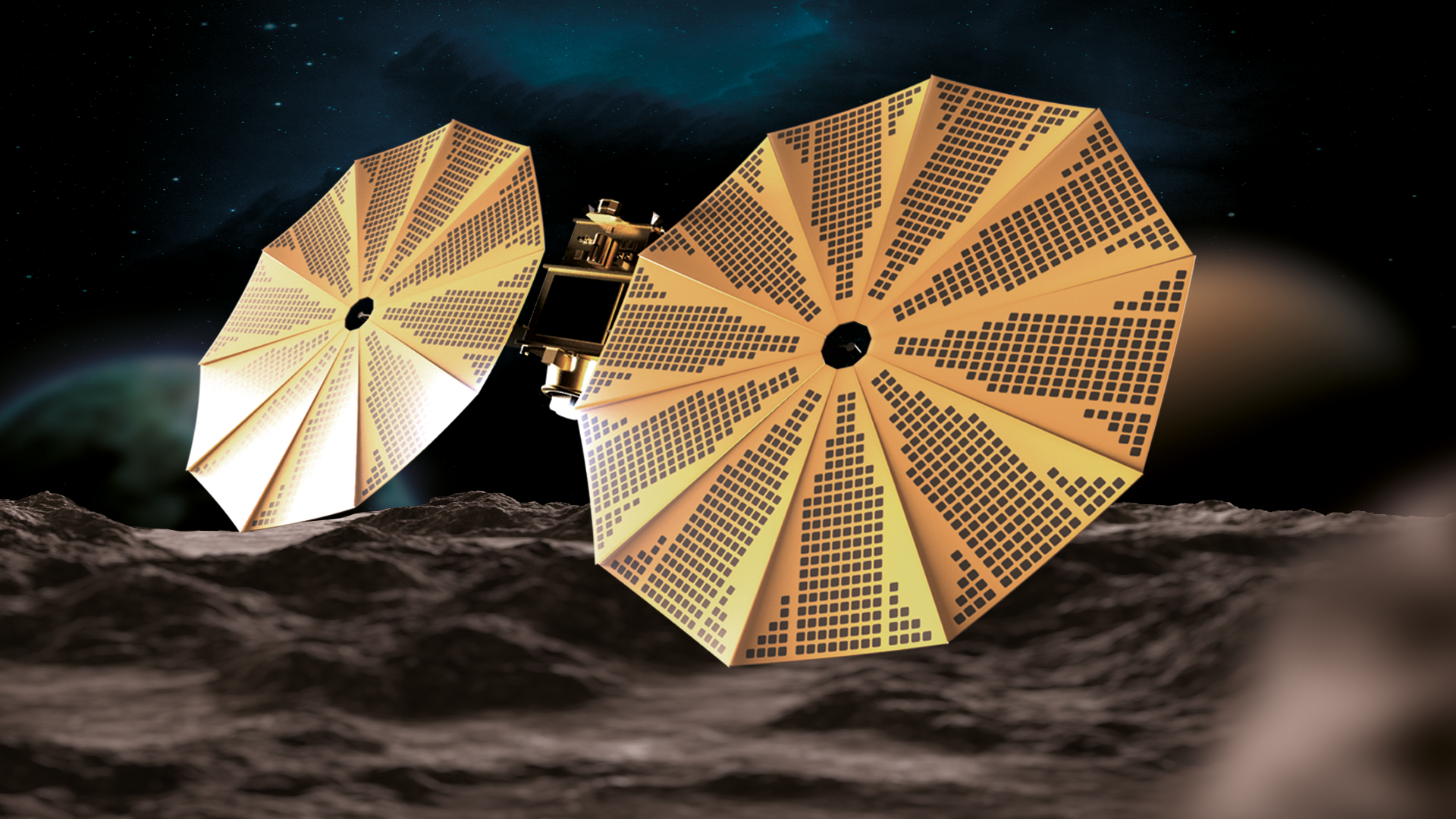
The mission is slated for launch in 2028 and landing in 2030. A three-week launch window has been allocated for the spacecraft, named MBR Explorer in honor of the UAE’s Vice President and Prime Minister Sheikh Mohammed bin Rashid Al Maktoum.
“Innovation and a strong vision built our nation, lie at the heart of human development and form the foundation of our future,” said Al Maktoum. “We will never cease to look ahead; we will never cease our efforts to develop a brighter future for our young generations.”
The mission aims to enhance our understanding of the solar system’s foundation, and the presence and origins of the life-building blocks found in the asteroid belt. Furthermore, it plans to lay the groundwork for potential future resource extraction from asteroids, as outlined by the space agency.
The UAE’s newly announced mission builds on the knowledge gained from the Emirates Mars Mission, launched in 2020. It aims to accelerate the development of the Emirates’ private space sector by empowering national staff.
“Space exploration offers potential economic benefits. Governments and private entities recognize the potential for job creation, technological innovation, and the growth of new industries,” Century Financial’s chief market analyst, Arun Leslie John, told The Media Line.
John explained, “They see space as a sector that can diversify and boost their economies, especially as reliance on traditional industries, such as fossil fuels, may diminish in the future. Space exploration has long been associated with national pride and international prestige.”
Give the gift of hope
We practice what we preach:
accurate, fearless journalism. But we can't do it alone.
- On the ground in Gaza, Syria, Israel, Egypt, Pakistan, and more
- Our program trained more than 100 journalists
- Calling out fake news and reporting real facts
- On the ground in Gaza, Syria, Israel, Egypt, Pakistan, and more
- Our program trained more than 100 journalists
- Calling out fake news and reporting real facts
Join us.
Support The Media Line. Save democracy.


Sarah Al Amiri, the chair of the UAE Space Agency, stated that the EMA is a key component of the UAE National Space Strategy. The overriding goal is the creation of viable and rewarding employment opportunities for young Emiratis for generations to come.
The EMA team comprises individuals who worked on the Emirates Mars Mission. They are now collaborating with a range of partners in the public, private, and educational sectors in the UAE. This ensures a broader impact, particularly on the private space sector’s growth in the Emirates.
Both Saudi Arabia and the UAE are intensifying their space programs for various reasons, including economic diversification, job creation, international collaboration, and space tourism.
“Participating in space missions and collaborating with other countries and space agencies can strengthen diplomatic ties and create opportunities for knowledge exchange and technology transfer. It also positions the UAE and Saudi Arabia as global players in the space industry, attracting foreign investments and partnerships,” John added.
EMA Program Director Mohsen Al Awadhi told The Media Line that the mission leaders were committed to the goal of ensuring over 50% of the contracted mission is placed with private sector companies.
“We offer funding, resources, and business support for Emirati start-ups in the sector. The UAE Space Fund also aims to offer incentives and financial support to international companies operating out of the Emirates,” Al Awadhi said.
The UAE provides a tax-free environment for local and international businesses, with Dubai serving as a center for logistics and supply chains.
“We believe that all of these factors make a compelling case for businesses to use the Emirates as a base to tap into the fast-growing, trillion-dollar opportunity that the global space sector represents,” Al Awadhi explained.
We’re using the Emirates Mars Mission Hope probe as our central spacecraft. … We’re calling EMA a national challenge, and behind it is a national team
The MBR Explorer’s 5-billion-kilometer journey includes gravity-assist maneuvers around Venus, Earth, and Mars to adjust the spacecraft’s velocity and support its flyby campaign. The first flyby is expected in 2030, with subsequent ones to follow through 2034. The spacecraft will then deploy a lander, which will transmit scientific data from the asteroid’s surface, the agency explained.
“We’re using the Emirates Mars Mission Hope probe as our central spacecraft — it’s a platform that has now gained significant heritage in space operations and is an efficient, robust, and agile spacecraft design. We’re traveling 10 times the distance of EMM, with a mission easily five times as complex, so we’re really extending that EMM experience in every way possible. We’re calling EMA a national challenge, and behind it is a national team,” Al Awadhi added.
However, it is expected to have “significant” economic opportunities, including new start-ups, international partnerships, and inward investment in the UAE space sector, which the UAE had an eye on in terms of driving the economy from its space program.
The lander will be developed by an Emirati private space sector startup. Moreover, the Ground Segment and Operations will also be delivered by an Emirati private sector operator.
“The Emirates Mars Mission wasn’t only the first Arab interplanetary mission,” said Al Awadhi. It was also the first deep space mission whose development a key partner to the Emirates space program—the Laboratory for Atmospheric and Space Physics at the University of Colorado Boulder—was responsible for. “We took on a tremendous amount of risk together and the combined EMM team learned a huge amount from that pioneering effort. This time around we have shared heritage and years of experience working together and that gives us confidence, but also the ability to bring in new team members and encompass significant innovation—not only in the way our mission and spacecraft are put together but in the involvement of private sector partners from mission design right through to operations,” said Al Awadhi.
