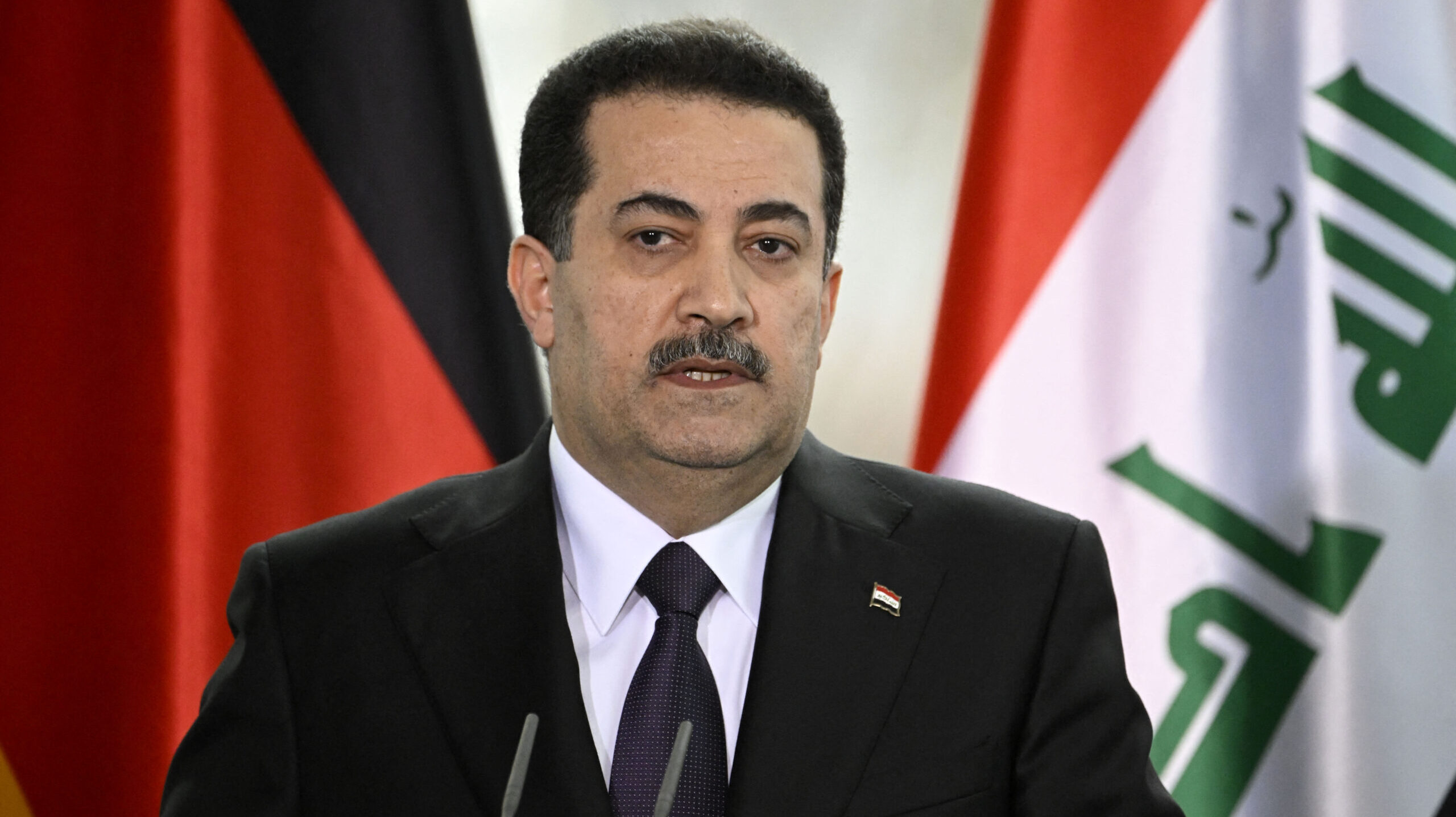
Al-Sudani Orders Dismissals After Fighters Linked to Kataib Hezbollah Kill 2 in Baghdad
Iraq’s prime minister has fired two top militia commanders and ordered prosecutions after an armed assault on a Baghdad government office left two people dead. The July 27 incident, officials say, was carried out by fighters linked to the powerful Kataib Hezbollah faction.
Prime Minister Mohammed Shia’ al-Sudani—who also serves as commander-in-chief of the armed forces—approved the dismissal of the leaders of the Popular Mobilization Forces’ (PMF) 45th and 46th Brigades. A government investigation concluded that elements from those units acted “without orders or authorizations,” opening fire on security personnel and civilians as a new Agriculture Ministry director took office. The clashes killed a security officer and a civilian, and wounded eight members of the security forces.
Give the gift of hope
We practice what we preach:
accurate, fearless journalism. But we can't do it alone.
- On the ground in Gaza, Syria, Israel, Egypt, Pakistan, and more
- Our program trained more than 100 journalists
- Calling out fake news and reporting real facts
- On the ground in Gaza, Syria, Israel, Egypt, Pakistan, and more
- Our program trained more than 100 journalists
- Calling out fake news and reporting real facts
Join us.
Support The Media Line. Save democracy.
Sabah al-Numan, the prime minister’s spokesperson, said the attackers coordinated with the ministry’s former director—already removed from his post over accusations of corruption, document forgery, and contract fraud. Investigators also cited “a leadership and control deficiency within the PMF” as a contributing factor.
The July 27 gunfight erupted at the Agriculture Ministry’s Baghdad office as the incoming director arrived to assume his duties. According to Iraqi security sources, the confrontation quickly escalated, with armed men from the PMF brigades engaging government security in a deadly exchange.
Al-Sudani has referred all individuals implicated in the attack to the judiciary, signaling a rare public crackdown on elements of Iraq’s sprawling paramilitary network, which is nominally under state control but often accused of operating outside the chain of command.
