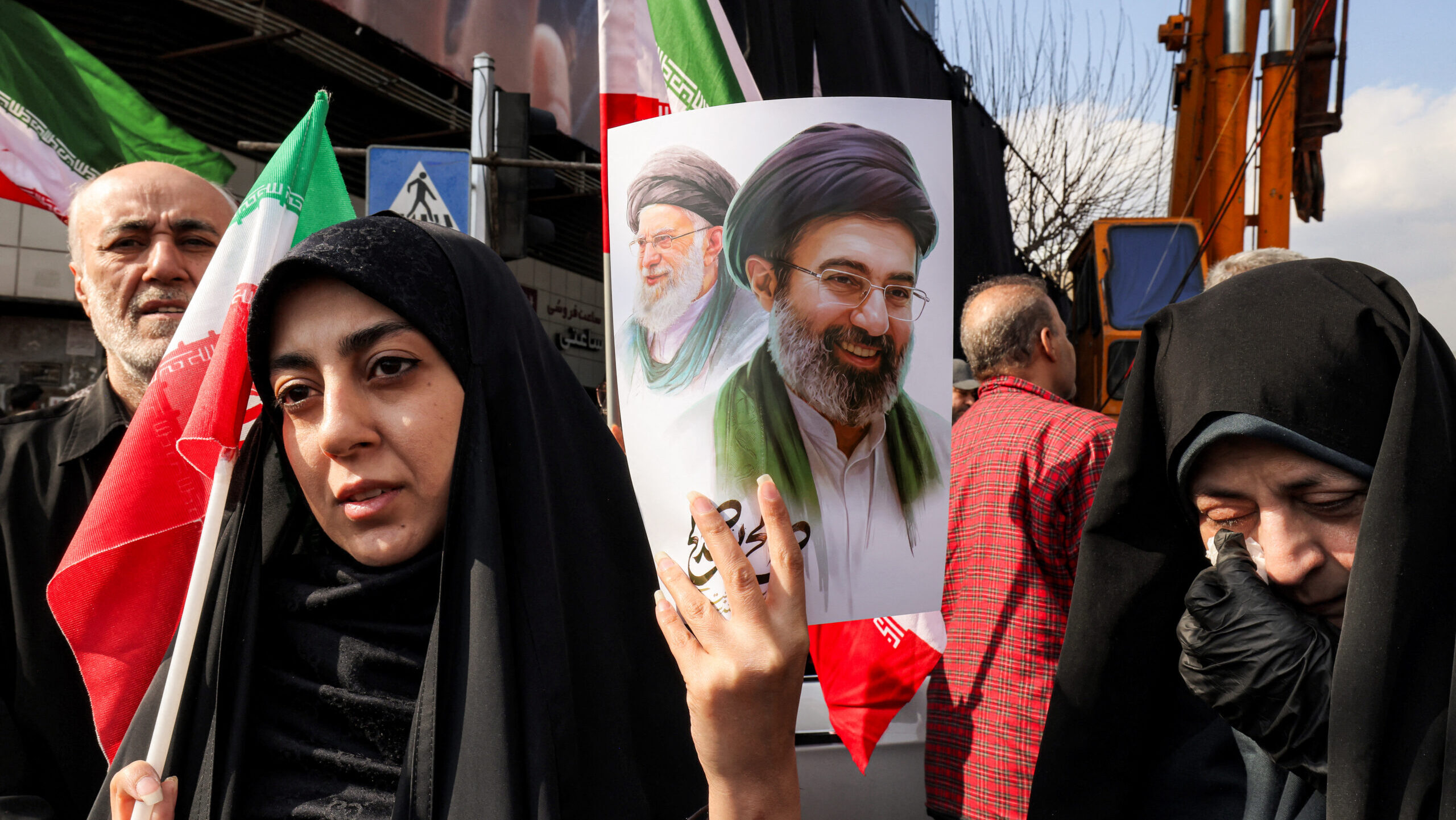
Iran’s New Leader May Be Leading in Name Only
Omid Habibinia reports that more than a month after the strike on the Beit-e Rahbari, the compound housing the Iranian supreme leader’s office and residence, the Islamic Republic still has not provided a clear public account of Mojtaba Khamenei’s condition, even as he has been presented as the regime’s new leader. According to the article, a hospital source told The Media Line that Mojtaba Khamenei remains in an underground intensive care unit with grave injuries that may include the loss of function in one arm, paralysis in a leg, spinal damage, jaw injuries, and trauma to the head and brain.
The result, Habibinia argues, is a bizarre and fragile arrangement in which the man nominally at the top may be physically unable to govern. Public denials from Iranian officials have done little to settle the matter. One lawmaker insisted that “he leads the country’s affairs,” yet the article notes that no senior official has publicly claimed to have met or spoken with him in the past month. State media have also failed to release any images or audio of him, which in Iran’s opaque political culture tends to speak volumes.
Give the gift of hope
We practice what we preach:
accurate, fearless journalism. But we can't do it alone.
- On the ground in Gaza, Syria, Israel, Egypt, Pakistan, and more
- Our program trained more than 100 journalists
- Calling out fake news and reporting real facts
- On the ground in Gaza, Syria, Israel, Egypt, Pakistan, and more
- Our program trained more than 100 journalists
- Calling out fake news and reporting real facts
Join us.
Support The Media Line. Save democracy.


That vacuum appears to have pushed the system deeper into what the article describes as “mosaic command,” an Islamic Revolutionary Guard Corps doctrine meant for existential crises, in which overlapping successors are prepared to act if commanders are killed or communications break down. The problem is obvious enough to drive a truck through: such a system still needs legal authorization from the commander-in-chief, and that commander-in-chief may be absent in all but name.
The article also depicts a widening legitimacy crisis. Several senior Shiite clerics, including Ayatollah Ali al-Sistani and prominent ayatollahs in Qom, are said to reject Mojtaba Khamenei’s religious standing and his claim to the authority required for supreme leadership. Shiite seminarians have reportedly gone further, accusing the Islamic Revolutionary Guard Corps of trying to impose a kind of religious monarchy.
Near the end of his report, Habibinia paints a regime that looks less like a confident state than a wounded machine still running on backup generators. For the full picture of the injuries, the power struggle, and the clerical backlash, read the full article.
