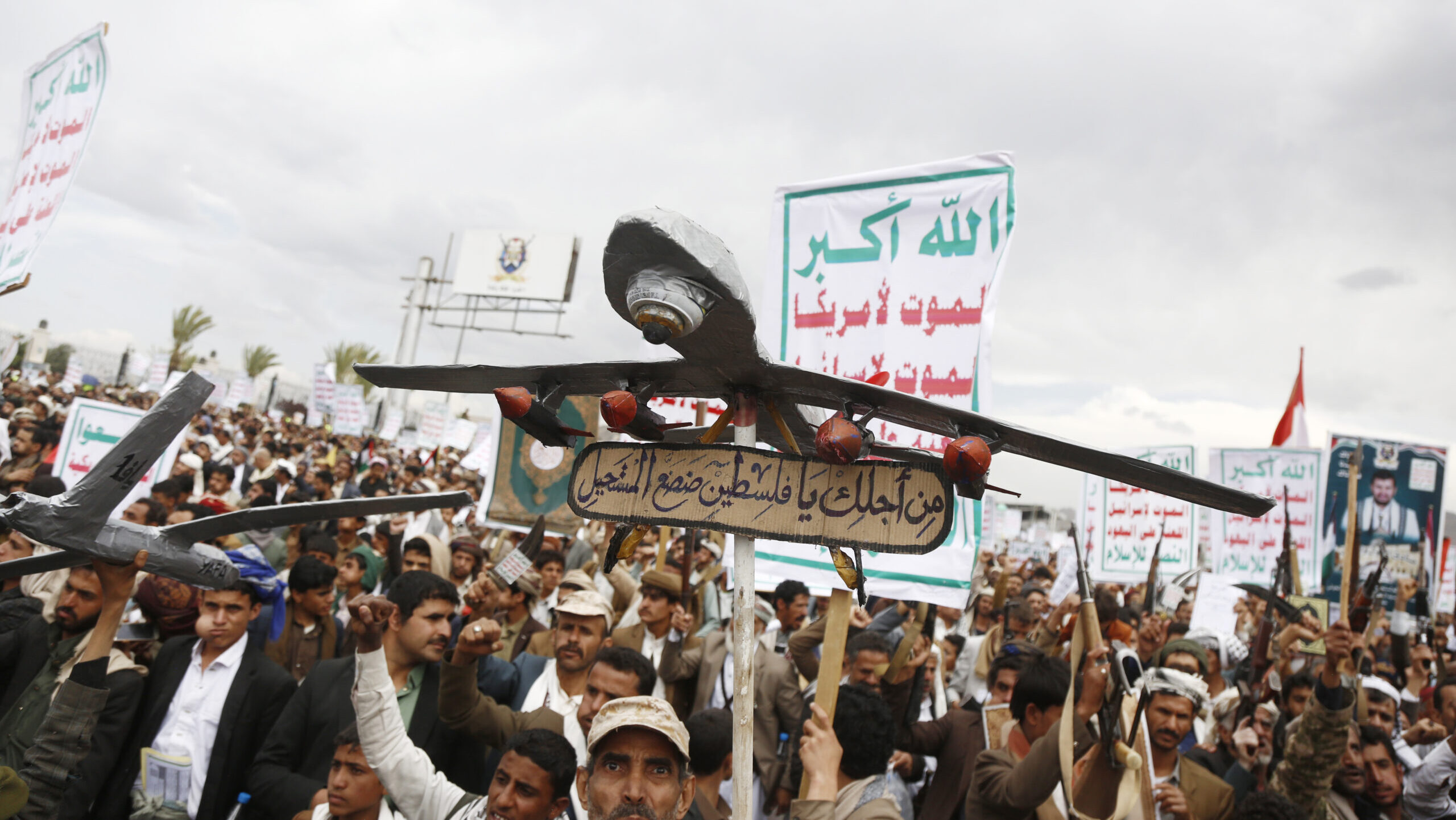
One Cheap Missile, One Billion-Dollar Problem
A Houthi ballistic missile evaded Israeli defense systems Sunday morning and exploded near Ben Gurion Airport, highlighting the growing threat posed by Iran-backed forces in the region. In a detailed report for The Media Line, Gabriel Colodro investigates how Yemen’s Houthi movement—using inexpensive, locally assembled weapons with Iranian components—is forcing the US and its allies to spend billions on defense, disrupting both military strategy and global commerce.
Experts interviewed by Colodro, including retired British Colonel Richard Kemp and analyst Janatan Sayeh, emphasize that this is deliberate asymmetric warfare. The Houthis’ low-cost attacks not only challenge Israel’s and America’s advanced defense systems, but also drain their military budgets and expose critical vulnerabilities. “This is Iran flexing its muscles,” Kemp said, calling the Houthis part of an “Iranian octopus” threatening Western military and economic targets.
Give the gift of hope
We practice what we preach:
accurate, fearless journalism. But we can't do it alone.
- On the ground in Gaza, Syria, Israel, Egypt, Pakistan, and more
- Our program trained more than 100 journalists
- Calling out fake news and reporting real facts
- On the ground in Gaza, Syria, Israel, Egypt, Pakistan, and more
- Our program trained more than 100 journalists
- Calling out fake news and reporting real facts
Join us.
Support The Media Line. Save democracy.


Beyond the battlefield, the attacks have slashed Red Sea and Suez Canal shipping traffic by over 50%, driving up freight costs and harming global energy flows. Analyst Noam Raydan explained that rerouted ships and suspended services are having ripple effects on consumers and oil prices—while countries like Egypt suffer billions in lost canal revenue.
Despite hundreds of Western strikes on Houthi positions, attacks continue. Experts criticize US strategy as insufficient and warn that as long as Iran provides training and material support, the threat won’t vanish. Ground forces are unlikely, but targeted escalation remains on the table.
To understand how the conflict is reshaping the military, economic, and diplomatic landscape in the Middle East, read Gabriel Colodro’s full article at The Media Line.
