For Israel, Regional Cooperation Is Key
Maariv, Israel, May 17
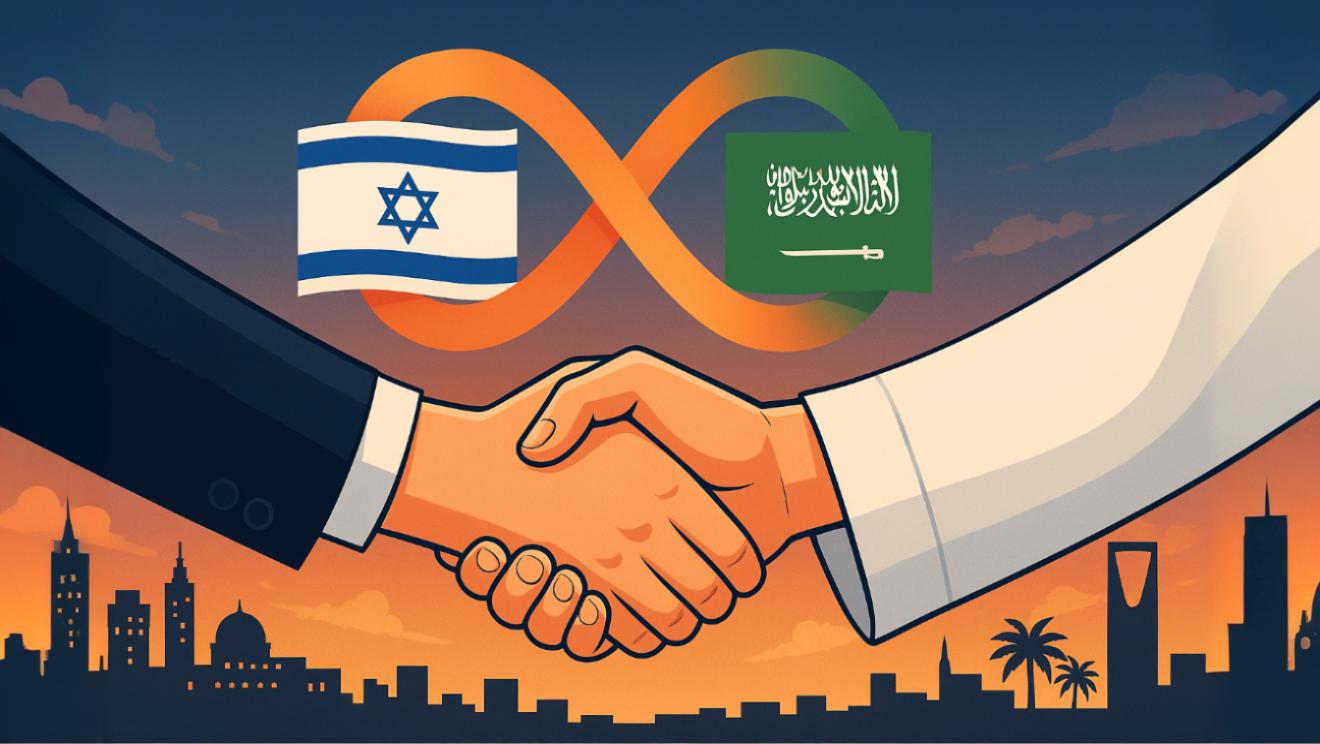
Full normalization between Israel and Saudi Arabia, while undoubtedly desirable, is not currently on the table, at least not in the context of President Donald Trump’s visit to the region.
Saudi Arabia’s formal accession to the Abraham Accords, with all the profound implications it would carry, would mark a historic shift, potentially signaling the effective conclusion of the wider Israeli-Arab conflict.
However, the Saudi position on the Palestinian issue remains a significant political hurdle, one for which the necessary conditions have yet to materialize in either Riyadh or Jerusalem.
This does not imply that Israel should stand on the sidelines of the major regional shifts now underway—on the contrary, it must act decisively.
Israel needs to distance itself from divisive ideas such as envisioning a depopulated Gaza or unilaterally applying sovereignty over all territory from the sea to the Jordan River. Instead, it should articulate a flexible stance on the Palestinian issue—one that avoids rigid political models but opens the door to multiple pathways for engagement.
Such a position could serve practical purposes, enabling Israel, with the backing of the American administration, to participate meaningfully in a broad, inclusive regional initiative that fosters strategic cooperation.
Across the various active fronts in which Israel finds itself engaged, shared interests with key regional players like Saudi Arabia call for collaborative action.
Give the gift of hope
We practice what we preach:
accurate, fearless journalism. But we can't do it alone.
- On the ground in Gaza, Syria, Israel, Egypt, Pakistan, and more
- Our program trained more than 100 journalists
- Calling out fake news and reporting real facts
- On the ground in Gaza, Syria, Israel, Egypt, Pakistan, and more
- Our program trained more than 100 journalists
- Calling out fake news and reporting real facts
Join us.
Support The Media Line. Save democracy.
With Iran, a critical decision point is approaching regarding the prevention of its acquisition of nuclear weapons.
Against the Houthis in Yemen, Israel is limited by geographic distance and a lack of a longstanding operational and intelligence infrastructure, making unilateral action implausible.
The viable solution lies in a comprehensive effort to reinforce the fragmented and weakened forces of Yemen’s legitimate government.
In Syria, members of what is often termed the “stability camp” share a vested interest in containing Turkish President Tayyip Erdoğan’s neo-Ottoman ambitions and offering the nascent Syrian regime alternative avenues for political legitimacy and economic recovery.
In Lebanon, Saudi involvement is already apparent, particularly in efforts to translate Hezbollah’s recent setbacks into tangible political change.
With thoughtful deployment of available resources, it may even be possible to erode Hezbollah’s dominance within the Shiite community and amplify the voices within Lebanon’s small but pivotal Druze population that are not opposed to establishing ties with Israel.
In this realm as well, cooperation with Saudi Arabia and the United Arab Emirates could prove to be a strategic lever of considerable value.
Moreover, it would be wise to seek Saudi assistance in reinforcing long-term relationships with Egypt and Jordan, both of which are currently grappling with economic challenges.
The mutual interest here is clear: to thwart the resurgence of the Muslim Brotherhood and to foster greater regional cohesion.
There is also a pressing need to establish the foundation for coordinated strategic actions among Israel, the United States, Saudi Arabia, and the Emirates that aim to curb Qatari influence in regional affairs.
At this critical juncture, what is required is the adoption of a wide-ranging strategic vision—one that integrates Israel’s military strength into a broader political framework, thereby solidifying its regional standing for years to come.
Eran Lerman (translated by Asaf Zilberfarb)
