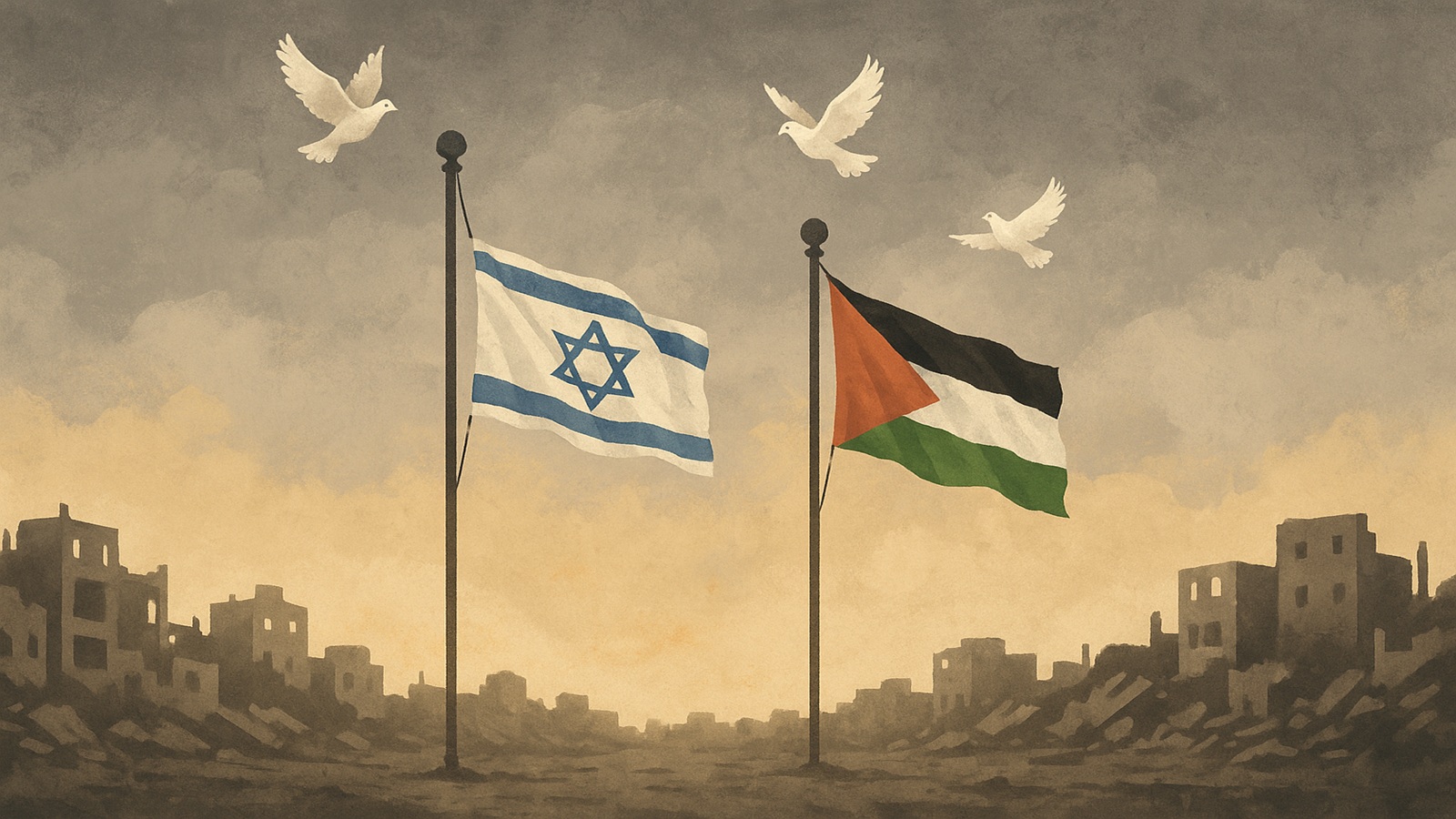
Gaza: The End of the War and Birth of a Tragedy
Asharq Al-Awsat, London, October 11
The atmosphere surrounding the announcement of the agreement between Hamas and Israel was far from optimistic. The world’s weariness was palpable: International fatigue and regional frustration mirrored the grueling and uncertain road toward ending this protracted war, a conflict marked by countless complications and grueling negotiations. This battle has often been likened to one of humanity’s ancient and grinding epics, stretching beyond the boundaries of time.
Yes, the world breathed a collective sigh of relief at the news, and many now wait anxiously for the promised stages of implementation to unfold. Yet relief does not mean recovery. The wounds remain deep, and the so-called symbolic war is far from over. Skirmishes may well persist, testing the durability of this fragile truce.
Still, this long-awaited accord represents a crack in the wall of crisis—one that, even if narrow, has managed to slow the relentless rhythm of conflict between Israel and its surroundings. Throughout the long and troubled history of the Arab-Israeli struggle, lessons have rarely been learned once the guns fall silent. Victories have too often been reduced to linguistic triumphs, while defeats and collapses are reinterpreted into rhetorical justifications.
This latest war is no exception. Let us be candid and grounded in reality: The signing of an agreement does not signal the end of a “military doctrine” entrenched on both sides. It merely ushers in a new phase of complexity and tension, where the challenges ahead may well prove greater than those behind.
Hard lessons must be drawn now, before they are once again buried under politics and pride. The Palestinians must confront the catastrophic consequences of their own strategic and military miscalculations—errors that have brought untold suffering to their people. Many combatants failed to grasp the extent of Israel’s military power and intelligence sophistication.
Both Palestinian and Lebanese factions were stunned by Israel’s formidable capabilities. From the “Al-Aqsa Flood” to the “Support War,” their expectation—as Hezbollah leaders themselves declared—was of a familiar Israeli playbook: targeted assassinations of Hamas and Hezbollah leadership, a cycle of retribution well within historical patterns. But this time, the scale and ferocity of Israel’s response surpassed all precedent.
Give the gift of hope
We practice what we preach:
accurate, fearless journalism. But we can't do it alone.
- On the ground in Gaza, Syria, Israel, Egypt, Pakistan, and more
- Our program trained more than 100 journalists
- Calling out fake news and reporting real facts
- On the ground in Gaza, Syria, Israel, Egypt, Pakistan, and more
- Our program trained more than 100 journalists
- Calling out fake news and reporting real facts
Join us.
Support The Media Line. Save democracy.
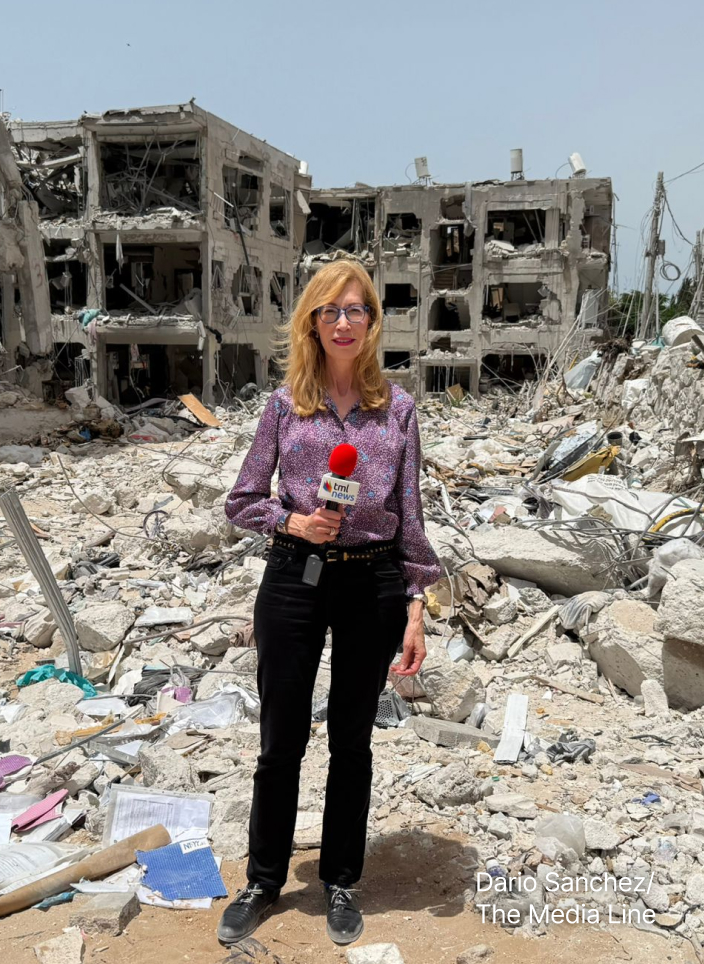
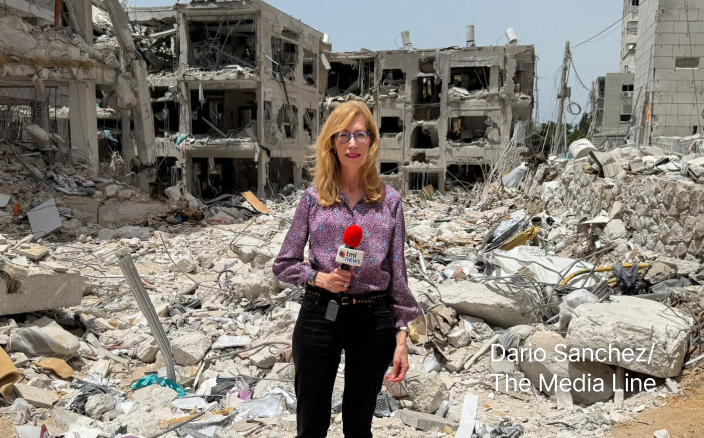
The October 7 attack, intended as a blow against Israel, instead handed it the moral and political leverage to unleash its most devastating campaign yet—violence that, under other circumstances, would never have found international justification.
I believe this agreement calls for two distinct levels of reflection. First, the responsible movements must confront their role in creating this humanitarian catastrophe and take meaningful steps to ensure it never happens again. That can only occur through a profound ideological transformation; through integration into state institutions and a commitment to governance rather than perpetual resistance. Whether such transformation is possible remains doubtful.
Second, there lies a rare opportunity to use this agreement as the foundation for a homegrown political and developmental project in both Lebanon and Palestine. Saudi Arabia’s diplomatic efforts have succeeded in expanding global recognition of the State of Palestine, a success the Palestinians must seize to anchor their future.
Yet daunting internal challenges persist—economic stagnation, humanitarian crises, political division. Without genuine unity among political factions, there can be no stability, no normalcy, and no hope for a just and lasting peace.
The path forward, beyond the signing ceremonies and speeches, is steep and perilous. The post-agreement world is not a time for celebration but for sober reckoning. The new order that emerges must rest on pragmatic political theory, not ideological slogans. The interests of the Palestinian people—not those of factions or external patrons—must be the compass guiding every decision and discussion that follows.
Some Lebanese voices are now calling for their own country to embrace this new regional momentum toward peace. If the Palestinians can sign an agreement, if Syria can negotiate with Israel, why should Lebanon remain on the sidelines? Lebanon, too, must open a dialogue to end the perpetual cycle of destruction caused by its recurring wars with Israel.
Like others in the region, it can pursue its own formula for peace—one that ends decades of bloodshed and explores practical ways to prevent future massacres and wars. Lebanese realism demands acknowledgment of a basic geographic truth: Israel is a neighbor, not a mirage. Just as maritime boundaries have been delineated, new agreements could one day define a path out of crisis and toward mutual stability, protecting the people, their economy, and their infrastructure from endless ruin.
In the end, this agreement marks the beginning of the end of a humanitarian nightmare for the Palestinians, and that alone is momentous. But its true test will be whether it becomes the seed of a genuine political and developmental vision, a long-term project built on reconstruction, unity, and integration with the global wave of emerging nations driving new models of progress.
The challenge now is to think beyond survival, to imagine a post-war future grounded in justice, stability, and the promise of renewal.
Fahad Suleiman Shoqiran (translated by Asaf Zilberfarb)
