Genocide Is a Public Responsibility in Israel
Al-Ahram, Egypt, October 18
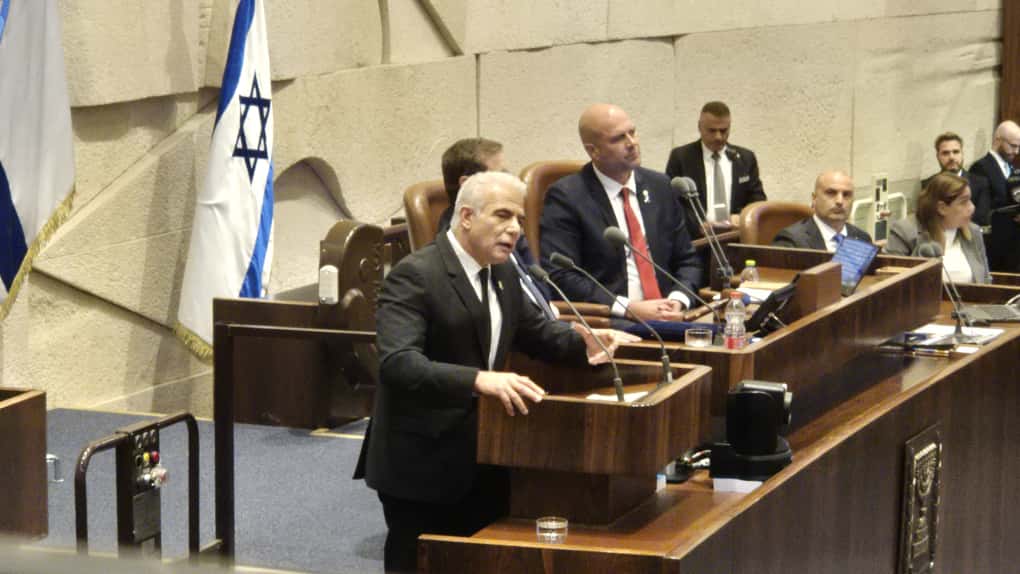
It is worth recalling this striking statement, which, despite its gravity, has received far less attention than it deserves—particularly in international media. During a Knesset session last week, Yair Lapid addressed President Trump directly, saying: “I speak now to all those who opposed Israel over the past two years—in London, Rome, Paris, and at Columbia University. Know that I do not represent the government; I am the leader of the opposition. And yet, I tell you this: You have been deceived. The truth is that there was no genocide and no deliberate war of starvation.”
The weight of these words, coming from the leader of the opposition and met with applause from Knesset members, cannot be overstated. They expose a recurring misconception among many foreign commentators who continue to assign Israel’s horrific acts—in Gaza, the West Bank, Lebanon, Syria, Yemen, Iran, and even Qatar—solely to Prime Minister Benjamin Netanyahu. Many attempt to rationalize or even excuse his role, suggesting that he is merely constrained by the extremists in his coalition.
Give the gift of hope
We practice what we preach:
accurate, fearless journalism. But we can't do it alone.
- On the ground in Gaza, Syria, Israel, Egypt, Pakistan, and more
- Our program trained more than 100 journalists
- Calling out fake news and reporting real facts
- On the ground in Gaza, Syria, Israel, Egypt, Pakistan, and more
- Our program trained more than 100 journalists
- Calling out fake news and reporting real facts
Join us.
Support The Media Line. Save democracy.
Some analyses go further, arguing that Netanyahu prolongs the war intentionally—to shield himself from prosecution and avoid imprisonment, perhaps for the remainder of his life. Yet Lapid’s statement, and the Knesset’s enthusiastic response, reveal a deeper truth: Netanyahu is not acting in isolation. The atrocities committed are not the product of a single leader’s strategy but a collective stance supported across Israel’s political spectrum.
The unity displayed between government and opposition reveals that Israel’s political establishment, regardless of faction, stands together in defiance of a world that has grown increasingly outraged. Global condemnation has intensified to the point of formal recognition of a Palestinian state, widespread demonstrations in major cities and universities, and even protests targeting Israel’s soccer team during matches in European countries long considered among its staunchest allies.
Israel is indeed enduring one of the darkest and most perilous chapters in its history, facing existential threats and unprecedented international scrutiny. Yet it is doing so with a shocking degree of consensus—its leaders, both in power and in opposition, no longer denying or concealing their transgressions, but defending them, rationalizing them, and silencing those who expose them. Journalists are obstructed or killed, and the state no longer seems to care that the world is watching—only that it continues, undeterred, in its chosen path, as though accountability itself were a foreign concept.
Ahmed Abdel-Tawwab (translated by Asaf Zilberfarb)
