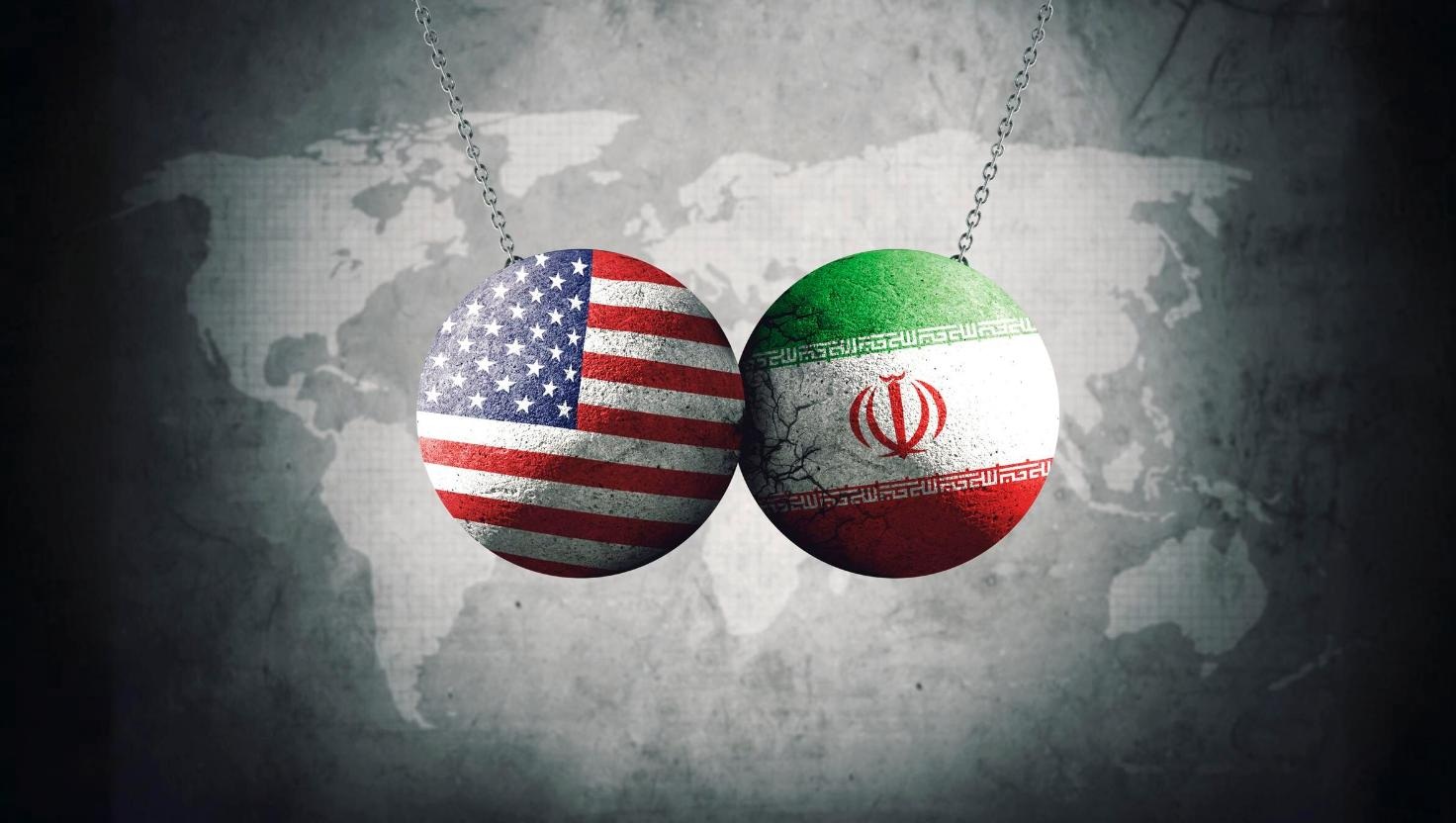
Is the US Getting Closer to Attacking Iran?
Maariv, Israel, April 3
For 20 years, Israel has weighed the option of launching a military strike against Iran’s nuclear facilities. Throughout this period, one of the primary deterrents has been American concern over the potential consequences, particularly the risk of military escalation in the Persian Gulf and the disruption of global energy supplies.
In the early 2000s, these concerns included fears about the impact on oil shipments to the American market itself. By the 2010s, however, as the United States transitioned to energy independence, its vulnerability to such disruptions diminished. Still, Washington continued to oppose Israeli action, largely due to worries about the broader economic fallout—soaring energy prices, global market instability, and the threat to international economic security.
But it wasn’t just Washington that feared such a scenario; Beijing, too, had reasons to worry. China, which imports nearly half of its oil from the Middle East, would face significant disruption in the event of a major conflict. Indeed, one of the lesser-known reasons China supported the 2010 United Nations Security Council sanctions on Iran was its concern that, without such diplomatic pressure, Israel may have attacked Iran, plunging the region into chaos.
However, the geopolitical landscape has shifted dramatically since then. In the 2010s, the United States still viewed China as a potential partner, hoping economic engagement would lead to political liberalization. Today, that view has evaporated. Washington no longer sees Chinese prosperity as aligned with its interests and is actively seeking to decouple economically from Beijing wherever possible.
Give the gift of hope
We practice what we preach:
accurate, fearless journalism. But we can't do it alone.
- On the ground in Gaza, Syria, Israel, Egypt, Pakistan, and more
- Our program trained more than 100 journalists
- Calling out fake news and reporting real facts
- On the ground in Gaza, Syria, Israel, Egypt, Pakistan, and more
- Our program trained more than 100 journalists
- Calling out fake news and reporting real facts
Join us.
Support The Media Line. Save democracy.
In the event of an Israeli strike on Iran’s nuclear facilities, Iran would likely retaliate by escalating tensions in the Persian Gulf, including efforts to disrupt the vital flow of energy through the Strait of Hormuz. This risk becomes even more pronounced if Iranian oil infrastructure is targeted as part of an effort to cripple its economy and undermine the regime’s stability.
The question, then, is how such damage would affect the world’s major powers. For the United States, the fallout would be manageable. While it might experience some impact from rising oil prices and potential knock-on effects in global markets, the damage would be far less severe than in previous decades, thanks to its status as the world’s top oil producer. Moreover, the US could cushion the blow by coordinating with Saudi Arabia to compensate for supply shortfalls. Saudi oil can be exported via the Red Sea, bypassing the Strait of Hormuz entirely.
China, on the other hand, remains dependent on Iranian oil—around 15% of its imports—and would be forced to scramble for alternative sources while drawing on limited reserves. In this light, the Trump administration may view a weakened Chinese economy as a strategic advantage.
Beyond the economic implications, a strike on Iran’s nuclear or energy facilities would bolster America’s strategic posture in the Middle East and complicate China’s efforts to expand its influence in the region. At a time when the Trump administration is pushing for a ceasefire in Ukraine—raising questions about its willingness to use military force—a bold action in the Middle East could help restore American deterrence.
Pulling back from Ukraine risks damaging Washington’s credibility, especially in the eyes of Beijing, which is closely watching for signs of American resolve regarding Taiwan. Demonstrating military readiness in another theater could send a powerful signal.
Indeed, the recent US operation against the Houthis appears to serve precisely this purpose: to balance perceptions and make clear that Washington is prepared to act when vital interests are at stake. In this context, completing the mission in Yemen—and potentially expanding it to include Iran, either directly by the US or through Israeli action with American backing—could serve to reinforce the US position in the region.
A decisive strategic victory in the Middle East would send an unmistakable message to Beijing: The United States remains the dominant security power in the region, and if it is willing to use force there, it will undoubtedly do so to defend Taiwan.
Raphael BenLevi (translated by Asaf Zilberfarb)
