
The Ceasefire Agreement: One Year On
Nida Al Watan, Lebanon, November 15
The ceasefire agreement between Hezbollah and Israel is nearing the end of its first year, existing largely as ink on paper, with none of its provisions meaningfully implemented on the ground. Israel has not halted its military assaults nor reversed its systematic devastation of villages along its northern border, blocking reconstruction and preventing displaced residents from returning.
Hezbollah, for its part, has not honored its commitments to relinquish its arsenal, dismantle its state-within-a-state, and integrate into the Lebanese state as a national actor rather than an Iranian proxy, as required under the agreement it sought after suffering heavy losses in leadership and elite fighters. The clauses the party proudly published on Al-Manar’s website at the time—and subsequently ignored—now stand as evidence against it, particularly its acknowledgment that UN Security Council Resolution 1701 mandates the full implementation of earlier resolutions, including the disarmament of all armed groups in Lebanon. Hezbollah also overlooks the agreement’s stipulation that “the United States will push for indirect negotiations between Israel and Lebanon to reach an agreement on the demarcation of land borders.”
Give the gift of hope
We practice what we preach:
accurate, fearless journalism. But we can't do it alone.
- On the ground in Gaza, Syria, Israel, Egypt, Pakistan, and more
- Our program trained more than 100 journalists
- Calling out fake news and reporting real facts
- On the ground in Gaza, Syria, Israel, Egypt, Pakistan, and more
- Our program trained more than 100 journalists
- Calling out fake news and reporting real facts
Join us.
Support The Media Line. Save democracy.
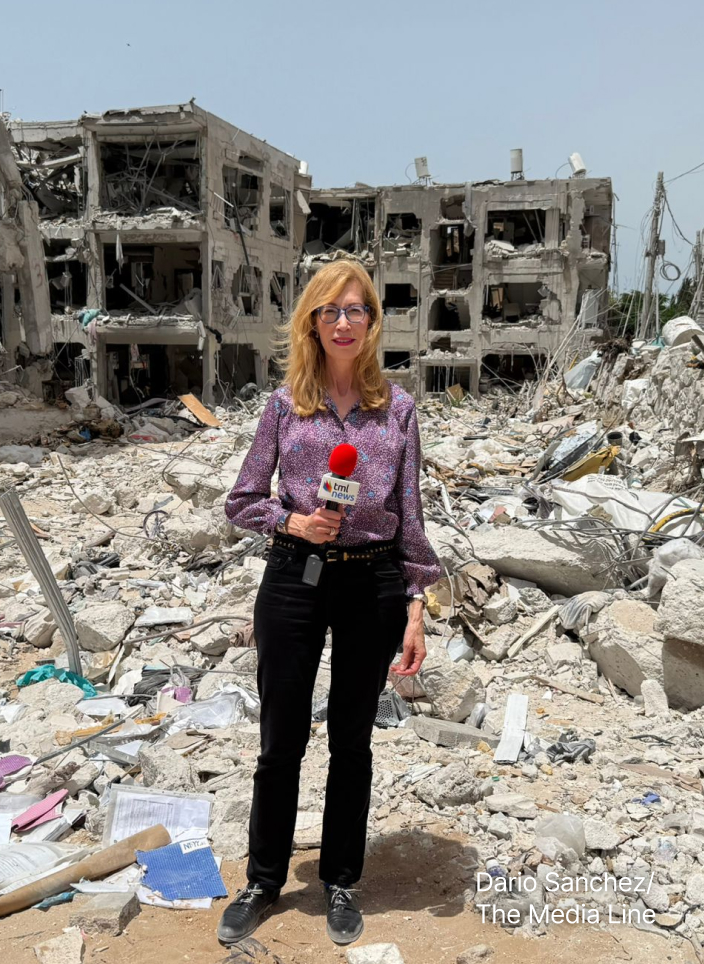
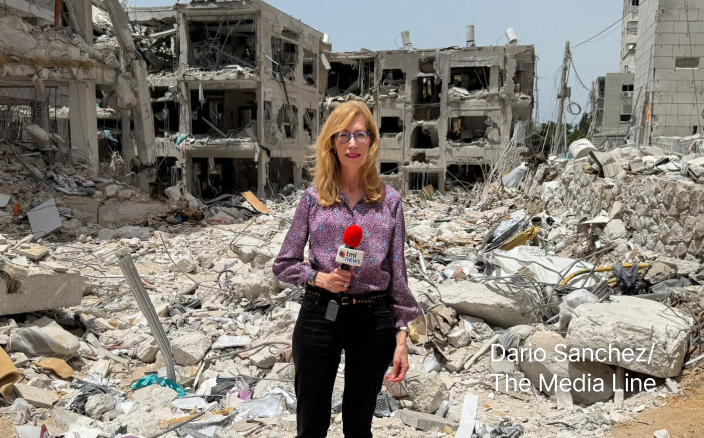
Criticizing the party and its conduct does not, of course, absolve Israel, which continues to behave as though it is immune from accountability, pressing ahead with assassinations and destructive strikes that spare neither civilians nor infrastructure. Yet Israel’s aggression does not erase the fact that Hezbollah itself shares responsibility for Lebanon’s paralysis, perched atop the wreckage of its once-formidable influence and refusing to honestly examine what its reckless war has wrought—an adventure born of poor calculations and an exaggerated sense of power, as if its overriding priority were to preserve its platform and whatever dollars and smuggled weapons might keep it barely afloat.
It is increasingly apparent that both parties, entrenched in their addiction to conflict, have abandoned the agreement in pursuit of their respective strategic wish lists, showing little concern for how their actions block any chance of Lebanon’s recovery, its escape from cascading crises, or the rebuilding of a functional state capable of carrying its burdens and untangling its knots. And while Israel’s efforts to obstruct Lebanon’s revival are unsurprising—after all, it is an adversary, and no one disputes that—Hezbollah’s behavior cannot be dismissed, especially when it frames the handover of its weapons to the state as “humiliation,” using Israel’s targeting of its fighters to justify its obstinacy and insisting that “we are in real existential danger, and we have the right to do anything to protect our existence… and any price is less than the price of surrender.”
Perhaps Hezbollah needs someone to remind it that true humiliation lies in clinging to weapons that cannot even protect its own fighters, that loyalty to a homeland is worth more than subservience to Iran, and that negotiations—however distasteful it claims they are—might secure Lebanon’s land, fortify its borders, and preserve its sovereignty; unless, for the party, pride stands in conflict with sovereignty itself.
Sana Aljak (translated by Asaf Zilberfarb)
