As President Donald Trump spoke of talks with a “senior Iranian official”—whom several media outlets identified as parliamentary speaker Mohammad Bagher Ghalibaf—concern spread among many Iranians that the Islamic Republic might ultimately remain in power.
Iranian authorities, however, have publicly insisted they will not fall into what they describe as a “deception operation” aimed at presenting Ghalibaf as Washington’s preferred figure to lead the country. They have also warned that any ground offensive or seizure of Iranian islands in the Persian Gulf would carry severe regional consequences.
President Trump described these developments as tantamount to regime change in Iran, something that deeply distresses many opponents of the Islamic Republic who seek the overthrow of the regime.
 [1]
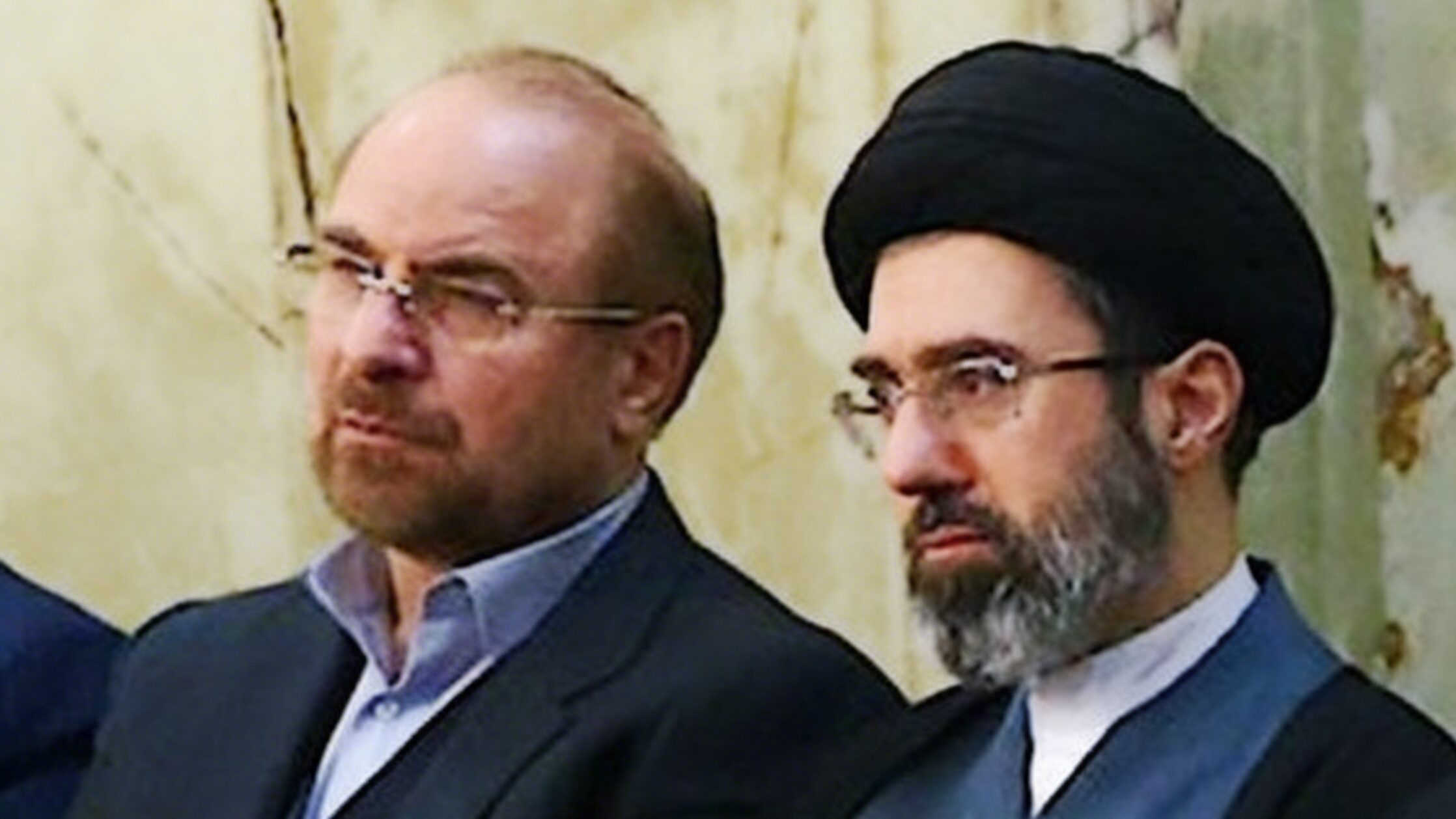
[1]Ghalibaf was Ali Khamenei’s favored IRGC commander and has close ties to Mojtaba Khamenei, the current but absent leader of the Islamic Republic, yet in domestic politics, he is regarded as a loser. (Social media)
His remarks on Monday unsettled part of the opposition, particularly those who had framed Israeli and US military action, echoing Reza Pahlavi, as a form of “humanitarian intervention.” Yet for others, the comments have had the opposite effect, reinforcing calls to intensify domestic efforts to revive a grassroots movement against the regime, regardless of whether Israel and the United States pursue negotiation or escalation with Tehran.
On Tuesday, President Trump reiterated that his administration is negotiating with Iran, that the Islamic Republic wants to reach a deal, and that it is expected to receive a “gift” in return for such an agreement. He also said that the United States is already the winner of this war and stressed that Washington is negotiating with “wise” people in Iran. He even described this development as tantamount to a “regime change” in Iran.
Q: Who is Steve Witkoff speaking with in Iran?
TRUMP: A top person
Q: Who is it?
TRUMP: I can't. I don't want them to be killed pic.twitter.com/lKPy8hdyPL [2]
— Aaron Rupar (@atrupar) March 23, 2026 [3]
Give the gift of hope
We practice what we preach:
accurate, fearless journalism. But we can't do it alone.
- On the ground in Gaza, Syria, Israel, Egypt, Pakistan, and more
- Our program trained more than 100 journalists
- Calling out fake news and reporting real facts
- On the ground in Gaza, Syria, Israel, Egypt, Pakistan, and more
- Our program trained more than 100 journalists
- Calling out fake news and reporting real facts
Join us.
Support The Media Line. Save democracy.
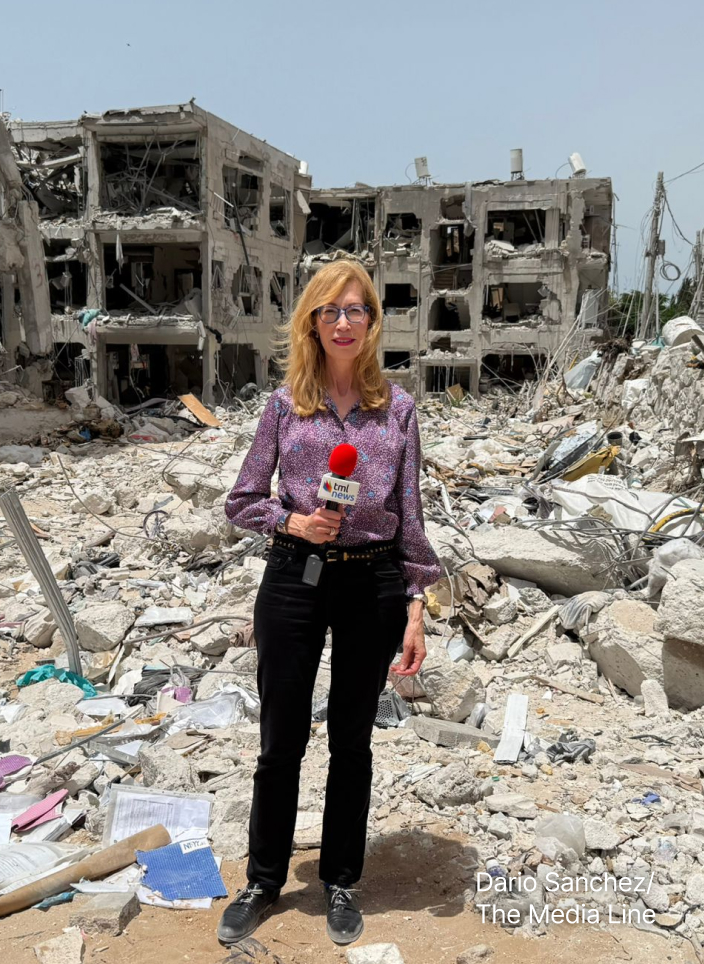
A Tehran-based professor of international relations told The Media Line on Tuesday evening that Washington is clearly reluctant to become entangled in a prolonged, attritional conflict, and that President Trump is keen to declare a political victory as soon as possible. In that context, the emergence of a figure such as Ghalibaf—capable of preserving the internal balance of power while steering the system away from collapse driven by its refusal to compromise with the West—could be framed as a “win-win” outcome.
However, the analyst noted that Trump’s “carrot-and-stick” approach is unlikely to stop at this stage, given that the Islamic Republic’s economic and military capabilities have not yet been sufficiently degraded to produce a decisive political shift.
Since the outset of the conflict, Trump has repeatedly suggested that he has individuals in mind for Iran, drawing comparisons with the Venezuela model. Notably, lists circulated by US officials naming key Iranian figures whose locations were being sought did not include Ghalibaf—nor, more strikingly, Esmail Qaani, the elusive commander of the Quds Force—prompting speculation that the intended interlocutor could be a senior Islamic Revolutionary Guard Corps (IRGC) figure with political standing, such as the parliamentary speaker.
President Trump’s characterization of the person he contacted, namely Ghalibaf, as a “respected” figure stands in sharp contrast to his reputation among many Iranians. Critics portray him as one of the most controversial figures within the political establishment, citing allegations of systemic corruption and his record in security roles.
His tenure as a senior commander in the IRGC and later as police chief coincided with the violent suppression of the 1999 student protests, events witnessed firsthand by me, as I was present at Tehran University dormitories during the crackdown by paramilitary forces, police, Basij units, IRGC personnel, and, ultimately, special security forces linked to the leadership.
Ghalibaf’s proximity to Ali Khamenei—with whom he shares roots in Mashhad—and his close ties to Mojtaba Khamenei have long reinforced his influence within the ruling establishment. Despite this backing, allegations of financial misconduct, particularly during his tenure as Tehran mayor, alongside his security record, have undermined his electoral performance. He finished last in the 2005 presidential election, placed second in 2013 with approximately 16.5% of the vote, and withdrew in 2017 in favor of Ebrahim Raisi.
After repeated presidential defeats, he entered parliament, becoming speaker following low-turnout elections. In the 2024 parliamentary vote, he secured only roughly 447,000 votes out of about eight million eligible voters in the Greater Tehran constituency.
Ghalibaf’s rise traces back to his early association with Khamenei in Mashhad. Following the establishment of the Islamic Republic, he quickly advanced within the IRGC, later heading Khatam al-Anbiya, the Guards’ powerful engineering and economic arm, which expanded its reach across Iran and into regional and international markets. He subsequently commanded the IRGC Air Force and trained in France on Airbus aircraft. Appointed police chief in 2000, he later transitioned into politics, serving as Tehran’s mayor for 12 years before entering parliament.
Related story: The IRGC’s Economic Lifeline in the World’s Largest Gas Field Comes Under Fire [5]
With the killing of key IRGC commanders and the death of Ali Larijani—widely seen as a pragmatic strategist within the system—some analysts argue that conditions may now favor Ghalibaf’s ascent. As more “moderate” figures such as Masoud Pezeshkian are increasingly sidelined, and the IRGC consolidates control, he could emerge as a central power broker.
 [6]
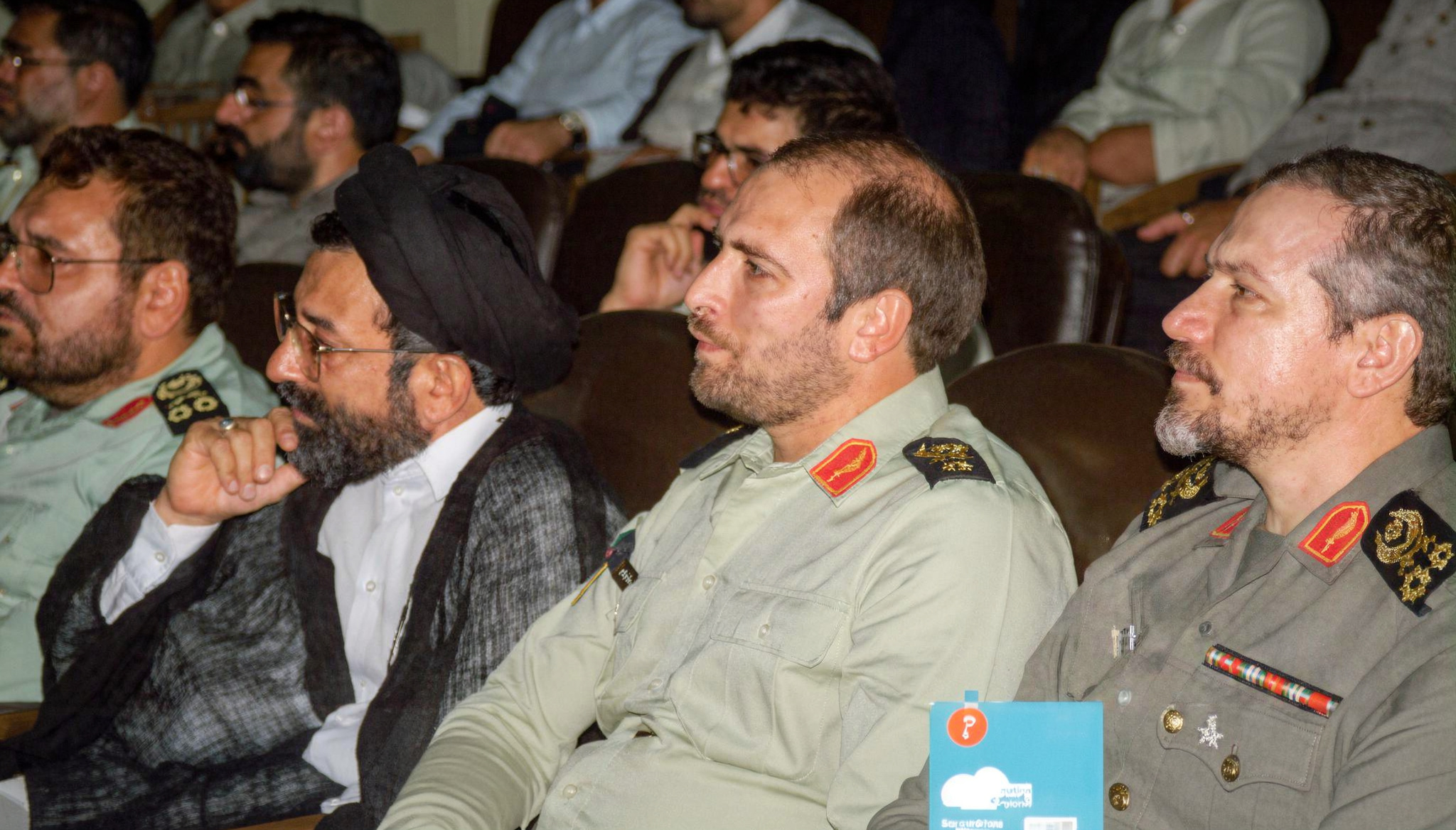
[6]Ghalibaf is virtually the only senior IRGC commander to have remained in a position of power, and for years he has held key posts within the government, including as head of the legislative branch. (IRNA)
Even so, his base of support remains limited beyond the IRGC and segments of the clerical establishment. Among regime supporters, he is often viewed as less popular than Saeed Jalili, the Supreme Leader’s representative on the Supreme National Security Council, who remains at odds with both Pezeshkian and Ghalibaf.
1/ Iranian people demand complete and remorseful punishment of the aggressors.
All Irainan officials stand firmly behind their supreme leader and people until this goal is achieved.— محمدباقر قالیباف | MB Ghalibaf (@mb_ghalibaf) March 23, 2026 [8]
Reports of direct US contacts with Ghalibaf remain speculative, while confirmed diplomatic engagement appears confined to the Iranian Foreign Ministry and to indirect channels. Iranian officials, including Ghalibaf himself, have denied any planned meeting. The IRGC-affiliated Fars News Agency has described the rumors as an attempt to deepen internal divisions.
At the same time, the White House has confirmed that Asim Munir, Pakistan’s army chief, and Pakistan’s prime minister, Shehbaz Sharif, have signaled readiness to facilitate high-level talks between Washington and Tehran. Iranian state media on Tuesday reiterated claims that reports of a potential meeting between Ghalibaf and US officials are intended both to damage his standing and to pave the way for his political removal, while also serving as part of a broader deception strategy ahead of possible escalation.
Meanwhile, the United States is reportedly deploying additional forces to the region, including Marine units, and, according to some news sources, the Pentagon is considering sending elements of the 82nd Airborne Division. Such forces could be used in operations to secure the Strait of Hormuz or even seize strategic islands such as Kharg—scenarios that would mark a dramatic escalation of the conflict.
The Media Line has previously reported, citing sources and an alleged audio recording attributed to a Basij commander in Tehran, that regime forces are preparing for the possibility of ground combat extending even into the capital.
Related story: Fear Spreads Through Basij and Revolutionary Guard Ranks in Tehran [9]
While many homes in the capital have been damaged and hundreds of thousands of people have been displaced, people are increasingly concerned about the intensifying war and the possible disruption of water, electricity, and gas supplies. Even so, many residents say they do not expect the war to end with the survival of the Islamic Republic in power.
A resident of Isfahan told The Media Line on Tuesday that if reports of a deal involving Ghalibaf were true, many Iranians would feel “deceived and abandoned—moving from one dictatorship to another.” He added that after thousands of civilian casualties and extensive damage to infrastructure, any outcome short of fundamental political change, beyond leadership reshuffles within the system, would bring little tangible benefit to ordinary citizens.