
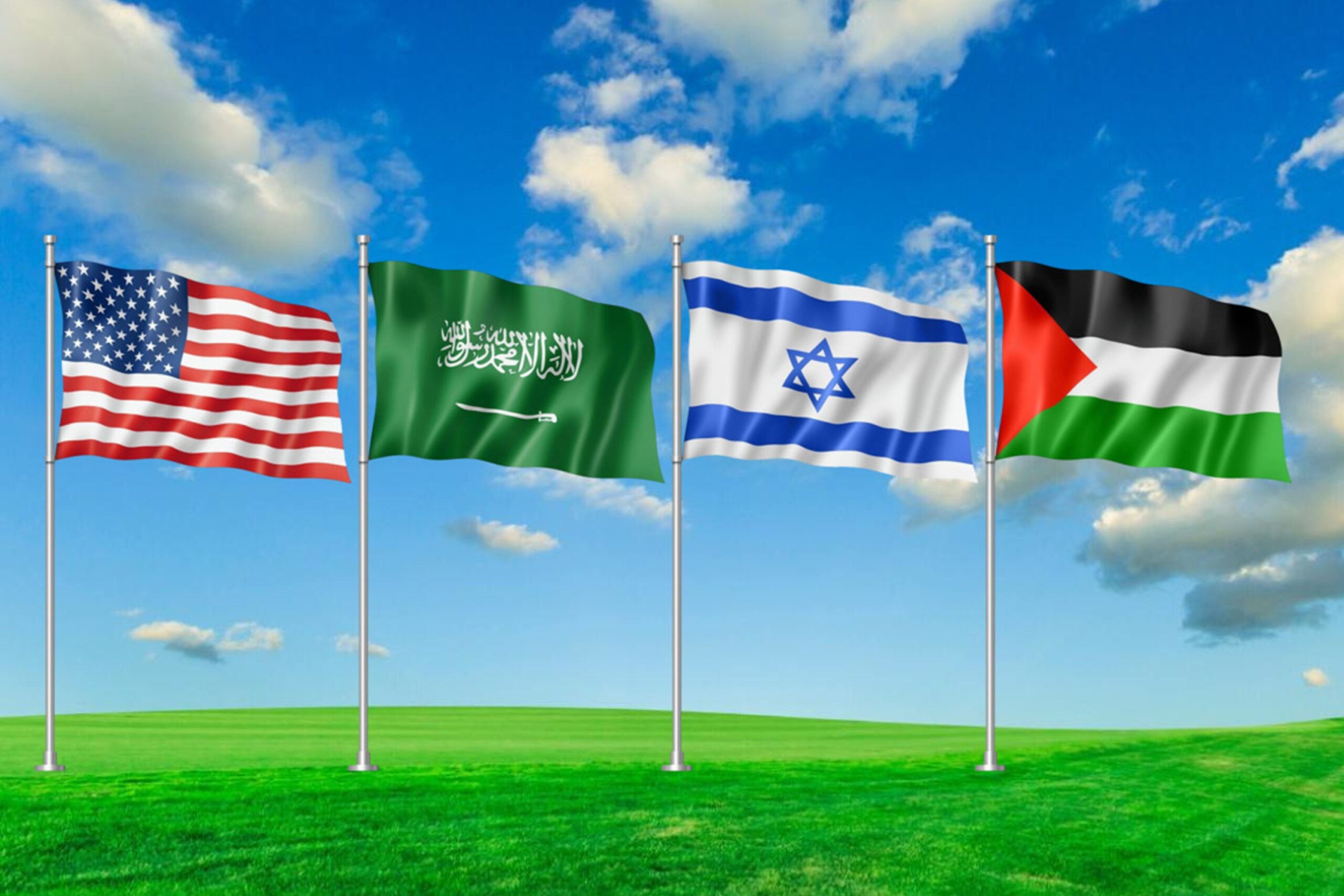
OPINION – ‘Defense Guarantees Must Be Enshrined in a Treaty’ as Riyadh Links Deal to Palestinian Statehood
Saudi negotiators push for a Senate-approved pact with Washington while insisting that any path to normalization with Israel depends on concrete steps toward a Palestinian state
Saudi Arabia and the United States are on the verge of signing a defense agreement that could redefine the strategic landscape of the Middle East. Crown Prince Mohammed bin Salman’s upcoming visit to Washington is expected to be pivotal, with both sides finalizing details to expand military and intelligence cooperation to new levels. The pact is projected to include advanced arms sales—such as F-35 fighter jets, state-of-the-art air defense systems, intelligence platforms, and a mutual defense commitment modeled on the US–Qatar agreement. According to a source familiar with the negotiations in Riyadh, the Saudi side has insisted that any defense guarantees be enshrined in a formal treaty approved by the US Senate, ensuring protection against policy shifts in Washington.
Saudi officials have made clear that normalization with Israel remains strictly conditional on the establishment of an independent Palestinian state with East Jerusalem as its capital. As a senior Saudi official in the Royal Court explained, Riyadh refuses to be seen as a junior partner in the Abraham Accords and will not proceed with normalization absent irreversible steps toward Palestinian statehood. Negotiators have also rejected symbolic gestures toward Israel, emphasizing that diplomatic progress depends entirely on tangible advancements on the Palestinian issue.
The defense pact is expected to generate major investments in both countries and further cement Saudi Arabia’s role as a central partner in regional security and economic growth. A well-informed source in Riyadh noted that the agreement will accelerate the transfer of critical defense technologies and fast-track procurement of advanced American weapons, supporting Saudi Arabia’s Vision 2030 goals. The pact is framed as a strategic necessity, given concerns over the durability of US commitments and the volatility of regional threats, especially from Iran’s proxies and other unconventional warfare tactics.
Give the gift of hope
We practice what we preach:
accurate, fearless journalism. But we can't do it alone.
- On the ground in Gaza, Syria, Israel, Egypt, Pakistan, and more
- Our program trained more than 100 journalists
- Calling out fake news and reporting real facts
- On the ground in Gaza, Syria, Israel, Egypt, Pakistan, and more
- Our program trained more than 100 journalists
- Calling out fake news and reporting real facts
Join us.
Support The Media Line. Save democracy.

According to a Saudi official, the kingdom is closely monitoring its recent mutual defense arrangement with Pakistan, which has set a precedent for extended deterrence and collective security in the region. This model is shaping Saudi expectations for the US pact, particularly regarding response mechanisms to external threats. In addition, a source in the Saudi Ministry of Defense said the agreement will prioritize the localization of military production, aiming to raise domestic defense manufacturing to 25% by 2030.
On the American side, Washington seeks to leverage the pact to limit Saudi Arabia’s strategic engagements with China and Russia, maintain US primacy in the Gulf, and counter Iranian influence in the air and maritime domains. US officials are also pressing for Saudi normalization with Israel as part of a broader regional security architecture, though Saudi policymakers remain steadfast in their conditions.
Despite the potential for deeper cooperation, Saudi Arabia remains wary of US disengagement and shifting politics in Washington. According to a source close to the Saudi leadership, Riyadh doubts whether the United States can fully deliver on its defense commitments in the Gulf, given the complex threats posed by non-state actors and the region’s volatility. The kingdom’s position is clear: normalization with Israel will be considered only after the realization of Palestinian statehood, and any defense agreement must provide robust, long-term guarantees.
If finalized, this pact would not only reshape the regional power structure but also reinforce Saudi Arabia’s strategic autonomy and its insistence on Palestinian self-determination as a prerequisite for any diplomatic breakthrough with Israel. As a well-placed source in Riyadh summarized, the agreement is designed to secure Saudi interests while maintaining principled positions on regional issues—signaling a new era in Middle Eastern security and diplomacy.
