OPINION – Representatives of a Terrorist Organization Should Be Expelled From Europe
Treating the IRGC as a terrorist organization pushes European governments to consider whether Iranian ambassadors should retain routine immunities and access
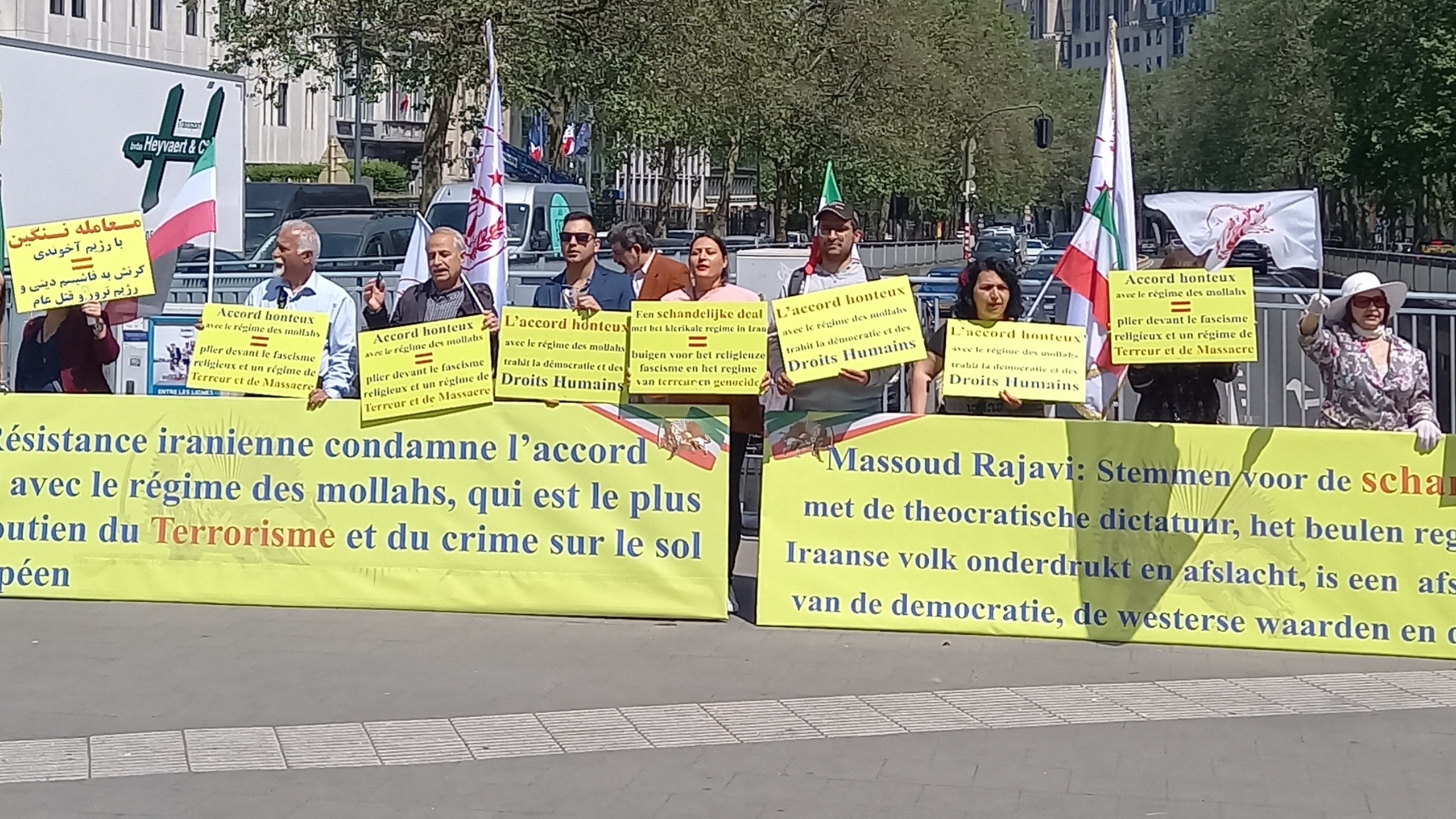
On January 29, the European Union (EU) formally designated the Islamic Revolutionary Guard Corps (IRGC) as a terrorist organization. With that decision, the EU’s 27 member states joined the United States, Canada, and Australia in acknowledging what millions of Iranians have known for decades: The central pillar of power in Iran is not a conventional military institution serving a sovereign nation, but an armed ideological apparatus that operates through repression at home and violence abroad.
This designation is not merely symbolic. It represents a long-overdue correction in how the international community understands the regime in Tehran. For years, policymakers in Europe and elsewhere attempted to distinguish between “moderates” and “hard-liners,” between the Iranian state and the IRGC, or between diplomacy and security. The EU’s decision cuts through that illusion. The IRGC is not a peripheral actor within the system—it is the system. It controls vast sectors of the economy, commands parallel security and intelligence structures, directs foreign proxy forces, and enforces ideological conformity through fear.
To understand the significance of this shift, one must begin with the lived experience of the Iranian people. Long before Western governments reached their current conclusions, Iranians recognized that the Islamic Republic functions less as a normal government and more as a transnational criminal syndicate. Its leadership has systematically diverted national wealth into opaque networks controlled by the IRGC. Its security forces have crushed dissent through imprisonment, torture, and execution. Its ideological project has prioritized confrontation with the outside world over the prosperity and dignity of its own citizens.
Beyond Iran’s borders, the IRGC’s conduct further underscores its character. Its direct intervention in the Syrian civil war contributed to one of the most devastating humanitarian catastrophes of the 21st century, costing hundreds of thousands of lives and displacing millions. Through the training, arming, and financing of proxy militias across the Middle East, it has entrenched instability from Lebanon to Iraq. Its support for armed groups, including Hamas, has tied Iran’s ruling apparatus to acts of mass violence that have shocked the international community.
Inside Iran, the regime’s reliance on force is even more stark. The suppression of protests, including episodes in which security forces used lethal force against unarmed civilians, reveals a system that governs not through consent, but through coercion. The use of foreign militias and recruited fighters from Lebanon, Iraq, Afghanistan, and Pakistan to kill tens of thousands of unarmed protesters in more than 300 cities across Iran on January 8 and 9 of this year further highlights this regime’s transnational terrorist nature. This is not the behavior of a normal state defending its sovereignty. It is the behavior of an entrenched ideological network determined to maintain power at any cost.
Give the gift of hope
We practice what we preach:
accurate, fearless journalism. But we can't do it alone.
- On the ground in Gaza, Syria, Israel, Egypt, Pakistan, and more
- Our program trained more than 100 journalists
- Calling out fake news and reporting real facts
- On the ground in Gaza, Syria, Israel, Egypt, Pakistan, and more
- Our program trained more than 100 journalists
- Calling out fake news and reporting real facts
Join us.
Support The Media Line. Save democracy.
The European Union’s designation carries profound implications. When an organization is formally recognized as terrorist, engagement with it can no longer be treated as routine diplomacy. Legal, financial, and political consequences follow. Assets are frozen. Material support becomes prosecutable. Cooperation is restricted. Yet one crucial area remains insufficiently addressed: diplomatic representation.
If the governing core of the Iranian regime is directed by a designated terrorist organization, then the individuals appointed to represent that regime abroad cannot be viewed through the same lens as ordinary diplomats. Ambassadors do not operate in isolation from the power structure that appoints them. In a system where the IRGC exerts decisive influence over foreign policy and security strategy, diplomatic missions cannot credibly be separated from that command structure.
That does not mean Iranian embassies should be closed. Those institutions belong, in principle, to the Iranian nation—not to any particular regime. One day, they should serve the representatives of a sovereign, accountable, and democratic Iran. But the individuals currently serving as ambassadors for a regime led by a designated terrorist organization should not automatically enjoy the privileges and immunities afforded under normal diplomatic conventions.
Expelling such ambassadors would not be an act against the Iranian people. On the contrary, it would signal solidarity with them. It would affirm that Europe distinguishes between a nation of more than 85 million citizens and the apparatus that suppresses them. It would reinforce the principle that terrorist designation carries practical consequences, not merely rhetorical weight.
Europe has taken a historic step by naming the IRGC for what it is. The challenge now is consistency. If Europe truly believes the IRGC constitutes a terrorist organization, then its policies must reflect that judgment across the board—including in diplomatic practice. Anything less risks diluting the significance of the designation and perpetuating the ambiguities that allowed the IRGC to entrench its power in the first place.
For decades, Iranians have paid the price of the international community’s hesitation. The EU’s decision offers a chance to align moral clarity with policy action. The next step is to ensure that recognition is matched by resolve.
