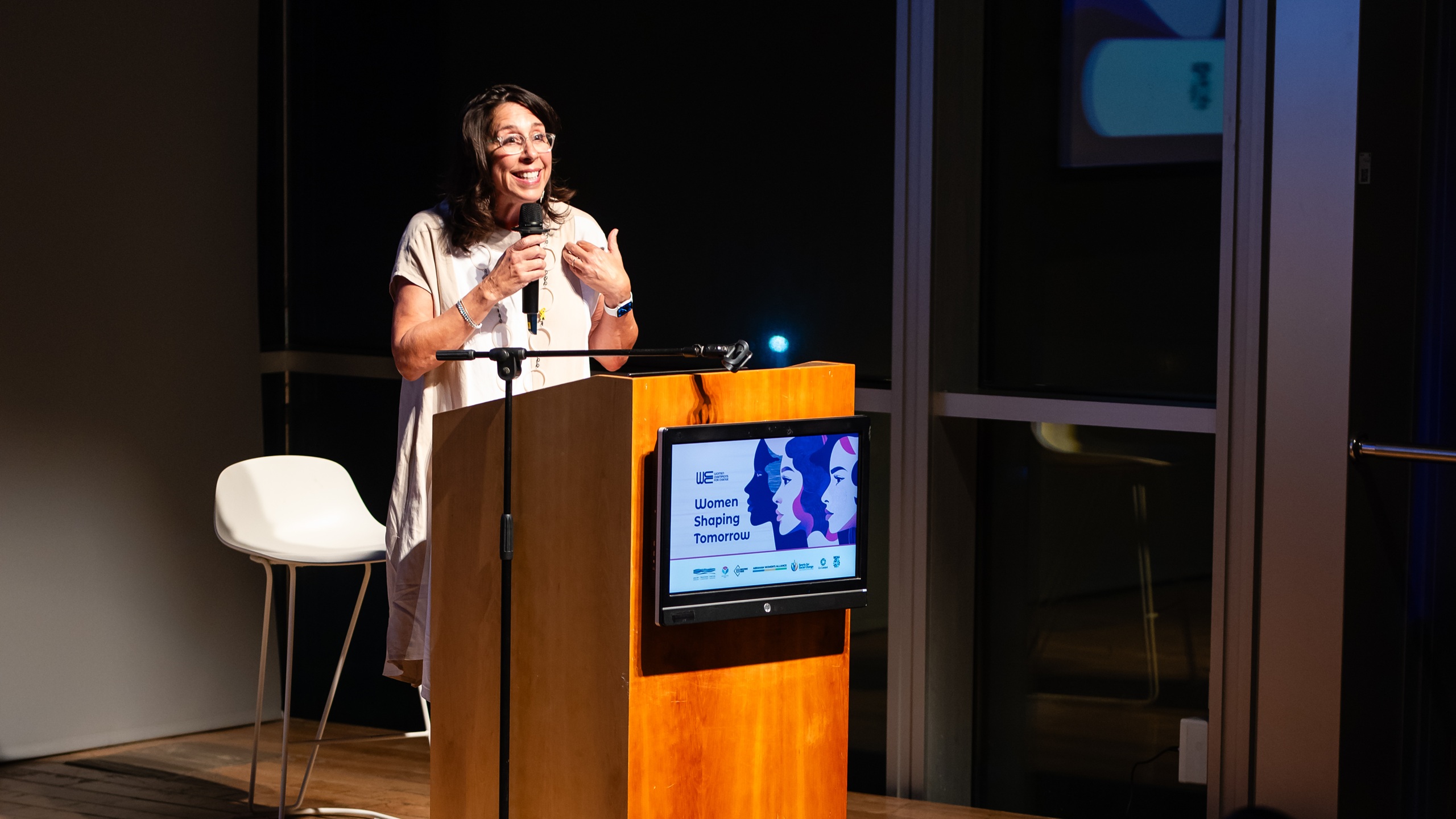
Former WNBA President Donna Orender Tells TML Connecting With Women Leaders Daily Helps Build Stronger Networks
Regular contact and shared projects among women leaders are creating networks aimed at strengthening long-term collaboration across regions and faiths
Donna Orender understands what it takes to turn a promising initiative into something that holds. Reflecting on her time in Israel with the Women Champions for Change program, she brings the eye of someone who has spent years in high-pressure environments learning the difference between inspiration and infrastructure. A former professional basketball player who went on to lead the Women’s National Basketball Association (WNBA) for six years and build a long executive career in sports, she knows that energy alone is never enough.
That’s why her description of the experience doesn’t linger on speeches or symbolism. She talks about intention—“peace collaboration” and “cross-border collaboration”—and about the emotional engine required to make those words more than a banner: “the idea of bringing all of us with united hearts,” even when the women in the room come from “a different religion or a different location.” She’s not naïve about how rare that is. She’s simply direct about what women can do when they’re willing to start there.
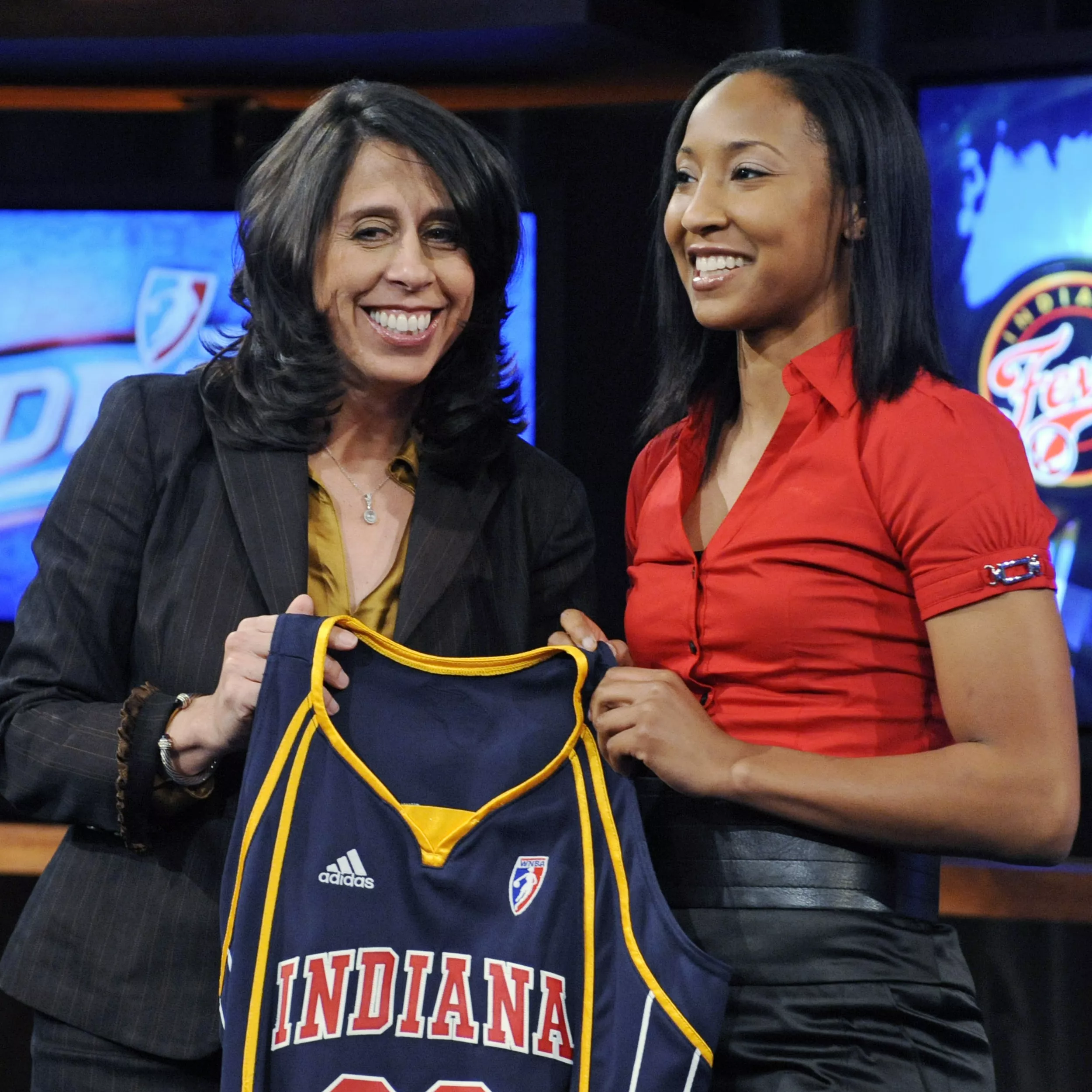
Donna Orender, then-WNBA president, with Briann January of the Indiana Fever, April 2009. (Courtesy Donna Orender)
What stayed with her most was the caliber of the participants—not as résumés, but as people in motion. They were, she says, “truly special, wonderful, motivated women” who don’t waste energy asking whether engagement matters, because they are already “actively engaged in their communities in doing things.” If you want to understand her view of women’s power, start there. It’s not a label. It’s a habit.
Still, the flattering part of any gathering is easy: the group photo, the promise, the applause. The real test is the uncomfortable hinge point—taking it to the next step. What happens after?
Behind the conversations in Israel was an unusual coalition. More than 50 women leaders from different countries, faiths, and communities—many from across the Middle East and North Africa—came together in September 2025 as part of the Women Champions for Change cohort initiated by social entrepreneur Danny Hakim. Their goal was practical as well as ambitious: to build connections across borders and design peace-building partnerships strong enough to endure beyond the gathering itself.
Orender’s answer begins with a word so basic it almost sounds too small for the size of the problems on the table: connection. “Fundamentally, the first thing is you have people connected,” she says. She talks about staying in touch with the women constantly—“almost every day”—not as a social nicety, but as an operating system.
Fundamentally, the first thing is you have people connected
Give the gift of hope
We practice what we preach:
accurate, fearless journalism. But we can't do it alone.
- On the ground in Gaza, Syria, Israel, Egypt, Pakistan, and more
- Our program trained more than 100 journalists
- Calling out fake news and reporting real facts
- On the ground in Gaza, Syria, Israel, Egypt, Pakistan, and more
- Our program trained more than 100 journalists
- Calling out fake news and reporting real facts
DONATEJoin us.
Support The Media Line. Save democracy.
When you keep the thread alive, she says, “things are percolating.”
Next she reaches for a metaphor that fits her style: plain-spoken, grounded, and quietly demanding. “I always believe when you put seeds in the ground or seeds in other people … they will sprout.” The line lands because it refuses the fantasy of instant transformation. Seeds take time. They also require care.
I always believe when you put seeds in the ground or seeds in other people … they will sprout
For her, those seeds are the women themselves—their projects, their missions, their very specific “purviews.” The group didn’t come together for abstract solidarity; it came together because each participant had something real she was trying to build. Once they recognized the value in one another’s work, the logic became obvious: “We can really help each other build those because they’re so valuable.”
From there, Orender moves into a deeper obstacle—how easily people turn each other into categories. “We can think macro,” she says, and rattle off the familiar tags: “You’re an Arab, you’re an Israeli, you’re a Jew, you’re a Christian, you’re a Muslim.” Yet she argues that this macro view is only a sliver of the story. People are also shaped by the micro: “the neighborhood everybody grew up in.” She calls it a “microclimate,” and points out that “across the street could be another microclimate,” a small distance that can still produce two very different worlds.
I think all of us feel othered
For Orender, the idea isn’t rhetorical—it’s strategic. When she distills the concept, she finds “common human experiences.” She also suggests a surprisingly personal door into that common ground: your own memory of being on the outside. “I think all of us feel othered,” she says. If you can “tap into that vulnerability,” she argues, it can produce empathy—and empathy can make you “want to reach across to understand other people.”
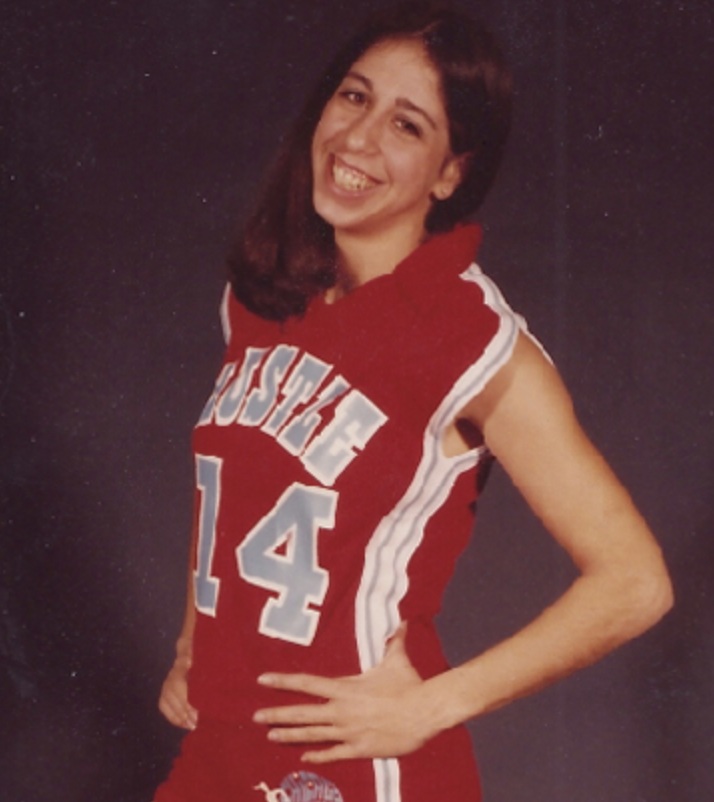
Orender played for the Chicago Hustle in 1980-1981. (Courtesy Donna Orender)
Yet she doesn’t allow empathy to become a shortcut around moral clarity. In one of the starkest moments of her reflection, Orender says she has had to accept that “there is truly right and wrong. There is good and evil, truly.” She speaks about how that reality can be obscured by what she describes as “a moral inversion” in public understanding—an inversion she finds “incredibly surprising.”
Then, as she often does, she steadies the frame with history. “Being a student of history,” she says, she understands “this is not the first time.” That doesn’t make the moment easier. It makes it clearer. It forces the question away from abstract outrage and into something more intimate and demanding: “How do I want to move through that? What impact do I want to make?”
This is where her background matters—not as credential-stacking, but as context. Orender’s professional life has been built around turning potential into performance: helping people execute under pressure, keeping organizations growing, and translating belief into structure. Beyond her years as a player and WNBA president, she went on to found Generation W, a nonprofit focused on educating, inspiring, and connecting women and girls and the communities in which they live. Before leading the WNBA, she spent 17 years at the PGA Tour and also worked for major media companies, helping negotiate television deals that reshaped the tour’s business and fueled major growth. She was also recognized as one of the most powerful women in sports and as one of Newsweek’s 100 most influential women in business and sports, and she now leads Orender Unlimited while serving on private and public boards.
In Israel, with Women Champions for Change, her message is essentially the same—only the “team” is cross-border, the scoreboard is invisible, and the stakes are measured in whether relationships survive the next news cycle.

(Courtesy Donna Orender)
Ultimately, Orender’s account resists the easy arc. There is no tidy “and then peace broke out.” There is only the next step—taken on purpose. Connection that continues. Seeds that are actually planted. And women who return to their communities not merely inspired, but linked—ready to help each other build what they came to build.
Orender is one of three women featured on episode 19 of Facing the Middle East with Felice Friedson.
