Agreement Between Syrian Government and SDF Leaves More Questions Than Answers
Concerns persist that Kurdish rights and equal citizenship are undermined by a system in which “the constitution clearly favors the majority,” observes former chair of the US Commission on International Religious Freedom, Nadine Maenza
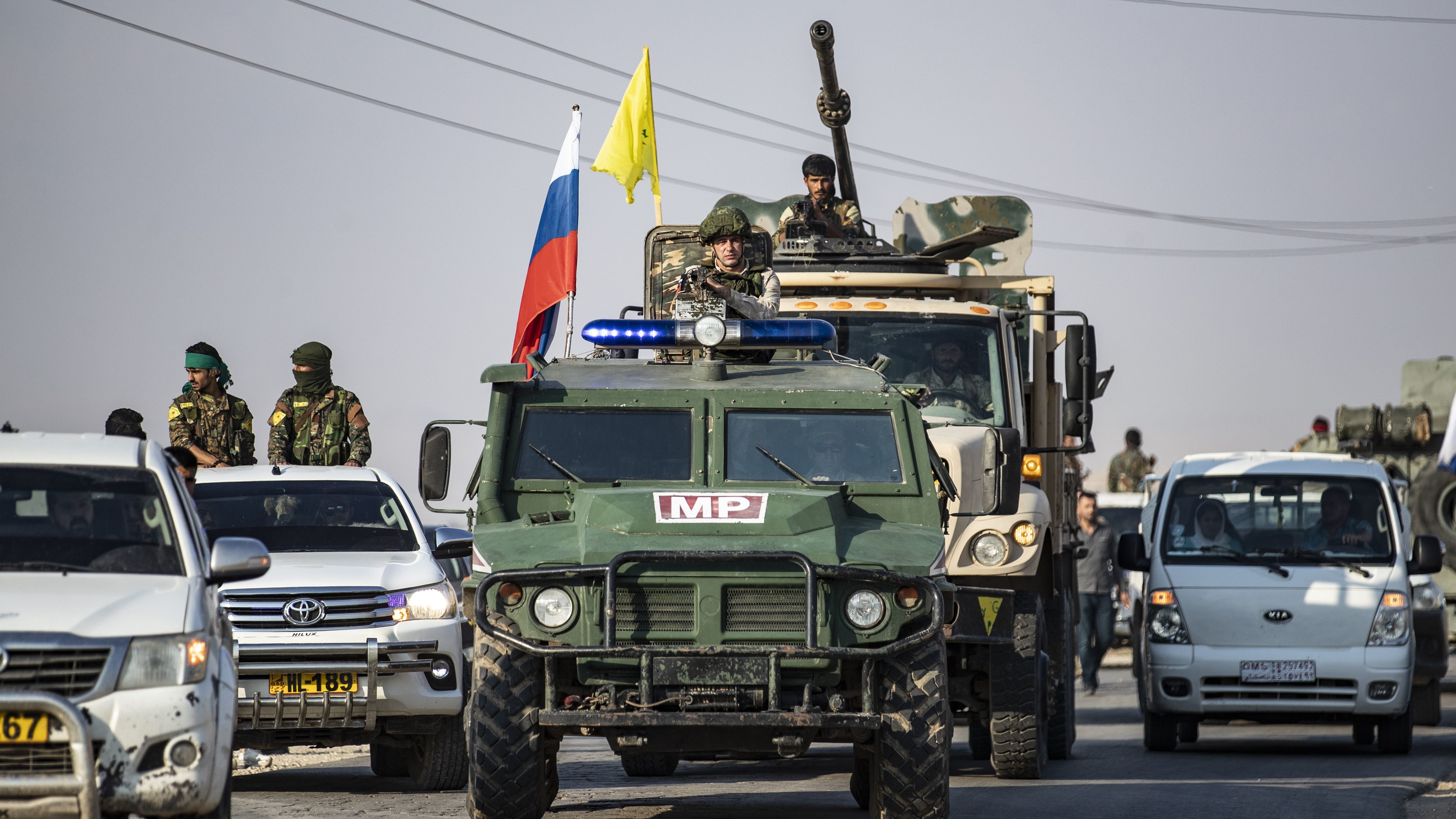
[DAMASCUS] A newly announced security agreement between Damascus and the Syrian Democratic Forces (SDF) is being described by officials as a turning point at one of the most delicate moments since the Syrian conflict began.
The accord outlines a comprehensive ceasefire, troop redeployments, and the planned integration of entire SDF units into the Syrian army — steps that go far beyond the limited, tactical understandings that have defined relations between the two sides in recent years.
Previous arrangements between the Syrian government and the SDF largely centered on temporary ceasefires, the management of contact lines, or narrowly defined security coordination. None evolved into a durable framework, and most eventually eroded under shifting regional pressures and competing international interests.
Under the terms being discussed, regular Syrian army forces are expected to remain outside major city centers such as al-Hasakah and Qamishli, with local internal security forces assuming responsibility in coordination with the SDF. The arrangement is intended to reduce friction and provide short-term stability for residents.
Yet the model also raises fundamental questions. Observers in Syria, Washington, and other regional capitals are questioning whether the agreement can withstand the same political and military pressures that undermined earlier efforts. Uncertainty remains over who will exercise real authority on the ground, how influence will be divided, and whether this hybrid security structure can endure in a landscape still shaped by foreign actors, internal rivalries, and unresolved mistrust between the parties.
The Syrian Democratic Forces played a pivotal role in the war against the Islamic State (ISIS), according to military documents, journalistic analyses, and multiple field reports. The forces engaged in large-scale battles that helped reclaim strategic areas previously under the group’s control, most notably Raqqa, Deir ez-Zor, and large parts of Hasakah.
Despite the absence of precise official numbers on total human losses, conflict data indicate that years of fighting resulted in hundreds of Kurdish fighters and coalition forces killed and wounded, whether during direct combat or subsequent security operations against ISIS sleeper cells.
However, the cost of the war extended beyond the military dimension. Kurdish populations and local communities paid a heavy price with widespread destruction of infrastructure, displacement of tens of thousands of civilians, and deep social and economic repercussions that the region continues to suffer from to this day.
Since the launch of the war against ISIS in 2014, the alliance between the United States and the SDF has been a cornerstone of military operations. In recent years, however, this alliance has undergone a clear transformation as Washington’s priorities in Syria have shifted.
The United States has begun moving thousands of ISIS detainees from prisons in northeastern Syria to Iraq. The process began with the transfer of approximately 150 detainees as part of a plan that may include up to 7,000. The goal is to reduce security pressure on areas where the SDF’s military role has declined.
This development coincides with ceasefire agreements and negotiations between the Syrian government and the SDF, under which some prison sites and detention camps were handed over to the new Syrian government headed by President Ahmed al-Sharaa. This reflects a decline in the traditional American role of managing security in favor of indirect support from Washington and Paris, focused on detainee transfers and rehabilitation programs.
However, Nadine Maenza, former chair of the US Commission on International Religious Freedom, told The Media Line that the issue of Syria is still a crucial component of US foreign policy, and has stated that she has been in frequent contact with members of Congress in recent weeks, making the situation between Damascus and the SDF one of her primary focuses.
The core demand, Maenza explained, is “to prevent the Syrian government from entering Kurdish-majority areas,” which is home to an unusually high concentration of religious and ethnic minorities.
The push in Washington is not only to keep Syrian government forces out of these areas but also “to demand that they integrate into the government with local governments, local security.” The reasoning, she argued, is that Syrian security forces have proven unreliable. “These Syrian security forces are so inconsistent at best that we cannot trust them to be security for Yazidi and Assyrian villages,” Maenza said, adding, “We’ve seen this movie before.”
For now, however, she said the immediate priority is “keeping these dangerous forces out of the Northeast.” Maenza argued that the US has “so many levers they could use to do that that aren’t even military,” and that Congress is beginning to reflect that thinking, pointing to the proposed “Save the Kurds Act” as an effort to introduce accountability.
Without enforcement, agreements between the Syrian government and Kurdish authorities repeatedly collapse. “These agreements are made, and then the Syrian government just blows through them,” she said. “They start over again and make a new agreement, and they just blow past that.” It is uncertain how negotiations can succeed “if no one’s going to hold them accountable.”
These agreements are made, and then the Syrian government just blows through them. They start over again and make a new agreement, and they just blow past that.
Prisons and camps represent one of the most sensitive current issues in Syria. According to estimates, the SDF is holding between 9,000 and 11,000 detainees suspected of belonging to ISIS, distributed across several prisons in northeastern Syria.
In addition, the SDF administers camps, most notably al-Hol, which in the past housed more than 24,000 people, including women and children of multiple nationalities, most of them family members of ISIS fighters
These facilities have witnessed repeated security tensions, including the escape of ISIS members from Al-Shaddadah prison following the withdrawal of Kurdish guards, before government forces later detained some of the escapees. The incident highlighted the fragility of security control and the complexity of managing this highly sensitive issue.
Amid these shifts, Kurdish political figures and activists have expressed a growing sense of betrayal. One Kurdish political leader told The Media Line: “We fought ISIS on behalf of the world, and now our sacrifices are easily forgotten when interests change.”
We fought ISIS on behalf of the world, and now our sacrifices are easily forgotten when interests change
Regarding the transfer of detainees, Maenza explained that even a small number of terrorists can create major instability. “You don’t need too many just cause trouble.” She pointed to the emptying of detention camps that had housed ISIS fighters’ families, describing one as “the most dangerous camp in the world,” and said the resulting disorder had created new openings for ISIS activity.
Give the gift of hope
We practice what we preach:
accurate, fearless journalism. But we can't do it alone.
- On the ground in Gaza, Syria, Israel, Egypt, Pakistan, and more
- Our program trained more than 100 journalists
- Calling out fake news and reporting real facts
- On the ground in Gaza, Syria, Israel, Egypt, Pakistan, and more
- Our program trained more than 100 journalists
- Calling out fake news and reporting real facts
Join us.
Support The Media Line. Save democracy.
The killing of “two US servicemen and a translator” by a Syrian security force member who shared ISIS ideology, the sight of ISIS patches on uniforms, and “the ISIS flag” briefly being raised over Raqqa, are disturbing. “The idea that anyone thought it was a good idea to put it up to begin with, it should be very troubling to people,” she said.
A Kurdish activist from northeastern Syria told The Media Line that the absence of any genuine international guarantees leaves civilians exposed to serious risks, and warned that any security vacuum could be exploited by ISIS cells or turn into open conflict between competing forces.
Criticism has not been limited to the international coalition or US policy. Over recent years, human rights organizations have documented cases of arbitrary detention and unlawful practices against civilians by the SDF in areas such as Raqqa and Deir ez-Zor, including arrests targeting students and minors.
There have also been reports of shooting incidents at security checkpoints and search operations that resulted in the killing of civilians, exacerbating tensions between local residents and security forces. Observers believe that the absence of an independent and impartial investigative body has complicated accountability, whether for violations attributed to the SDF or to government forces.
The Syrian Network for Human Rights (SNHR), an independent organization, confirmed to The Media Line that the SDF has committed serious violations against civilians in areas under its control, particularly in Aleppo, Raqqa, and Deir ez-Zor.
From the end of November 2024 until the end of January 2025, the SDF deployed snipers in the Aleppo neighborhoods of Sheikh Maqsood and Al-Ashrafieh, resulting in the deaths of no fewer than 65 civilians, including two children, two women, and two humanitarian workers. The workers died as a result of direct fire targeting individuals who were clearly not participating in the fighting, according to the SNHR, which described the incident as a blatant violation of the right to life under international law.
Fadel Abdul Ghany, a Syrian human rights activist who heads the SNHR, says this conduct reflects a deliberate intent to target civilians and constitutes a war crime under the Rome Statute of the International Criminal Court. He has called for international investigations and accountability from those responsible.
Arbitrary detention operations affecting dozens of civilians in the governorates of Raqqa and Deir ez-Zor were also documented by the SNHR. The organization told The Media Line the civilians — mainly children and vocational students — were transferred to unknown destinations, with the alleged goal of forced conscription. All of these violations implicate the SDF.
The SNHR also condemned raid operations that led to the deaths of civilians during the campaign and called for the judicial prosecution of the perpetrators to ensure the protection of civilians and prevent the recurrence of human rights violations.
When asked about reports of abuses of Syrian forces against Kurdish civilians, including women and children, Maenza told The Media Line that much of what is known comes from videos and reporting that have circulated widely. Footage showed “the beheading of SDF fighters, including women,” and another video revealed that “a Kurdish family” was confronted, asked if they were Kurdish, and then shot despite saying they were not affiliated with any group. She also referenced “the video of the woman fighter being killed, her braid being cut off,” saying those responsible had posted the footage themselves.
“These are all things they’re very proud of,” Maenza noted, arguing that such incidents reflect deep hostility toward minorities among some of the armed elements operating in the area. These documented abuses point to an intent that amounts to “ethnic cleansing when they get in there — either they’ll kill them, or they’ll make them leave.”
“We already have what, 150,000 displaced in Hasakah,” from areas she said Syrian government forces had entered. Without safeguards, similar patterns could spread unless Syrian forces are excluded and security is managed locally. “They can integrate in with local security and local governance, but it’s just not going to be safe without that,” she said.
Kurdish Syrian activist Rodi Hesso told The Media Line that the advances made by government forces at the expense of the SDF cannot be understood as a conventional military shift, but rather as a political transformation translated on the ground through gradual and calculated steps.
Hesso noted that what is unfolding does not resemble decisive battles, since there are no major assaults or sudden collapses, but rather movement within a political and security vacuum that began to take shape with the decline of the international cover that had frozen front lines for years.
He added that the SDF is no longer treated as a long-term strategic ally, but rather as a postponed file whose reintegration into the Syrian state framework is now being pursued—even if in a coercive and incomplete form.
Hesso warned that any transitional phase of control in ethnically and politically mixed areas carries a high risk of abuses, noting that the overall picture does not yet indicate a systematic decision to launch a comprehensive campaign of repression, but rather reflects a dangerous phase of friction requiring urgent political and security regulation.
The issue of constitutional structure also remains part of the discussion, Maenza explained. Concerns persist that Kurdish rights and equal citizenship are undermined by a system in which “the constitution clearly favors the majority,” noting that requirements such as the president being Muslim and governance rooted in Islamic jurisprudence signal to minorities that they are treated as second-class citizens.
For his part, Kurdish Syrian journalist Kadar Ahmad believes that the SDF’s loss of areas such as Sheikh Maqsood and Ashrafieh in Aleppo, followed by its withdrawal from Dayr Hafir and Maskanah, revealed a miscalculation regarding the size of its popular support base in some Arab areas.
In remarks to The Media Line, Ahmad said the SDF believed that Raqqa and Deir ez-Zor were its strongholds, but this perception quickly evaporated as residents pursued its forces, forcing them to withdraw—sometimes even before government army units arrived.
By contrast, he stressed that the resistance shown by the SDF in predominantly Kurdish areas was driven primarily by residents’ fears of a repeat of previous massacre scenarios, rather than by pure military superiority. He also emphasized the difficulty of accurately documenting violations amid siege conditions and restrictions preventing activists from accessing victims, calling for an effective role by independent international institutions to conduct impartial investigations.
Meanwhile, Kurdish Syrian journalist Nidal Hannan told The Media Line that the recent advance does not represent a strategic military victory, but rather the outcome of regional understandings and international pressure, as evidenced by the SDF’s rapid retreat without wide-scale confrontations in most areas.
Hannan argued that attempting to impose surrender rather than pursuing a political solution would mean a return to marginalization, warning that enforcing a “victor’s peace” would undermine prospects for stability—in contrast to a “partners’ peace” based on recognition of rights.
Regarding violations, Hannan distinguished between systematic abuses that infringe on human dignity and Kurdish symbolic identity, and others resulting from incitement and the absence of accountability. He noted that documenting these violations relies on individual efforts that do not constitute a comprehensive legal investigation, yet they still reveal the dangerous trajectory of the current situation.
Fadel Abdul Ghani, founder of the Syrian Network for Human Rights, told The Media Line that he does not wish for the government to advance militarily. Instead, he emphasized the necessity of reaching an agreement without resorting to fighting and of handing the administration of the areas over to their own people. Military advancement leads to casualties and losses among civilians, and it is necessary to work to avoid that and protect lives.
Although the government has controlled most areas, some should be administered by local people through local governance.
Beyond maps of control and political transformations, the human cost of the war against ISIS remains the heaviest burden in northeastern Syria. Thousands of families lost relatives in the fighting or still do not know their fate, while many civilians live amid destruction and displacement camps, with limited services and almost nonexistent job opportunities.
Entire neighborhoods in Raqqa, Deir ez-Zor, and Hasakah have yet to recover, despite years since the end of major battles, as a new generation of children grows up in an environment burdened by memories of violence, fear, and uncertainty. With declining international attention and shifting priorities, residents fear that their sacrifices will be reduced to mere numbers in conflict reports, and that the humanitarian burden will remain without a genuine response ensuring a minimum level of security, dignity, and stability.
A widespread sense of betrayal prevails within Kurdish circles, both popular and political, as US support for the Syrian Democratic Forces declines after years of close military partnership in the fight against ISIS. That partnership, built on joint combat and heavy sacrifice, created expectations among many for continued political and security protection, or at least guarantees that would prevent the collapse of the balances formed during the war.
However, Washington’s redefinition of its priorities, reduction of its field presence, and shift from a direct alliance to limited management are read locally as abandonment rather than repositioning, deepening the feeling that the sacrifices made in confronting ISIS did not translate into a long-term commitment to the region’s stability or the future of its local partners.
Between the major sacrifices made by the Kurds in the war against ISIS, political shifts reshaping power balances, and real fears of security vacuums and violations, northeastern Syria now stands at a critical juncture.
The wager is no longer solely on military alliances but on the ability of local and international actors to avoid sliding into a broader conflict, while also ensuring security, addressing the issue of detainees, and crafting a political solution that preserves human dignity and prevents the recurrence of violence.
Regarding the future of the newest agreement between the Syrian government and the SDF, Maenza expressed skepticism that the military forces can be integrated, echoing critics of the notion that Hamas could be entrusted with a continued role in postwar Gaza. “These things don’t work. You can’t have Islamists who are violent and hate minorities oversee an area rich with minorities, full-stop,” she said.
These things don’t work. You can’t have Islamists who are violent and hate minorities oversee an area rich with minorities, full stop.
Maenza has focused on pressing Congress to intervene more assertively, and she added that she has been meeting regularly with officials at the State Department, sometimes “every three weeks,” and that she sensed internal disagreements over policy direction.
The mix of fighters now operating under the Syrian government umbrella — including members of the Turkish-backed Syrian National Army, Hayat Tahrir al-Sham, and foreign fighters — amounts to “too many extremists for these minority communities” to feel safe under their “protection,” Maenza points out.
The government’s effort to install its own mayors and security officials in these areas lies at the heart of the current tensions. “There has been negotiating for the last couple of days. It’s been quiet for that reason, but it’s been several days,” she added.
Charmaine Hedding of the Shai fund told The Media Line that if Kurdish self-governance is dismantled, it would set a dangerous precedent elsewhere in Syria. “It’s not integration, it’s basically total submission” to al-Shaara, arguing that this would undermine any model of local governance and community-based security.
It’s not integration, it’s basically total submission
Such a shift would pose risks not only to Kurdish areas but also to Druze communities and other minority regions. “If the Kurds lose their ability, no one else is gonna be able to win it,” Hedding said.
Recent developments in northeastern Syria reveal the nature of international alliances in complex conflicts, where partnerships are often built on intersecting short-term interests rather than long-term strategic commitments.
With ISIS no longer a dominant territorial force, the US need for a local military partner has diminished, opening the door to a reordering of priorities—whether through reducing military presence or pushing local actors toward political settlements with Damascus.
The decline of the SDF’s role was not the result of a battlefield failure, but rather a reflection of changes in the political and international environment that had provided it with cover for years. Yet this shift carries latent risks, as any imbalance in control or mismanagement of sensitive issues, such as prisons and camps, could recreate conditions of instability and open the door to renewed security threats or escalating local tensions, thereby making the post-alliance phase more complex than the war itself.
