Boycotts, Downgrades, and Protests Test Israel’s Economy as War Nears 2 Years
The Tel Aviv Stock Exchange fell after the prime minister’s remarks, while governments weighed recognition of a Palestinian state and new restrictions
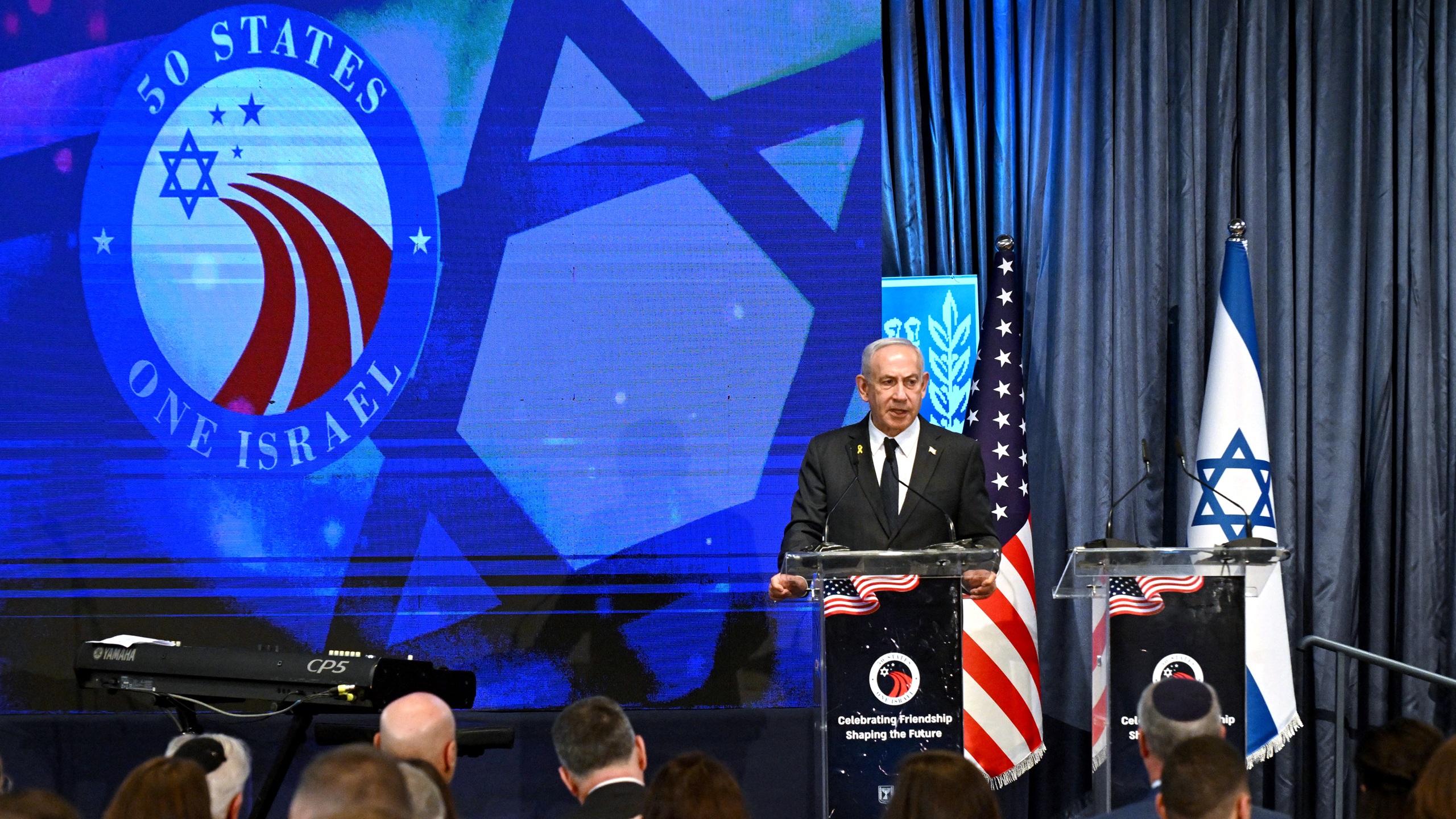
The Israeli military intensified operations in Gaza City on Tuesday, pushing tanks toward the urban center as Prime Minister Benjamin Netanyahu warned that Israel faces “a kind of isolation,” a risk now reverberating through markets and foreign relations.
At a conference in Jerusalem on Monday, Netanyahu said Israel would need to prepare for efforts to shun the country internationally, raising alarms in a nation already grappling with fallout across multiple fronts.
“There’s no choice; in the coming years, at least, we will have to deal with these attempts to isolate us,” the leader said at a conference in Jerusalem.
Netanyahu was referring mainly to the economy, saying Israel would need to adopt “autarkic characteristics” by becoming more self-sufficient and less reliant on foreign trade. He later tried to downplay the remarks, which drew criticism at home. Opposition figures cast the comments as fresh evidence of what they call Netanyahu’s failed handling of the Gaza war, while unnamed coalition ministers were quoted in the media calling the remarks “harmful.”
Markets reacted quickly. The Tel Aviv Stock Exchange fell at the opening Tuesday.
Israel isn’t isolated, but it is on a very negative course
“Israel isn’t isolated, but it is on a very negative course,” said Dani Catarivas, president of the Israeli Federation of Bi-National Chambers of Commerce and Industry. “There are worrying signs. If in the past it was non-state actors and fringe groups that were promoting moves against Israel, we are now seeing increasing statements from countries,” he told The Media Line.
A report released Tuesday by the UN Human Rights Council concluded Israel is committing genocide in Gaza, joining accusations that have grown louder throughout the war.
As the conflict approaches its two-year mark next month, Israel’s standing in global forums has eroded. A number of countries say they will recognize a Palestinian state later this month at the UN General Assembly. Several governments have announced weapons embargoes, while academic and cultural boycotts are spreading. A global surge in antisemitic incidents is also being linked by critics to Israel’s weakened international position.
According to Inbal Ratz-Gilmore, a researcher on American Jewry and a publicist, the war that erupted on October 7, 2023—with a surprise attack by the Hamas terrorist organization—brought to the surface antisemitism that had long existed beneath it.
“The state of Israel has been fighting for its legitimacy since the day it was established,” Ratz-Gilmore told The Media Line. “This fact only proves the moral off-side the world is at. Israel has always been isolated to a certain extent and not isolated at the same time.”
Give the gift of hope
We practice what we preach:
accurate, fearless journalism. But we can't do it alone.
- On the ground in Gaza, Syria, Israel, Egypt, Pakistan, and more
- Our program trained more than 100 journalists
- Calling out fake news and reporting real facts
- On the ground in Gaza, Syria, Israel, Egypt, Pakistan, and more
- Our program trained more than 100 journalists
- Calling out fake news and reporting real facts
Join us.
Support The Media Line. Save democracy.
“The fact that Israel is the only country that consistently needs to explain the legitimacy of its existence is a testament to the continued presence of antisemitism,” she added.
For three decades, Israel has been regarded as a regional and global economic powerhouse, driven by its high-tech sector. The war’s fallout has dented that image, with foreign investment dropping and defense spending surging.
“We are definitely on the way to being isolated, at the beginning of this process,” Dr. Gali Ingber, head of finance studies at Israel’s College of Management Academic Studies, told The Media Line.
Credit rating agencies have already downgraded Israel. The moves are forcing the government to pay higher interest on debt and signal pessimism about a prolonged war and its drag on fiscal performance.
Still, Ingber noted signs of resilience that raters themselves cite. The Israeli currency, the shekel, has strengthened against the US dollar this year and outperformed many of its peers, despite low unemployment rates.
The state of the economy does raise amazement
“The state of the economy does raise amazement,” Ingber told The Media Line. “But there is no immunity. As long as the government continues to behave recklessly with the budget and the war continues, taxes will rise, and the economy will weaken.”
The government has revised the annual budget multiple times since October to meet defense needs. Spending has jumped, and the deficit has widened.
At the same time, Israel’s ability to thwart threats from Lebanon, Syria, and Iran has improved its perceived deterrence.
“Israel’s risk premium has decreased, and this is why we have seen the stock exchange reach record-breaking levels,” said Ingber. “But this is not sustainable for long.”
Two years of fighting have also strained Israel’s relationships in academia and culture. Universities in Brazil, Norway, Spain, and Ireland have cut ties; officials fear Israel’s share of European Union research grants will shrink. Spain last week limited access to its ports and airspace for ships and planes carrying weapons for Israel. Divestment from Israeli firms is growing. Prominent artists and actors have signed open letters urging Israel’s exclusion from major cultural events, and some national broadcasters and culture ministries threaten to boycott the Eurovision Song Contest if Israel participates. Over the weekend, a major cycling race in Spain was halted after pro-Palestinian protesters flooded the course. Large anti-Israel protests worldwide are pressuring governments to censure Jerusalem. Arab states that maintain relations with Israel have repeatedly threatened to re-examine ties.
Israel is also on trial at the International Court of Justice, accused of genocide against the Palestinians.
Of particular concern is a pullback in investment in Israel’s high-tech industry. The sector accounts for nearly 20% of gross domestic product and has powered growth in recent years. Investment was already cooling before October, due to global conditions and domestic instability tied to a fierce debate over judicial overhaul. While global tech funding has recovered somewhat, Israel’s ecosystem is more vulnerable now.
Netanyahu’s suggestion that Israel may need to be more self-reliant surprised many. His metaphor comparing Israel to Athens and Sparta sparked a backlash.
Israel’s economy cannot exist without foreign investment
“Israel’s economy cannot exist without foreign investment,” said Ingber. “The high-tech sector will not stay in Israel if the economy becomes like Netanyahu envisions. The economy will become a low-tech one, there will be no foreign investments, and there will be a brain drain from the country. Israel will become a third-world country.”
Netanyahu is widely seen as an architect of Israel’s modern, open economy—a legacy he appears keen to preserve. At the press conference, he said he “hated” the thought of an autarkic economy.
“Netanyahu completely understands the benefits of free international trade,” said Catarivas. “Israel cannot be isolated, and the engine of its economic growth is directly connected to its international relations. Without this, Israel will not be able to maintain its current standard of living.”
The prime minister has also become the focal point of international criticism and domestic reproach from those who argue that he is prioritizing political survival over national interest.
For Ratz-Gilmore, who sees antisemitism as central to Israel’s predicament, leadership changes would not alter the underlying dynamic.
“Antisemitism isn’t going anywhere, even if the prime minister is replaced,” she said, adding that reports of Israel’s growing isolation may be overstated.
“It’s more complicated than that—Israel still has extensive international ties and there is a steady exchange of knowledge and technology between Israel and the world,” Ratz-Gilmore explained. “It certainly sounds like Israel is isolated, but there are people who benefit from portraying Israel in this position.”
With Israeli tanks advancing in Gaza City on Tuesday, the war appears far from over, further weighing on Israel’s international standing.
