Can Israeli Medtech Grow in the US Without Relocating? At Least One Firm Plans To Help
US-based The Mullings Group opens Israel office, aiming to accelerate Israeli medtech companies’ path to FDA clearance, commercialization, and US market scale without forcing founders to relocate
Israeli medtech companies looking to enter the American market while keeping their core teams in Israel may soon find the process a little easier.
Earlier this month, The Mullings Group (TMG), a Florida-based firm focused on talent access, media, and advisory services for the medtech industry, announced the establishment of an office in Israel. The move is designed to help Israeli companies build strong US-based teams without relocating their leadership or operations abroad.
When an Israeli CEO is confident that their US team is built from the very best, they gain the freedom to keep their center of gravity, and their home, in Israel
“When an Israeli CEO is confident that their US team is built from the very best, they gain the freedom to keep their center of gravity, and their home, in Israel,” explained Ido Hadari, who will lead the new Israeli initiative.
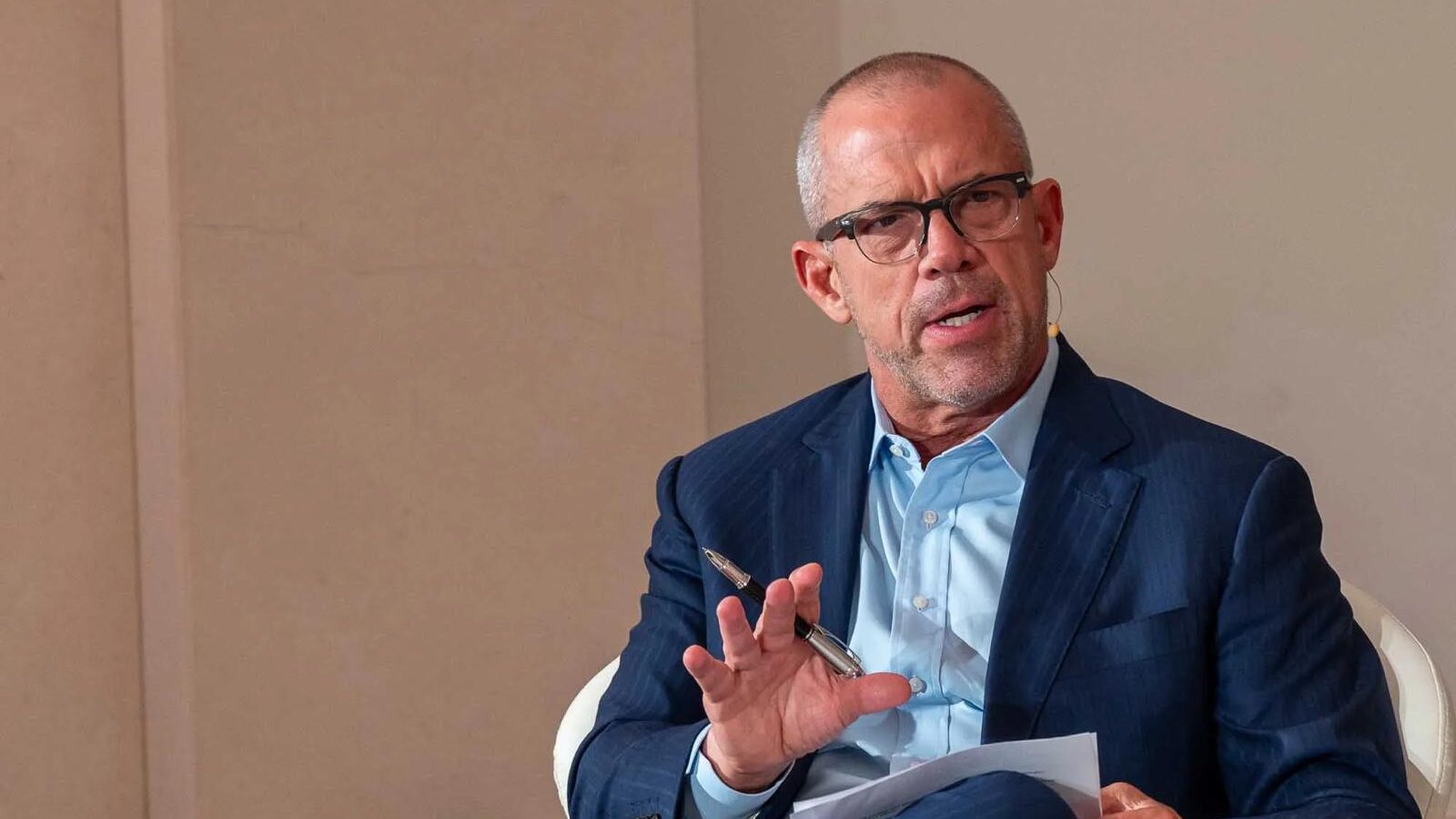
Joe Mullings, chairman and CEO of TMG, told The Media Line that the goal is to accelerate both the speed and scale at which Israeli medtech companies reach commercial success and, ultimately, patients.
“We’ve been looking for a very long time for a partner here,” he said during his recent visit to Israel to attend the Innovation in Cardiovascular Interventions global summit and take part in this year’s US/Israel medtech delegation. “It was just an ideal opportunity for both of us to leverage our skills, networks, experiences, and passion about the industry.”
TMG plays a significant role in the US medical device and digital health sectors. The company specializes in executive search and placement and has recruited approximately 9,000 executives since its establishment.
“All Israeli medtech companies aim for the American market,” Hadari said. “At a certain stage in a company’s growth, it will need a vice president of sales in the US, a clinical trials manager, or other senior roles on the ground.”
According to Hadari, the stakes are high.
“A precise hire can propel the company forward, while a poor hire can cost a lot of money and lead to long periods of stagnation,” Hadari said.
TMG has been active in Israel for more than two decades and has already worked with several local companies as they expanded into the US market.
With offices across the United States, Canada, the United Kingdom, and the Asia Pacific region, TMG has long partnered with Israeli-based companies and helped Israeli-founded organizations build a presence in America. Hadari said the Israel office will be the company’s smallest operation globally, but also one of its most strategically important.
Give the gift of hope
We practice what we preach:
accurate, fearless journalism. But we can't do it alone.
- On the ground in Gaza, Syria, Israel, Egypt, Pakistan, and more
- Our program trained more than 100 journalists
- Calling out fake news and reporting real facts
- On the ground in Gaza, Syria, Israel, Egypt, Pakistan, and more
- Our program trained more than 100 journalists
- Calling out fake news and reporting real facts
Join us.
Support The Media Line. Save democracy.
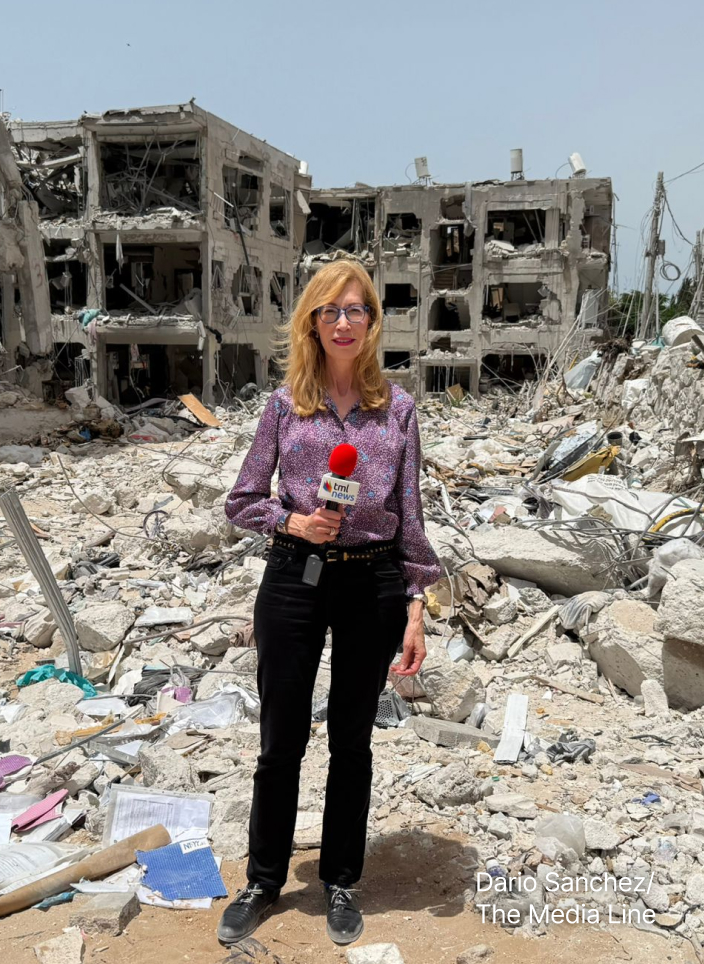
Hadari brings extensive experience in Israel’s health care and medtech sectors to his new role. He previously served as chief communications adviser to Israel’s minister of health and as the ministry’s spokesperson. He later served as chief business development officer at The Maccabi Group, a leading healthcare provider, among other senior positions.
He emphasized that leadership is often the deciding factor between success and failure.
“Sharp, experienced leadership becomes the difference between breaking through and falling behind,” Hadari said. “TMG empowers medical device and digital health companies to scale in the US by bringing them the most important asset: top-tier executives and senior leadership teams who can launch, run, and expand US operations.”
All Israeli medtech companies aim for the American market. At a certain stage in a company’s growth, it will need a vice president of sales in the US, a clinical trials manager, or other senior roles on the ground.
Mullings told The Media Line that innovation is where Israeli medtech companies most excel.
“They’re great inventors,” he said. “They have unbelievable drive and passion, problem-solving skills, intelligence, and the ability to focus on subjects. But then there’s this entire other side: Once you ideate, you need financing, you need scale, you need access to the US market, which are things that the Israelis don’t have as much of a core competency in,” he noted.
According to Mullings, some of the challenges are geographic, while others relate to the investment community, in addition to the challenges surrounding Israel’s limited manufacturing base. The events of October 7, 2023, only deepened those difficulties.
“We saw venture money stop coming into Israel because of the situation that was going on over here,” Mullings said.
He added that the venture capital community increasingly wants to see companies domiciled in the US, particularly since October 7. He noted that the US health care ecosystem is complex, spanning hospitals, ambulatory surgical centers, and outpatient clinics.
Mullings said that, in his view, Israelis tend to fall behind when it comes to systematically working with the United States on key stages such as clinical engagement, interaction with the US Food and Drug Administration (FDA), and ultimately, go-to-market commercialization there.
“What Ido and I are creating is that bridge of getting in much earlier, with market access, with the market development, so they have exposure between Israel and the US and not waiting too long when it becomes more of a desperation point for financing,” Mullings explained.
“There’s no way to do that unless I have a native Israeli partner who understands the medical device industry and has all the doors open to the medical device industry here in Israel, and then I have that same ability with the strategics, the corporates, the investors in the US to be able to get the Israeli startups exposure … in the US market.”
Ian McDougall, vice president of research and development at Endospan, which develops an aortic arch stent graft system, has been doing similar work for his company. He has been responsible for preparing Endospan’s submission package for the FDA review, a critical step toward launching clinical trials and, ultimately, securing approval for implantable medical devices.
McDougall, originally from Canada, has played this role for other non-American companies.
“There are a lot of English speakers in Israel, but it helps to have a native speaker when it comes to communication with the FDA,” he said.
He added that the need for experienced, native-speaking staff has only grown in recent years. A decade ago, companies were often acquired at earlier stages and did not need to navigate the same level of regulatory and compliance requirements. Today, many companies are acquired only after they have already secured regulatory approval and are closer to market readiness. As a result, companies in Israel and around the world must take their products further before an acquisition becomes possible. For Hadari, the decision to establish a local presence is also profoundly personal.
“I also see this step as an act of Zionism, because when the CEO of an Israeli company feels confident in the people he recruits in the US, he himself will not need to relocate or move the company to the US,” Hadari said. “This way, Israeli companies can continue operating from Israel, and the entire economy benefits.”
According to the Israel Innovation Authority, that goal has become even more critical since October 7.
I also see this step as an act of Zionism, because when the CEO of an Israeli company feels confident in the people he recruits in the US, he himself will not need to relocate or move the company to the US
“Throughout the judicial reform, you saw that companies started being founded in the US,” explained Kerem Nevo, head of the authority’s Growth Division. She said that at one point, as many as 80% of high-tech companies were being established as foreign entities. Since October 7, however, the trend has reversed, with more companies choosing to incorporate in Israel, saying they want to build their ventures locally and ensure they last.
Still, the question remains whether this is the right moment for TMG to establish a local presence.
“Those who have courage, those who can see the inevitable in the future, those who want to bring technologies not only to the US but to the rest of the world, there are very few countries that can do that like Israel,” Mullings said. “When you stand by a friend in their darkest times, in their highest areas of need, that friendship becomes stronger and stronger.”
He acknowledged that global divisions with regard to politics, religion, and other issues remain, “but at the end of the day, the medical device industry is flooded with people who care about helping other people, independent of their religion, of their race, of their nationality,” he said. “I think there are certain moments in time that we have to make decisions, and those decisions are beyond all of those, and this is one of those moments in time.”
Mullings concluded by stressing that in matters of health care for children, older adults, and loved ones, divisions such as national borders, political or religious belief systems, and government interests should not get in the way of providing care. Access to health support should transcend geography, ideology, and bureaucracy. “We should just try and heal people,” he said.
