Fate of Protesting Workers Arrested by the IRGC Still Unknown
Approximately 200 workers are being held in IRGC-controlled warehouses, raising serious concerns among labor activists about their conditions
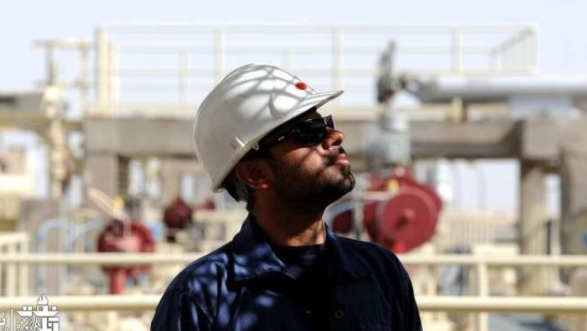
Hundreds of striking workers in Asaluyeh, home to Iran’s most important gas hub and the world’s largest, have been detained in warehouses belonging to the Islamic Revolutionary Guard Corps’ (IRGC) Khatam al-Anbiya Construction Headquarters. Communication between the detained workers and their families has been cut off for weeks.

The strikes and protests by workers in IRGC-dominated Asaluyeh have occurred repeatedly in recent years but have intensified in recent months. (Social Media)
An employee in industries linked to the South Pars gas field told The Media Line that workers across different sectors in Asaluyeh had begun holding gatherings, protests, and strikes weeks before nationwide demonstrations started in Iran.
Their demands focused on higher wages and improved benefits. However, the IRGC, which serves as the main executor of projects in these major petrochemical industries and gas complexes, responded with mass arrests, transferring protesting workers to its facilities in an effort to prevent the spread of labor strikes. Despite these measures, protests and work stoppages have reportedly expanded to other parts of Asaluyeh.
A family member of one detained worker said he was arrested on January 10 and that the only information available is that he is being held in a temporary IRGC detention facility in the area.
A spokesperson for South Pars workers stated that detainees are being kept in large industrial warehouses with limited access to water and food during the day. Approximately 200 workers remain in detention, raising serious concerns among labor activists about their conditions.
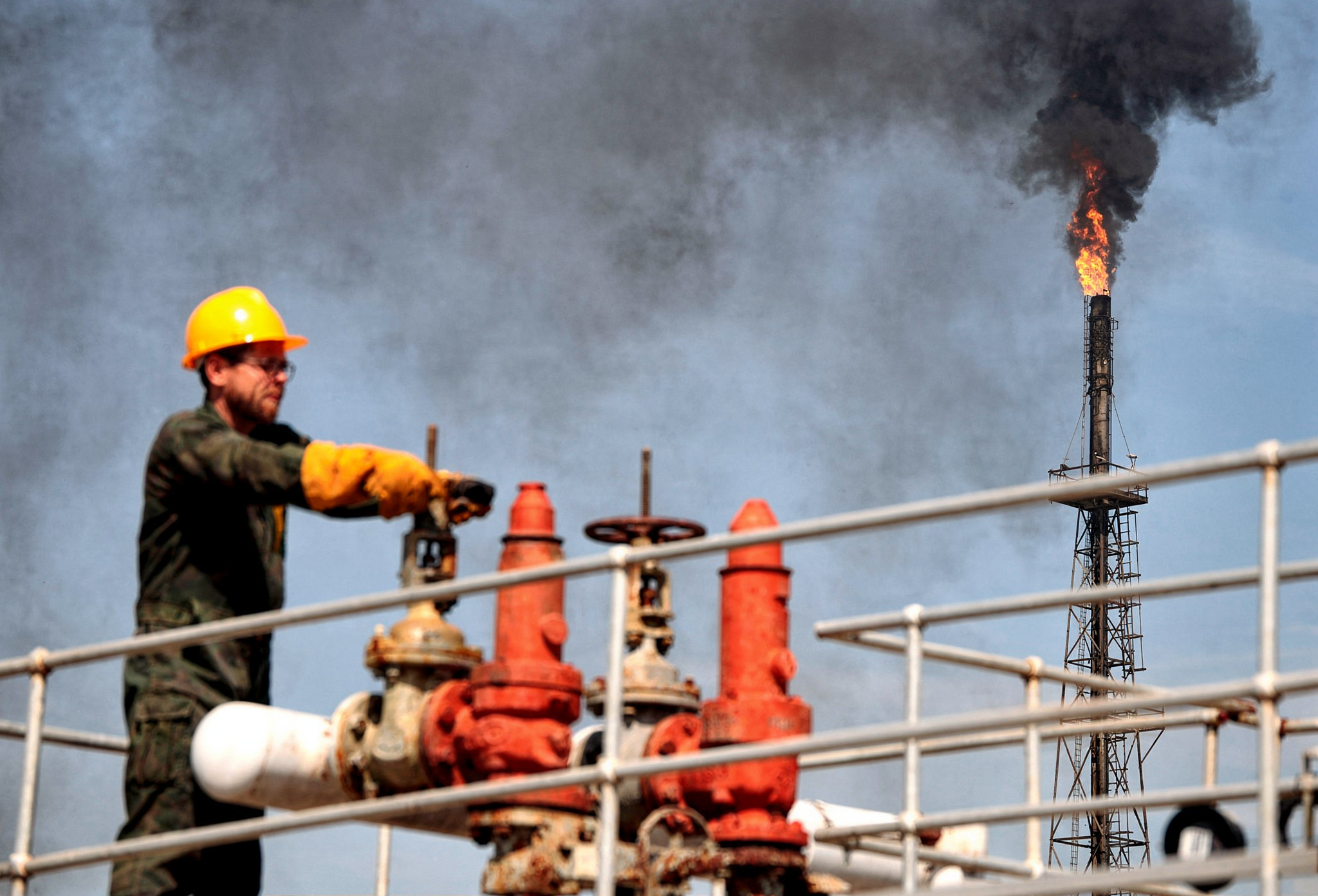
Contract workers in Asaluyeh, home to the world’s largest gas field, are forced to work under some of the worst labor conditions while receiving low wages. (IRNA)
Asaluyeh, located in southern Iran, lies near the South Pars gas field—the largest gas field in Iran and the world, much of which is shared between Iran and Qatar. The area includes vast gas refineries, petrochemical plants, and gas transfer facilities. This industrial zone, known as the Pars Special Economic Energy Zone, forms part of the operational area of South Pars (also referred to as Pars 1). Significant quantities of gas and petrochemical products are extracted daily from this region, a portion of which is exported.
Give the gift of hope
We practice what we preach:
accurate, fearless journalism. But we can't do it alone.
- On the ground in Gaza, Syria, Israel, Egypt, Pakistan, and more
- Our program trained more than 100 journalists
- Calling out fake news and reporting real facts
- On the ground in Gaza, Syria, Israel, Egypt, Pakistan, and more
- Our program trained more than 100 journalists
- Calling out fake news and reporting real facts
Join us.
Support The Media Line. Save democracy.


The IRGC’s Khatam al-Anbiya Construction Headquarters, considered Iran’s largest state contractor for infrastructure projects, effectively oversees the execution and development of projects in the area on behalf of the National Iranian Oil Company. Some estimates suggest that this IRGC-affiliated financial conglomerate, whose stated mission is engineering and infrastructure development in Iran and in other countries such as Iraq, controls as much as 40 percent of the state-dominated economy.
Abdolreza Abed is currently the managing director of Khatam al-Anbiya and has previously held senior positions in major Iranian oil companies. He recently stated that the IRGC’s economic arm is managing 430 projects. The scale of corruption within this network has become clearer in recent years following leaks of confidential documents. For example, in documents obtained through a hack of Iran’s judiciary by a group calling itself “Edalat Ali,” evidence emerged of a multi-million-dollar corruption case involving managers at Khatam al-Anbiya. According to the files, officials abused their positions to purchase shares in bankrupt companies on the stock exchange and entered into sham contracts through irregular relationships with foreign firms. The case is reportedly under judicial review.
Some of the companies involved are based in the United Arab Emirates, others in Spain, and others in European countries, and have allegedly been involved in sanctions evasion, shell company creation, and money laundering.
Khatam al-Anbiya has also been sanctioned by the United States and the European Union for its role in supplying equipment to the IRGC and providing financial support to proxy groups.
The Council for Organizing Oil Contract Workers’ Protests has expressed deep concern over the condition of detained workers, who are reportedly being held in inhumane circumstances, and has called for the release of labor activists detained in recent days.
Despite threats, arrests of union leaders, and pressure on workers in the oil, petrochemical, and gas sectors, industries that are vital to Iran’s economy, strikes and protests have continued and even gained coverage in some domestic media outlets. The website “Naft Ma,” for instance, has reported ongoing strikes by workers at the 10th refinery of the South Pars Gas Complex in Asaluyeh.
Initially, workers protested unpaid overtime, poor working conditions, inadequate dormitory facilities, high housing rents, and cuts to certain benefits. In recent weeks, however, their protests have taken on political dimensions, coinciding with widespread labor strikes nationwide and further complicating the government’s economic situation.
The government, particularly after opposition groups called on energy industry workers to strike, has shown heightened sensitivity toward protests in these strategic sectors and has responded harshly. In 1979, a widespread strike by oil workers halted Iran’s oil exports and significantly weakened the Shah’s government during the revolution.
Workers in Asaluyeh continue production under harsh economic conditions and a difficult labor environment. The IRGC, as the primary employer in the area, does not recognize independent unions or labor organizations and reportedly confronts any attempt to assert workers’ rights, especially by contract workers, with severe measures.
Unofficial South Pars workers reportedly earn an average of about $125 per month, and in some cases, do not receive housing allowances, usual overtime payments, or other benefits. Welfare services such as housing support, hardship allowances for extreme weather conditions, insurance, and overtime compensation are often unpaid. Their wages, under IRGC supervision in this harsh working environment, are reportedly lower than the average wages in some other parts of Iran. Recently, some workers have reportedly gone several months without receiving any salary.
A labor activist in the region told The Media Line that because the IRGC is the main contractor, workers in South Pars face intensified pressure and that protests are met with violent responses. He confirmed that there has been no information for weeks about the fate of at least 200 detained striking workers. With internet restrictions and what he described as near-martial law conditions, the IRGC has reportedly prevented the dissemination of news about their status and about unrest in this strategically vital energy sector.
Despite worsening economic conditions and an atmosphere of fear following last month’s violent crackdown, labor and syndicate protests continue to grow. Student activists, many with left-leaning orientations, have called for nationwide strikes and a memorial ceremony on Tuesday and Wednesday to mark the fortieth day since the violent suppression of January 8 and 9 protests, which they say resulted in the killing of thousands by the IRGC and security forces.
The call has once again placed the Islamic Republic on edge amid fears of renewed widespread protests, particularly as commemorations and nightly anti-regime slogans have intensified in recent days.
