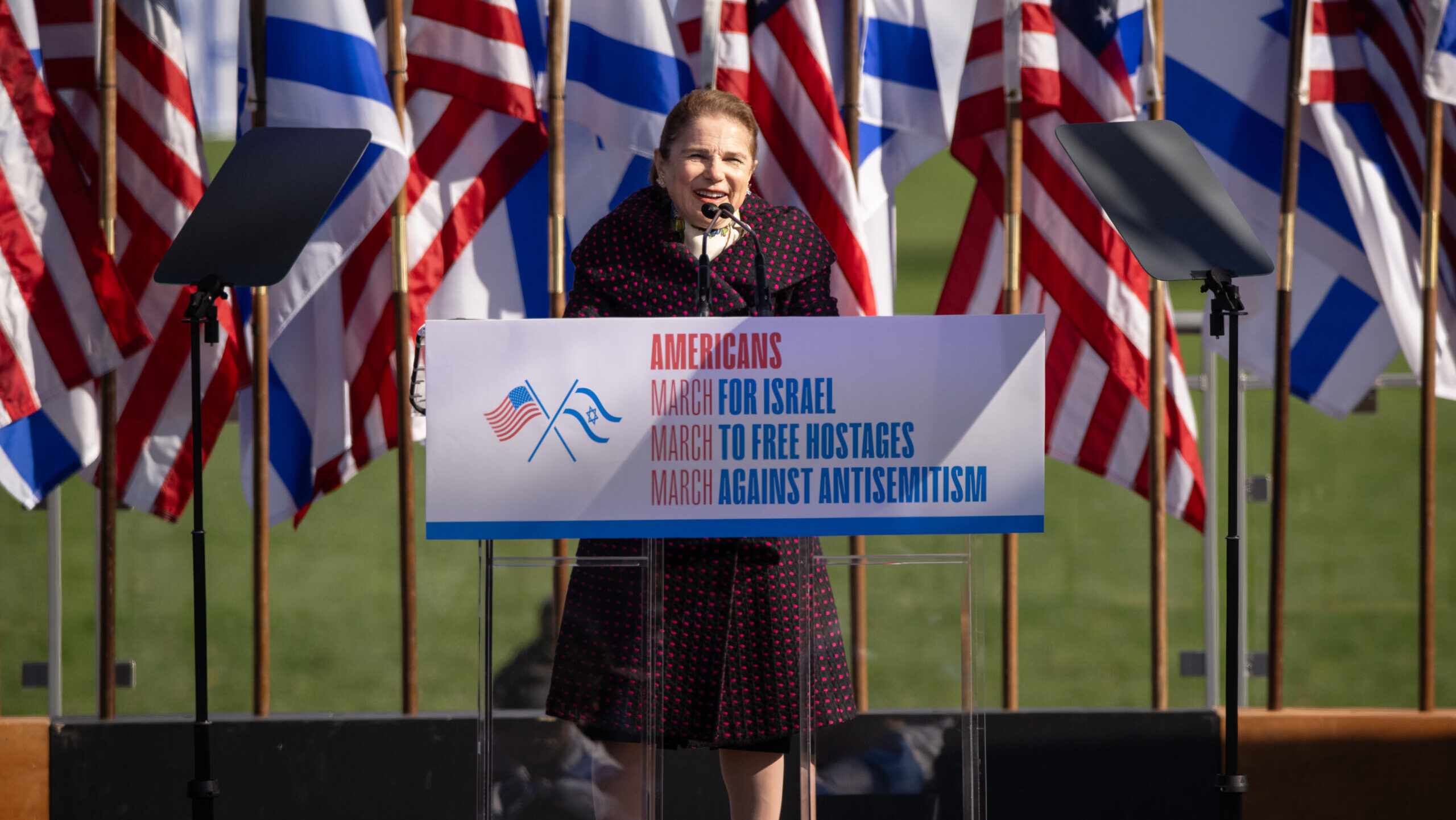
Filling Golda’s Shoes, Tovah Feldshuh Slams Antisemites: ‘We’re on to You!’
Actress, singer and playwright Tovah Feldshuh shares her perspective on antisemitism, celebrity activism, and the fight for peace and Western values
Acclaimed actress Tovah Feldshuh has a lot in common with Golda Meir. Both might be described as feisty, forthright and courageous, and Feldshuh herself is polished, precise, and very much to the point. I sat with her moments before the international premiere of Golda’s Balcony, The Film, a filmed version of her acclaimed one-woman play about Golda Meir, Israel’s fourth prime minister, who led the country from 1969 to 1974.
Feldshuh’s gleaming eyes and steady, unflinching focus echoed the conviction, warmth, directness and intelligence that defined Meir, along with a similarly distinctive tone of voice, making her an uncannily fitting choice for the role. Known for a five-decade career on Broadway and in Hollywood, Feldshuh is familiar to audiences from stage productions such as Yentl, Golda’s Balcony and Irena’s Vow; from television work including Holocaust, Law & Order, The Walking Dead and Crazy Ex-Girlfriend; and from films like Kissing Jessica Stein and A Walk on the Moon, as well as her recent turns as Marla in the film Tuner and as Bina Roklov in the Netflix series Nobody Wants This.
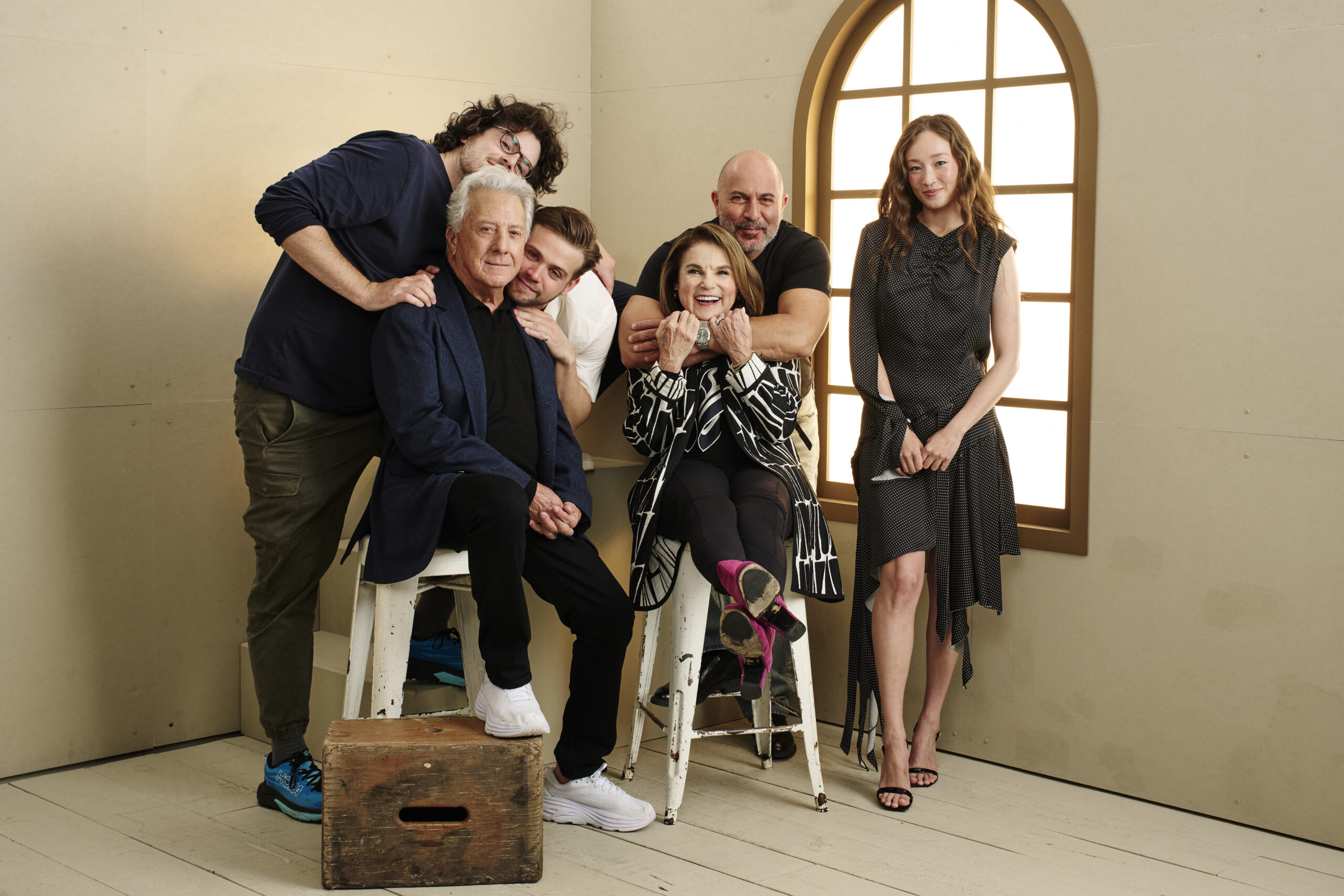
Daniel Roher, Dustin Hoffman, Leo Woodall, Tovah Feldshuh, Lior Raz and Havana Rose Liu of “Tuner” pose in the Getty Images Portrait Studio Presented by IMDb and IMDbPro during the Toronto International Film Festival at InterContinental Toronto Centre on Sept. 8, 2025 in Toronto, Ontario. (Gareth Cattermole/Getty Images for IMDb)
For the current release of Golda’s Balcony, The Film, Feldshuh credited producer David Fishelson and the team behind Izzy—an international streaming platform devoted to Israeli films, series and documentaries—with helping bring the project to a global audience. “Nati Dinnar, the head of Izzy, came to me and said, we want to stream your film,” she said. “Thanks to my primary producer, off-Broadway and on-Broadway, David Fishelson, a contract was struck. And I’m thrilled we have the rights to do this, and it will be distributed worldwide.”
The timing of the project release carries added meaning for Feldshuh. “Oddly enough, and ironically, it will not be distributed here in Israel, so you’ll all have to come visit other countries to watch it,” she joked. She described the film as “one of the great moments of my career,” noting that her work has spanned more than 50 years on stage and screen. “And December 8 happens to be the yahrzeit of Golda Meir. She died December 8, 1978, and it is the anniversary of my bat mitzvah. I was bat mitzvahed December 8 in an undisclosed decade.”
Asked about performing such an overtly pro-Israel work at a time of rising antisemitism, Feldshuh said she has not faced local pushback but sees a very different reality in her home country. “I’m not getting any pushback here, but I’m unable to produce it at the moment in New York City,” she said. “We would have to have security. And this kind of global anti-Semitism and anti-Semitism in my country of origin, which is the United States, is based on half-knowledge, ignorance, and the desire of the American to root for the underdog.”
If you want to kill me, I object
She argued that this instinct has distorted perceptions of the conflict. “The misperception is that the Palestinians are the underdogs,” she said. Feldshuh insisted that Israel would gladly make peace with its neighbors but would not accept campaigns calling for its destruction. “It’s real simple. I’m a practical woman. If you want to kill me, I object. And I object in my country as well.”
Feldshuh then broadened her comments to the debate over immigration and identity in the US and Israel. She recalled her own family’s journey to America through Ellis Island in 1901 and her husband’s through Castle Garden in the 1880s, saying they came “to become Americans.” By contrast, she claimed that some recent arrivals come “to conquer” the country, a pattern she said Israel also faces. “Well, sorry, but that’s not going to work. And it’s not going to work in Israel either,” she said. “I regard Israel and I regard the Jewish people as the indigenous minority, as like our Native Americans, who inhabited this land 2,000 years before Christ. And after all, Muhammad was born in 570 CE. So give me a break. Happy to live in peace. Offered peace many times. Pulled our people out of Gaza. Doesn’t work. Wish it did. Wish it did.”
She criticized what she described as a climate shaped by both a distorted media narrative and the charged atmosphere on US college campuses, speaking directly to the camera with unmistakable resolve. “So I say this to Columbia University, Harvard, MIT, U. of P. [University of Pennsylvania], we are on to you. And we are on to the cleverness of the media campaign that the … Muslim radicals can propagate throughout my country,” she said, arguing that they have been “very clear” about their goals and that the Jewish story is often erased.
Give the gift of hope
We practice what we preach:
accurate, fearless journalism. But we can't do it alone.
- On the ground in Gaza, Syria, Israel, Egypt, Pakistan, and more
- Our program trained more than 100 journalists
- Calling out fake news and reporting real facts
- On the ground in Gaza, Syria, Israel, Egypt, Pakistan, and more
- Our program trained more than 100 journalists
- Calling out fake news and reporting real facts
Join us.
Support The Media Line. Save democracy.
Feldshuh has been notably outspoken while many celebrities have remained quiet during recent conflicts. She spoke with characteristic candor when addressing fellow actors with opposing views. “I don’t have any parlance with Susan Sarandon, Javier Bardem, and the very kind Mark Ruffalo. I just feel they are misinformed. I’m sure they feel I am misinformed,” she said. She warned that some public statements by entertainers can inadvertently legitimize violent ideologies. Referring to “marvelous entertainers like Emma Stone” who signed petitions she rejects, Feldshuh said, “This is a dangerous point of view. It’s a point of view that harbors militarism and harbors death. There’s a part of that religion that celebrates death, as long as you’re dedicated to their god.”
In our religion and in our faith, we say to lose a life is to lose a universe
Drawing on her study of religion and history, Feldshuh contrasted Jewish teachings about human life with what she described as radical interpretations in parts of the Muslim world. “In our religion and in our faith, we say to lose a life is to lose a universe. In the Islam radical POV, they say kill a Jew and you’ve got 72 virgins waiting for you,” she said. She added that she has read of “120 ways in the Quran of how to kill an infidel” and said she had reached these views “just through studying.” Accusing Israel of genocide, she argued, ignores how the conflict began. “To say the Jew is committing genocide, you’re nuts,” she said. “Who started this mess? Who started this mess?”
At the same time, she returned to the daily human cost of conflict. She lamented that young people on all sides are pulled into violence instead of normal life. “We’d all love to live in coexistence. We’d all love to go to the beach and read a good book,” she said, describing how some 18-year-olds “want to get out of high school and put on an AK-47 and get into uniform.”
Feldshuh’s portrayal of Meir has sharpened her sense of moral courage in politics. I asked her—having immersed herself deeply in Golda Meir’s voice, posture, and worldview to bring the prime minister to life on stage and screen—how she believed Meir would have responded to today’s events. “She would have tried to negotiate a peace, but she’s no fool,” Feldshuh said. “The 1973 war partially began because Sadat wanted kilometers on the other side of the canal. And she said, ‘Today the other side of the canal, tomorrow, Tel Aviv.’ She said no. And so, he felt compelled to invade. And then when peace was made, they killed him.”
Her reflections moved quickly to the broader pattern she sees in modern history. “People killed the peacemakers,” she said. “They killed Rabin, the peacemakers, along with Bobby Kennedy, John Kennedy, Martin Luther King.” She stressed that her critique is directed at radicals, not at all Muslims. “I want to be careful about that and clear. I’m not saying everybody who worships Allah and finds Muhammad their prophet is bad stuff or is a person who wants to kill other people,” she said.
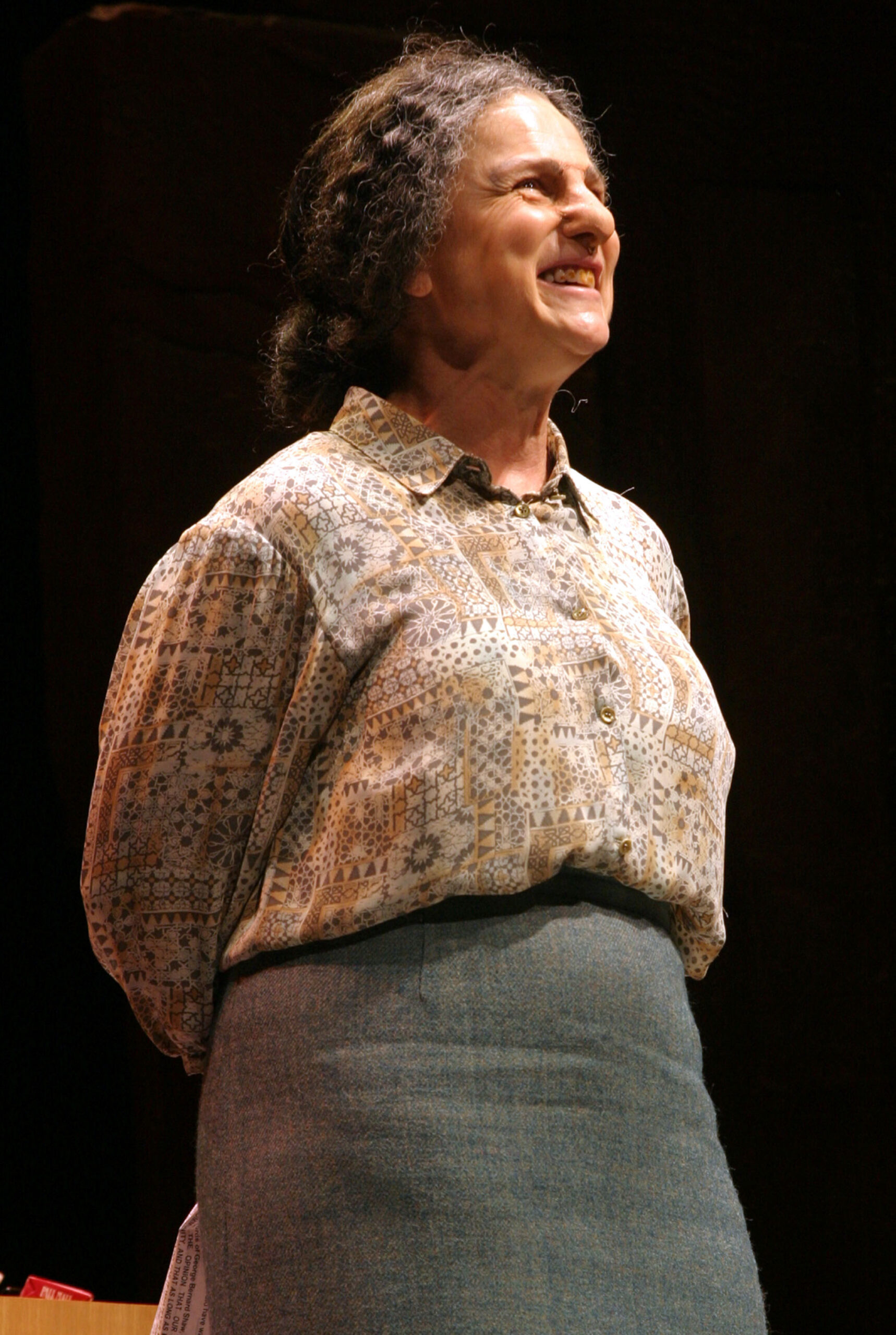
Tovah Feldshuh as Golda Meir at curtain call during the opening night of “Golda’s Balcony” on Broadway at The Helen Hayes Theater in New York. (Bruce Glikas/FilmMagic)
Feldshuh referenced her travels and held up Azerbaijan as an example of religious coexistence that others could study. “It is exemplary. They have harbored their Jewish community and their Christians. For 2,000 years we have lived in peace in that Muslim country that’s 96% Muslim. They’re modern. They’re open-hearted. People all worship inside their houses of worship,” she said. “Since when are you entitled to take over the public streets to worship? I’ve never heard of any other religious sect doing that. It’s an absolute show of power.”
She described herself as neither politician nor pundit, but a seasoned observer. “I have to speak from the truth I see it. I don’t hold myself with any great importance as I’m not in a political office. I’m just a well-educated, curious mind with over seven decades of wisdom,” she said. She said she is haunted by how children absorb hatred from an early age. “These children come into the world. They’re peacemakers, but you have one mother saying, if you’re not good, I’ll throw you to the Jews, and we’re done. You have a three-year-old that is then trained in kindergarten to go along the floor with a model wooden gun, where we’re playing dreidel or reading a book.”
Toward the end of our interview, I asked her about Golda Meir’s famous line: “Peace will come when the Arabs will love their children more than they hate us.” Feldshuh immediately clarified the phrasing: “More than they hate the Jews,” she said. Asked how such a vision could be realized in 2025, she replied that it would require “some decency and will” and again pointed to Azerbaijan as a possible reference point. “You want to see an up, you know, the Muslims are fabulous at conquest. They’re fabulous,” she said. “There’s one little conundrum here. We as the Jewish people are fantastic at survival. We have been well-trained through the millennia, and you’re not going to take our lives and our livelihood and our land from us. And we don’t want to, we don’t want to begrudge you anything. You’ve already got 57 countries. There are many places for you to go. Why your identity has to be tied up in taking this piece of desert that the Jews have turned green, I really don’t know.”
Her comments returned to a long-running historical debate over the language used for the land. “We all know that Palestine is not the name of your country. It’s the name that the Roman Empire gave to Israel to insult the Jews way back when. I think it was right after the destruction of the Second Temple, probably around 70 CE,” she said, later adding that Palestinians “lived there starting no sooner than 622 CE.”
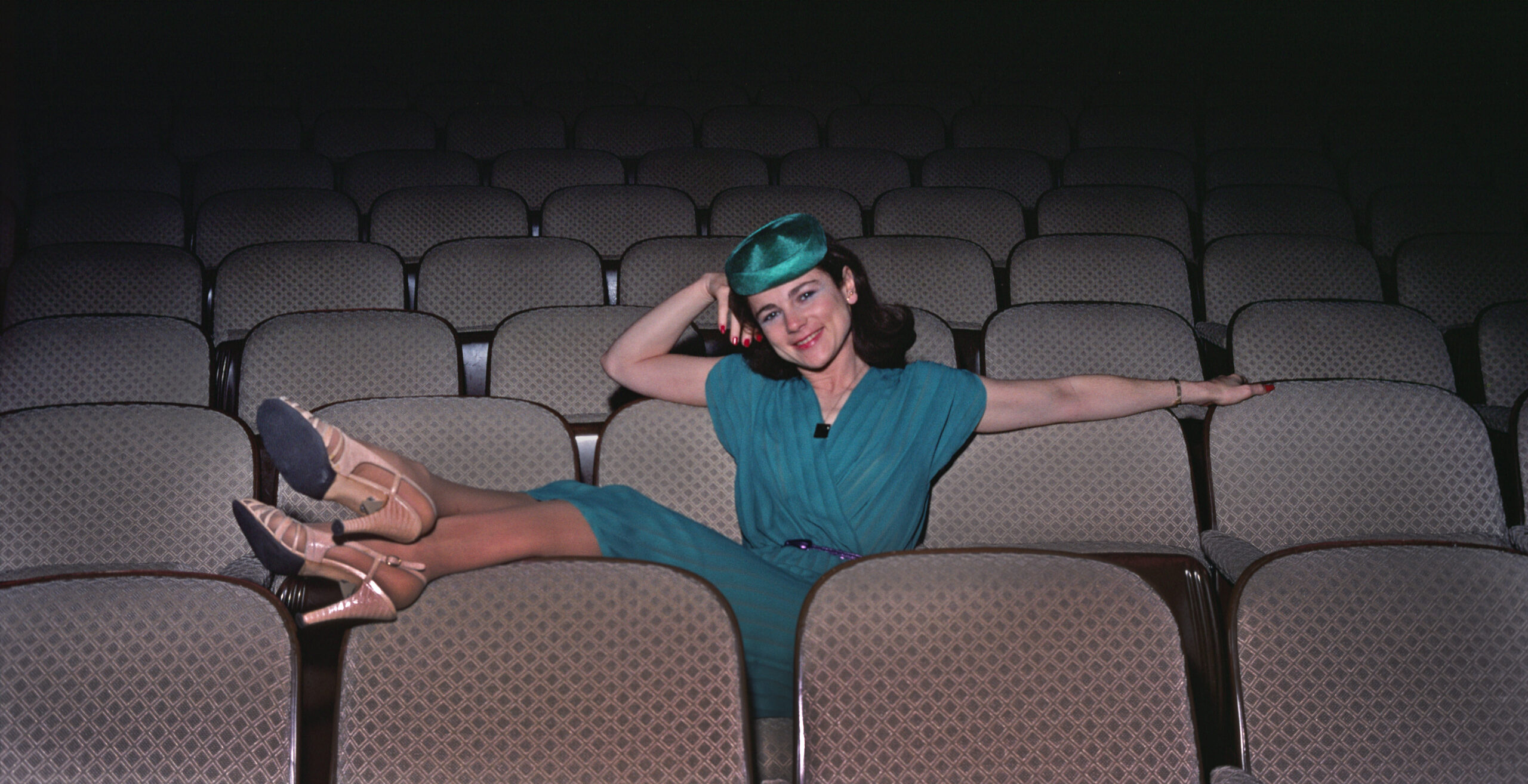
Actress Tovah Feldshuh sitting in a theatre on June 6,1979 in New York. (Santi Visalli/Getty Images)
Before she left Israel, Feldshuh asked to share several additional thoughts. She emphasized that her critiques of extremism are not a denial of suffering on any side. “Of course, my heart goes out to innocent civilians, and they exist on all sides. I refuse to believe that Gazan mothers give birth to their sons and daughters in order only to teach them to die in the name of radical Islam,” she said. “It should be remembered always that, though mistakes are sometimes made, only Israel goes to great efforts to try to target military operations.”
“These targets, unfortunately, must include sometimes locations such as hospitals and schools where the terrorists cynically locate military emplacements in an effort to gain propaganda points if there is collateral damage,” she continued. “Some may be politically sympathetic to the oppressed-oppressor line of thinking. Given the record of the jihadists against minorities of all types, it is beyond my comprehension that their supporters can, on balance, align themselves with the savagery of intifada and the goals of global jihad.”
Feldshuh then turned back to her own industry. “In my profession, there have been reports of a few, fortunately only a few, well-known people who have made statements in support of the Palestinians and the intifada. Sometimes their motivation is well meaning, as they are concerned about human suffering. I understand that,” she said. “However, as a practical matter, in the complex world in which we live, their concern for suffering does not take into account the source as well as negative implications of supporting people advocating intifada and jihad.”
I choose life and self-preservation for those of us who advocate for and support Western values
“Israel would run to accept peace if Hamas and others would give up their specific and avowed murderous activities,” she added. Feldshuh closed with a succinct statement of her worldview: “I choose life and self-preservation for those of us who advocate for and support Western values. It should always be thus.”
