From Right to Left, Israeli Political Parties Outline Critical Objectives After the War – Defense, Identity, and Social Needs
As Israel approaches what could be the end of the Gaza war during the Sukkot holidays, lawmakers from across the political spectrum discuss what comes next: economic recovery, social healing, and national identity reconstruction
As Israel nears what officials and analysts describe as a potential turning point, with US mediation and the Trump administration’s new ceasefire framework possibly paving the way toward the end of the Gaza war, the national conversation has begun to shift. After 24 months of fighting, Israelis are no longer asking if the war will end, but how the country will recover when it does.
The challenges are enormous: economic recession, social fragmentation, mass trauma, and an international image crisis. Each political faction envisions a different hierarchy of priorities for Israel’s “day after,” ranging from deterrence and defense to psychological rehabilitation and rebuilding public trust.
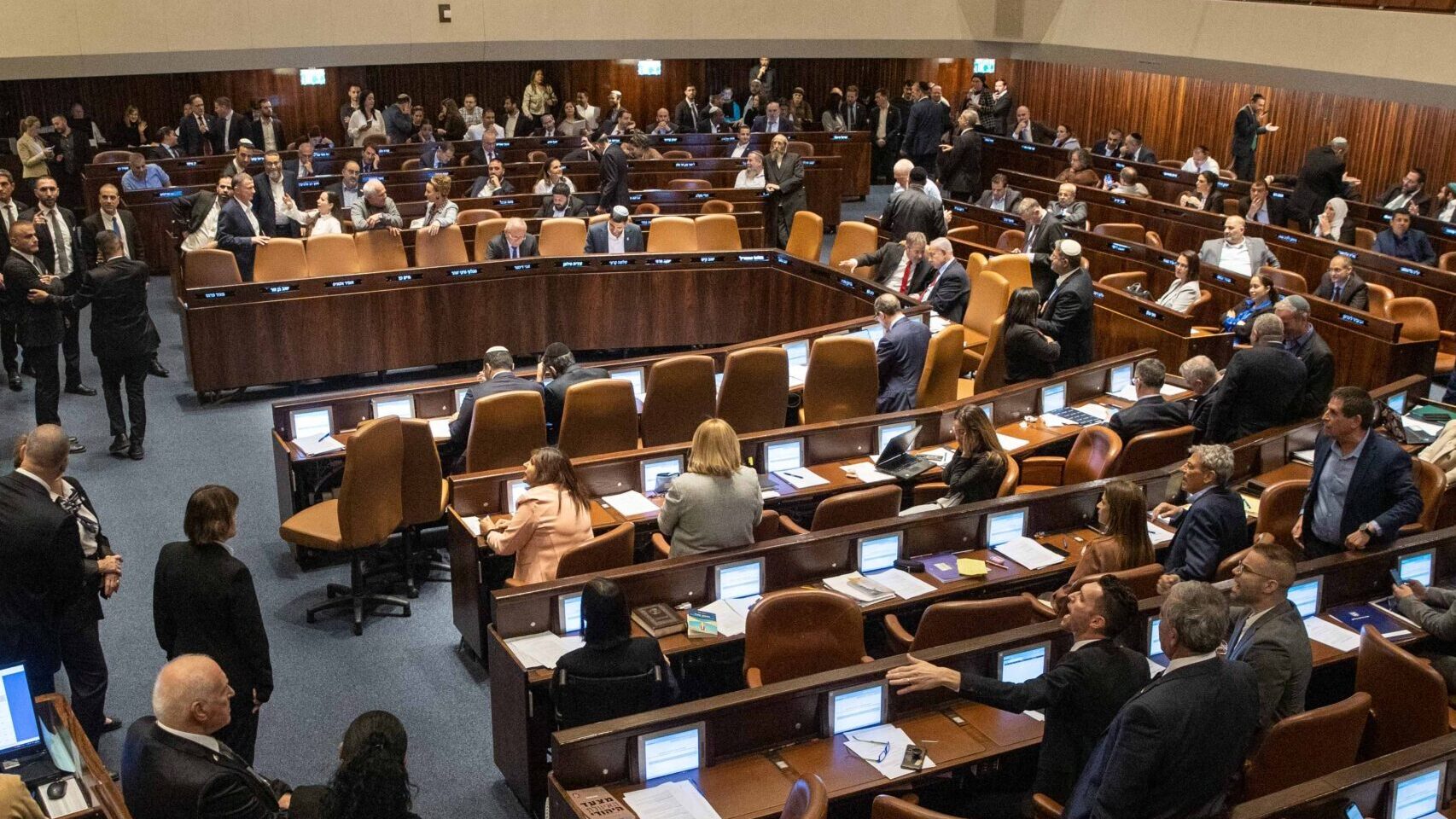
Speaking with The Media Line, lawmakers from three key ideological blocs — Religious Zionism, Likud, and the Democrats — reflected on Israel’s future once the fighting stops. Their perspectives reveal not only ideological contrasts but also a shared recognition that the war has left wounds too deep for short-term fixes.
For Israeli lawmaker Zvi Sukkot of the Religious Zionism Party, the question of recovery begins and ends with security. Sitting on the Knesset’s Foreign Affairs and Defense Committee, Sukkot rejects any illusion of normalcy after the ceasefire. “Israel is still the most threatened country in the world, not maybe, but certainly,” he said. “Even after Gaza, there are weapons in Judea and Samaria, in Arab towns, and near the Egyptian border. These are existential threats. We can’t just close our eyes and say, ‘Let’s deal with tourism.’”
We don’t have the luxury to pretend everything is fine,” Sukkot added. “Only once the threats are neutralized can Israel truly start rebuilding.
Sukkot argues that Israel’s civilian and economic rehabilitation must follow, not precede, decisive military achievements. “When we significantly reduce the threats in Judea and Samaria and inside Israel, our capacity to develop and heal will grow tremendously,” he said. For him, deterrence itself is the foundation of economic growth. “The shekel is strengthening, inflation is falling, and the interest rate will soon drop, all because we are fighting and removing threats. The war, not peace talks, has made Israel’s economy stronger.”
His view reflects deep skepticism toward rapid normalization and a belief that the state’s stability is inseparable from its control over the security situation. “We don’t have the luxury to pretend everything is fine,” Sukkot added. “Only once the threats are neutralized can Israel truly start rebuilding.”
Israeli lawmaker Amit Halevi of the Likud Party shares Sukkot’s concern about the cost of instability but focuses on the economic dimensions of the postwar challenge. “If the day after does not include a fundamental change in the Middle East, it will have a decisive impact on Israel’s economic agenda,” he told The Media Line.
Give the gift of hope
We practice what we preach:
accurate, fearless journalism. But we can't do it alone.
- On the ground in Gaza, Syria, Israel, Egypt, Pakistan, and more
- Our program trained more than 100 journalists
- Calling out fake news and reporting real facts
- On the ground in Gaza, Syria, Israel, Egypt, Pakistan, and more
- Our program trained more than 100 journalists
- Calling out fake news and reporting real facts
Join us.
Support The Media Line. Save democracy.


Halevi, a member of the Knesset’s Finance Committee, described the current fiscal crisis as a direct result of Israel’s security environment. “Defense spending has become the largest expenditure in the state budget,” he said. “The war doubled the deficit and changed Israel’s debt-to-GDP ratio. If this conflict does not end with the complete defeat of Hamas, Gaza will continue to drain our resources.”
Halevi argues that the solution lies not in raising taxes or cutting social programs, but in redefining national priorities. “The war should be an opportunity to cut unnecessary government expenses and make structural economic reforms,” he said. “We must focus on investments that actually build the country — in infrastructure, productivity, and innovation, not bureaucracy.”
If we don’t achieve full control and genuine de-radicalization, it will cost us far more blood and far more money
Yet his economic realism is intertwined with a broader regional perspective. Halevi insists that the outcome in Gaza will shape Israel’s fiscal future. “If we don’t achieve full control and genuine de-radicalization, it will cost us far more blood and far more money,” he warned.
When asked about tourism, one of the hardest-hit sectors during the war, Halevi offered a measured view. “I’m not directly involved in tourism policy,” he admitted, “but it’s clear that Israel’s appeal depends on two things: security and identity. Our added value lies in our history — the City of David, Shiloh, the Via Dolorosa — places you can’t find anywhere else. But without safety and responsible diplomacy, even the most beautiful destinations can’t bring visitors back.”
He described Israel’s heritage as both an economic and moral resource. “These are treasures,” Halevi said. “They are the civilizational foundations of humanity, our moral and historical DNA. Investing in them is not just about tourism; it’s about who we are.” In a moment of reflection, Halevi articulated what he sees as the hierarchy of statecraft. “Every country stands on three pillars: identity, security, and economy. Identity is who we are — our purpose, our culture, our heritage. If we strengthen that, the rest follows. Before security and economy comes identity.”
While Sukkot and Halevi both locate Israel’s renewal in security and self-definition, Israeli lawmaker Efrat Rayten of the Democrats party offers an almost mirror image of their approach, arguing that Israel must begin with its people, not its borders. “This is a war of a scale Israel has never known before,” Rayten told The Media Line. “Hundreds of thousands of reservists left their families, their studies, their jobs, and fought for long months on several fronts against terror organizations known for their brutality.”
The human cost, she said, is immeasurable. “Soldiers have faced unbearable moral dilemmas, fighting in tunnels, seeing their friends injured, worrying about the hostages. At the same time, every citizen in Israel has been traumatized by the events of Oct. 7. This is a bleeding wound in the Israeli soul.” Rayten believes that the state failed to anticipate the psychological toll. “The government should have established a national authority dedicated to the mental and social rehabilitation of soldiers and their families,” she said. “The war’s impact on women, parents, and children is enormous. They also need guidance, counseling, and long-term support.”
The world will return to Israel only when it sees that this is again a country of life, not of war
She framed mental health not as welfare policy but as a national mission. “The basic contract between a state and its citizens obligates the government to care for their security, life, and health — including mental health,” she said. “After two years of war, therapy, family assistance, and rehabilitation must be provided immediately and without budgetary limits. Our recovery as a people will not be measured only by military victory, but by our ability to heal those who lived the war from within.”
Rayten also emphasized the need for deep educational and labor-market adjustments. “Many reservists are students who have lost academic years. The state must adapt the higher education system and offer flexible programs to close the gaps,” she said. “We must invest in professional training, prevent brain drain, and ensure that young people have a future here in Israel.”
On tourism and diplomacy, her tone shifted from domestic to global. “The world will return to Israel only when it sees that this is again a country of life, not of war,” she said. “We need a new government that opens its face to the world and restores international trust. Israelis love tourism; it reflects our curiosity, our warmth, and our love of life.”
For Rayten, Israel’s legitimacy depends as much on its democracy as on its deterrence. “Israel is the only Jewish and democratic state in the world, committed to equality, justice, and peace,” she said. “The current government has damaged Israel’s image and deepened internal division. But the real Israel — the moral, compassionate Israel — is alive in the citizens who march every week for democracy and for the hostages. That is the beating heart of this nation.”
As the Sukkot holiday arrives — a season of temporary shelters and reflection — Israelis find themselves still living under fragile roofs, both literal and symbolic. The war’s end, if it comes, will not deliver automatic peace or prosperity. For the right, like Sukkot and Halevi, the path forward is grounded in restoring deterrence, national identity, and fiscal responsibility. For the left, represented by Rayten, it begins with compassion, mental health, and rebuilding social trust.
All three, however, share an understanding that Israel’s future cannot simply resume where Oct. 6 left off. The country that emerges from this war will need to redefine not only its borders but its sense of purpose. Halevi said it succinctly: “Israel will be judged not only by its security but by the kind of nation it becomes.” And as Rayten countered, “Our moral strength will determine our survival more than any military victory.”
From right to left, their words reveal a shared understanding that Israel’s greatest battle now lies within itself: to rebuild, to heal, and to remember why it fought.
