Israeli Parliament Marks US 250th Anniversary with a Message to Washington: The Alliance Must Be Won, Not Assumed
As President Donald Trump is praised, speakers caution that rising antisemitism and generational shifts test the alliance’s future
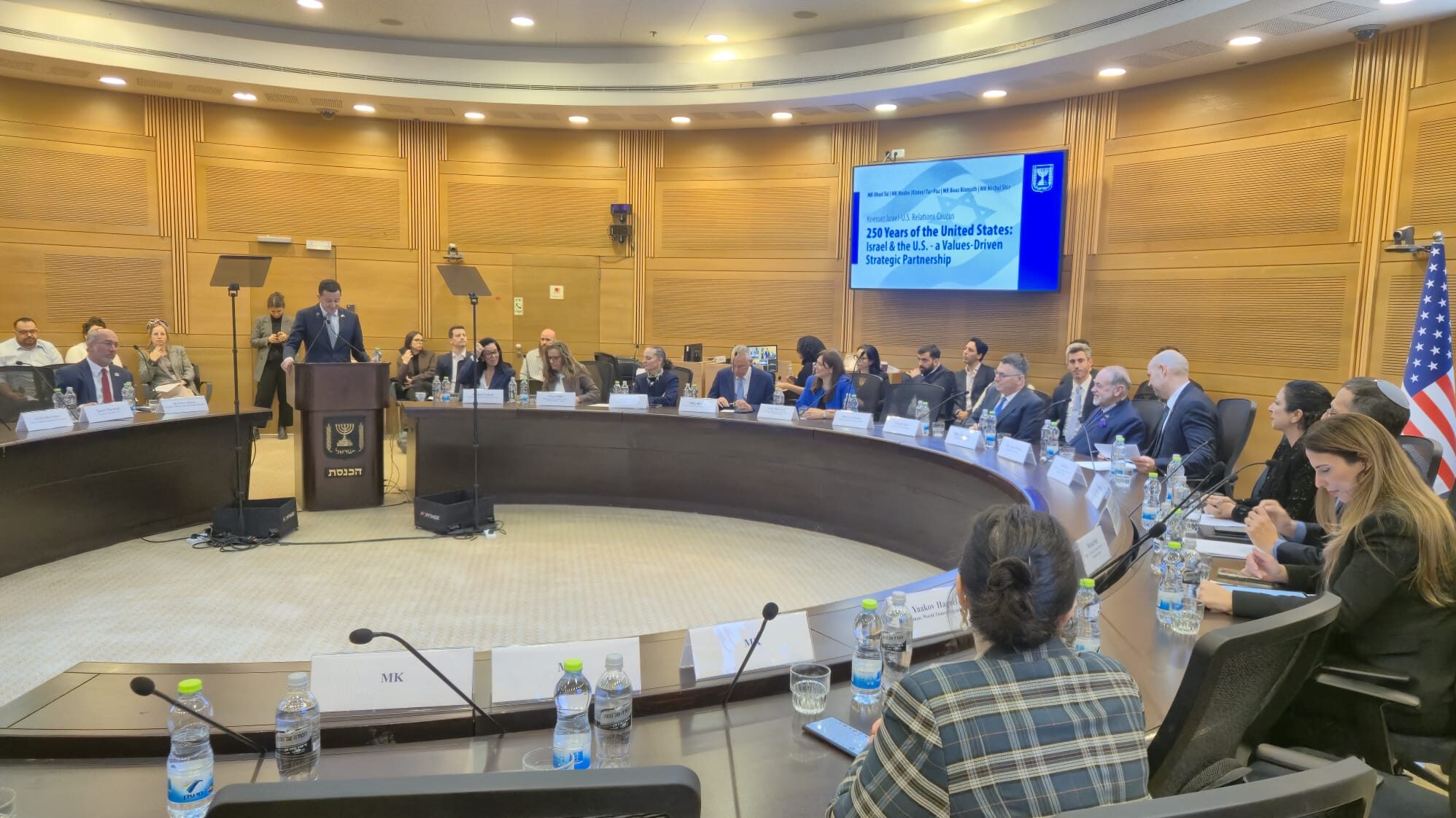
The phrase, “most trusted and cherished,” lingered in the hall. Wednesday’s conference, celebrating 250 Years of the United States and the Israel-US Strategic Partnership, was organized by the Knesset’s Israel–US caucus. Speaker after speaker returned to the same premise. The alliance is strong. It is visible. It is active. But it cannot be assumed.
US Ambassador to Israel Mike Huckabee told The Media Line that the event was “a wonderful opportunity to once again celebrate the partnership between the US and Israel.” As the United States approaches its 250th anniversary, he said, it was “quite appropriate” to recognize Israel as “our most trusted and cherished partner in the world.”

US Ambassador Mike Huckabee and Knesset speaker Amir Ohana on Feb. 25, 2026. (Gabriel Colodro/The Media Line)
Speaker of the Knesset Amir Ohana, a senior member of the Likud party, set the frame early. “Today, Israel, the Jewish people, and the entire free world, face the twin threats of terrorism and antisemitism,” he said. “Those who chant ‘death to America’ also chant ‘death to Israel’.”
Ohana pointed to what he described as exceptional coordination between Jerusalem and Washington. “President Trump has met with Prime Minister Netanyahu seven times in 13 months, unprecedented by any measure,” he said, presenting the statistic as evidence of alignment at the highest level. Turning toward Huckabee, he added that the ambassador had defended Israel publicly “with the courage and composure of Daniel in the lion’s den.”
The anniversary was the stated reason for the gathering. The underlying message was more strategic. Several speakers made clear that the relationship between Israel and the US, though reinforced in recent years, now faces a different kind of challenge. Not a diplomatic break or a military split, but something more subtle and likely to last much longer.
Huckabee himself, while emphasizing economic reciprocity, shifted quickly away from budgetary language in his formal address. The annual $3.8 billion assistance package, he noted, represents “0.005% of the US budget.” It is “not a one-way street. It is a two-way street.” Ammunition used by the Israel Defense Forces (IDF), he said, is manufactured “just outside of Little Rock, Arkansas, where I live,” and components of Israel’s missile defense systems are also produced in his home state.
But he stopped short of leaving it there. “Let’s not put it in economic terms,” Huckabee said. “Let’s put it in something more important, something even deeper.” What binds the two countries, he argued, is a “Judeo-Christian foundation.”
The argument that American support is an investment rather than aid was echoed by Likud lawmaker Ohad Tal, who said bluntly, “The $3.8 billion that the US gives to Israel every year isn’t aid. It is America’s smartest and highest return investment.” Citing former US Secretary of State Alexander Haig, Tal described Israel as “the largest American aircraft carrier in the world that cannot be sunk,” adding that it is “America’s most cost-effective aircraft carrier that does not need to be moved.”
The $3.8 billion that the US gives to Israel every year isn’t aid. It is America’s smartest and highest return investment.
At the same time, he warned that backing for Israel faces pressure across the ideological spectrum. The alliance, he said, is “constantly challenged in college campuses, in the streets of Western capitals, in the media, in think tanks, in civil society organizations, and even in parts of Washington.” He named figures on the American right whom he accused of fueling hostility toward Jews, saying, “Candace Owens, Nick Fuentes, Tucker Carlson, and others have joined the radical left and Islamists in their hatred for Jews.”
Sharren Haskel, the deputy minister of foreign affairs and a member of the Likud party, framed the relationship in ideological terms. “This is not charity. This is partnership,” she said, adding that “Israel has never had a better friend in the White House than President Donald J. Trump.”
Give the gift of hope
We practice what we preach:
accurate, fearless journalism. But we can't do it alone.
- On the ground in Gaza, Syria, Israel, Egypt, Pakistan, and more
- Our program trained more than 100 journalists
- Calling out fake news and reporting real facts
- On the ground in Gaza, Syria, Israel, Egypt, Pakistan, and more
- Our program trained more than 100 journalists
- Calling out fake news and reporting real facts
Join us.
Support The Media Line. Save democracy.
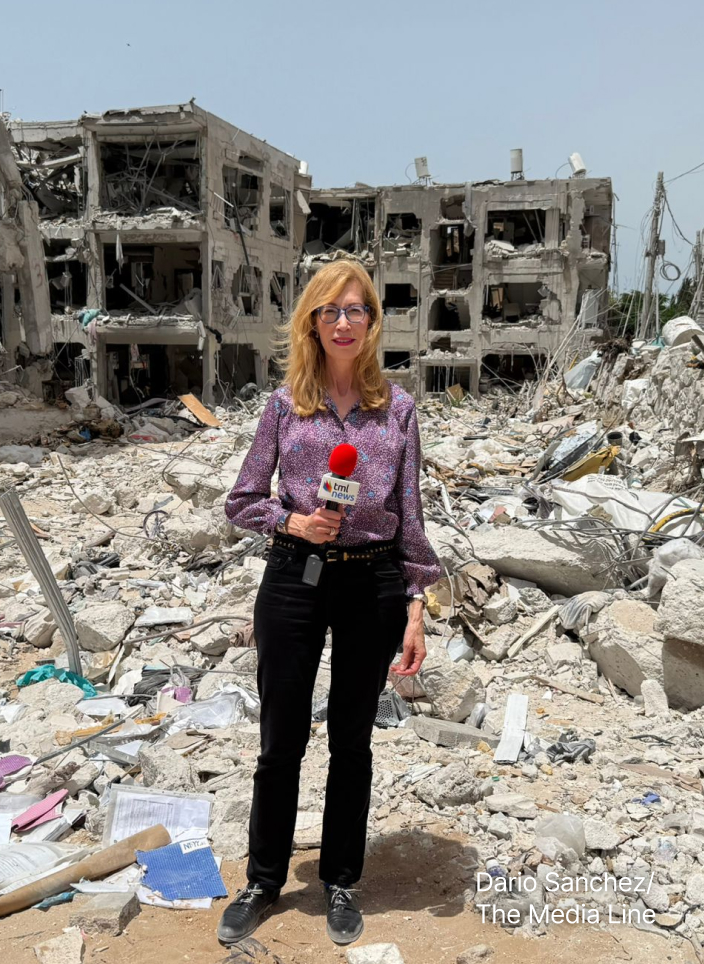
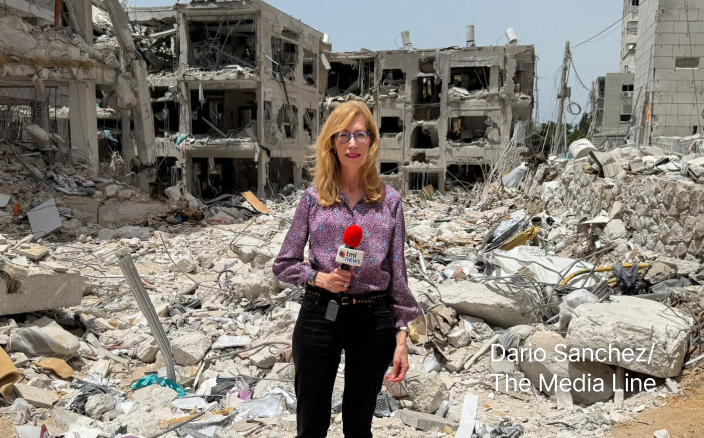

Deputy Foreign Minister Sharren Haskel speaks at Knesset, Feb. 25, 2026. (Gabriel Colodro/The Media Line)
That sentiment was reinforced by Foreign Minister Gideon Sa’ar, who credited President Donald Trump with reshaping the regional landscape following the Gaza war. President Trump, Sa’ar said, “has proven time and again that he deserves the title, the leader of the free world,” arguing that his leadership “made our region and the world a safer place.”
Referring to the Trump-backed 20-point plan that concluded the war, Sa’ar stated that it “helped bring about the release of all our hostages,” and that “at the heart of this plan are the disarmament of Hamas and Islamic Jihad” as well as the demilitarization of the Gaza Strip, and the deradicalization of the Palestinian society there.
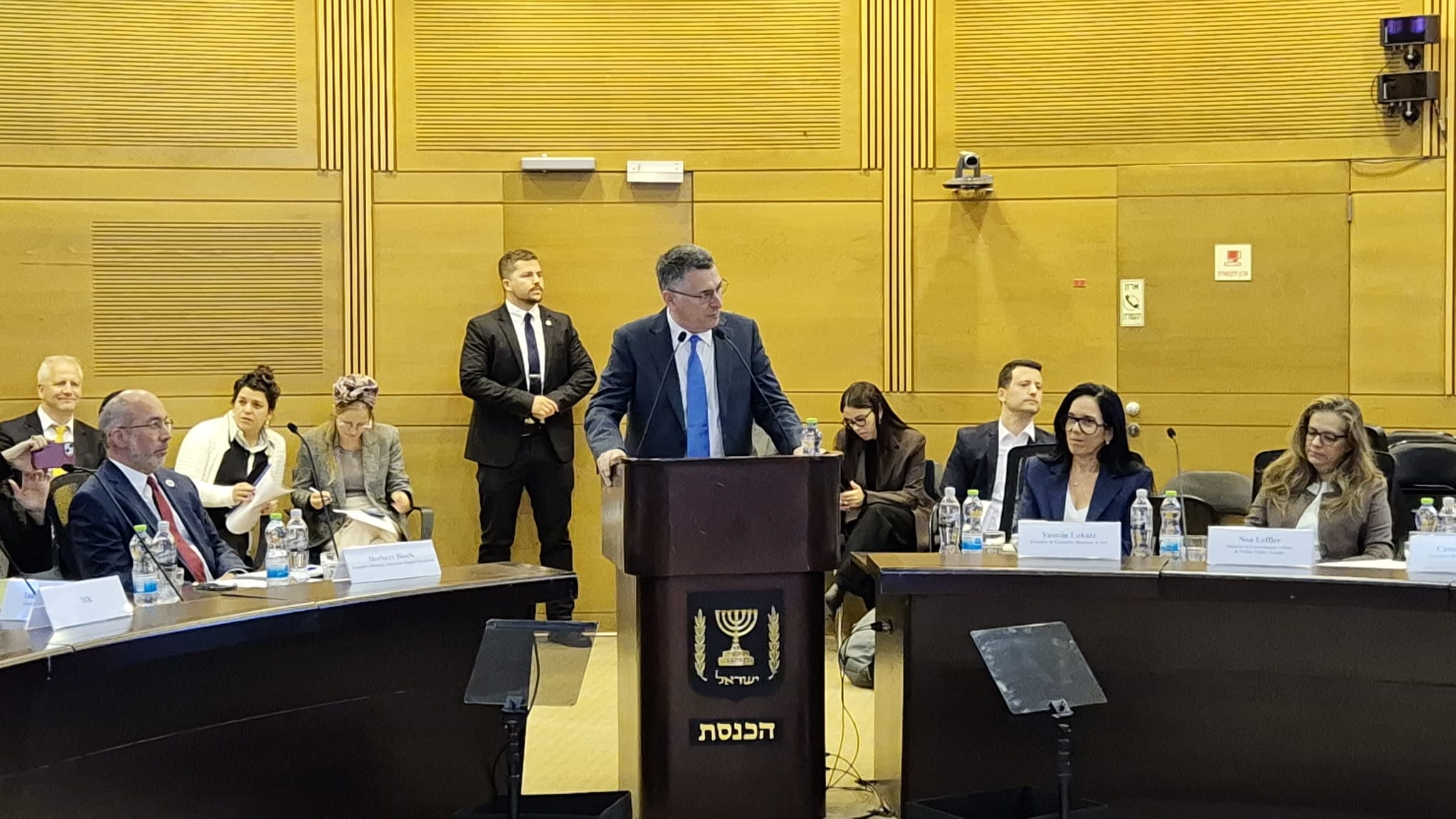
Foreign Minister Gideon Sa’ar speaks at the Knesset on Feb. 25, 2026. (Gabriel Colodro/The Media Line)
Yet, beneath the praise for current coordination ran a thread of unease about the future. Michal Shir, a member of the Knesset from the Yesh Atid party, told The Media Line that “the very strong relationship and friendship … is crucial for the future of both nations,” but cautioned that “the world is changing,” and that “the tectonic plates are shifting since we haven’t seen since World War II.”
She added that younger generations are “being influenced by social media,” warning that rising antisemitism is altering public attitudes. “We see the numbers. These are not good numbers,” she said. In her remarks at the conference, she described antisemitism as “a test of Western civilization itself,” adding that “the fight against antisemitism is not Israel’s fight alone.”
For the Jews in the diaspora, and certainly in the US, there is no ceasefire. We are talking about 10,000 [antisemitic] events a year in the US.
Carole Nuriel of the Anti-Defamation League offered data to support that concern. “For the Jews in the diaspora, and certainly in the US, there is no ceasefire,” she said. “We are talking about 10,000 [antisemitic] events a year in the US.”
She noted that the share of Americans holding antisemitic views has climbed from “11-12%” over many years to “24%” today. “One out of four Americans,” she said, holds “significant antisemitic attitudes.”
Polling trends cited by Rotem Oreg-Kalisky, founder of Librael, an NGO based in Israel promoting Israeli interests from a liberal values perspective, highlighted the challenge. He said, “53% of Americans hold a negative opinion on Israel. Among Americans under 30, “Only 24% hold a positive opinion on Israel.”
He noted that arguments focused on high-tech innovation or military cooperation fail to resonate with audiences shaped by human rights discourse, because those convinced they cannot support Israel on the basis of their values — justice, peace, equality, and human rights — are not interested in Israel’s high-tech sector.
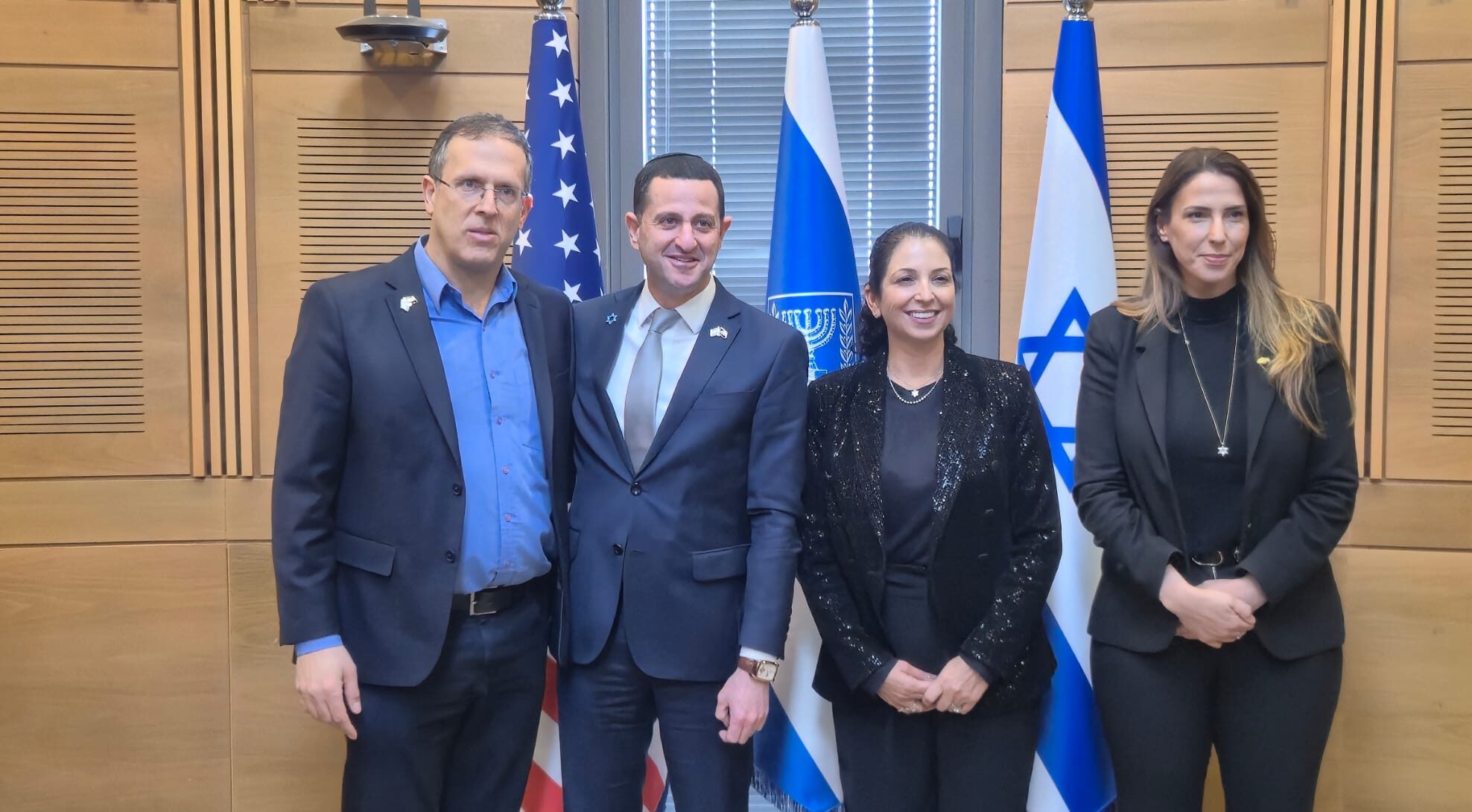
L to R: Moshe Tur-Paz, Ohad Tal, Shira Ruderman, and Michal Shir, Feb.25, 2026. (Gabriel Colodro/The Media Line)
While describing President Trump as “a true friend of the State of Israel,” Oreg-Kalisky added, “The bad news, he will not be president for a long time,” urging preparation “for every scenario.”
Yasmin Lukatz, executive director of the Israel Collaboration Network, described what she called a shift in the alliance’s very premise: “The discussion used to be how to strengthen the connection between Israel and the United States,” she said. “It turned into the question: Why do we even need the connection?” She insisted that the relationship remains “win-win,” grounded in both shared values and mutual interests, but acknowledged that the debate has reached schools, campuses, and boardrooms.
Former Israeli ambassador to the United States, Michael Herzog, urged the audience not to confuse strength with permanence. “For the American Jewish community, added to the traumatic date of October 7th, is October 8th,” he said, describing “an unprecedented wave of antisemitism.” He warned that “we should never take our relations for granted,” and called for “a long-term strategy” and continued investment in bipartisanship.
The most personal reflection came from Orna and Ronen Neutra, the parents of Omer Neutra, an American-Israeli soldier who was killed on October 7 and whose body was kidnapped and later returned for burial. They described raising their son “in Jewish-Zionist education,” and with “a close and ongoing connection to the State of Israel,” saying he “chose to come to Israel, to enlist in the IDF, and to become a combat officer out of a sense of responsibility.”

Orna and Ronen Neutra, parents of Omer Neutra, an American-Israeli IDF soldier who was killed on Oct.7 and whose body was kidnapped to Gaza, speak at the Knesset on Feb. 25, 2026. (Gabriel Colodro/The Media Line)
Since Omer was an American citizen, they felt compelled to act quickly in Washington. A letter regarding his case, they said, was received at the White House already on October 8, 2023. “Within a few days, we understood that the struggle for the release of the hostages does not take place only in Israel,” they noted. “It takes place also in the United States, and mainly in Washington.”
They described the “listening, openness and identification” across party lines, but also noted that “as the war continued, we saw cracks, mainly among the younger generation. Less connection, less identification, less sense of partnership.”
As the war continued, we saw cracks, mainly among the younger generation. Less connection, less identification, less sense of partnership.
Other lawmakers used history and tradition to frame continuity. National Religious Party—Religious Zionism MK Simcha Rothman invoked early American precedent, drawing a distinction between tolerance and belonging and insisting that the bond should remain “forever strong.” Moshe Tur-Paz of Yesh Atid, co-chair of the caucus, used the language of Purim to emphasize unity in the face of present-day threats. “We say to Haman, we say to Iran, we are not scattered,” he said. “We are together.” Former Israeli ambassador to the United Kingdom Tzipi Hotovely described what she called “a war of values,” adding a third pillar, “identity,” to the classic diplomatic pairing of security and prosperity.
Boaz Bismuth of the Likud party, chair of the Knesset’s Foreign Affairs and Defense Committee, rejected narratives of isolation. “Israel is not alone,” he said. Still, he acknowledged the unpredictability of the region. “These are very, very challenging days,” he said, adding, “I am very anxious to know what tomorrow will bring.”
Israeli Druze politician Afif Abed of the Likud party addressed the conference in Hebrew, emphasizing what he described as a historic bond between the Druze community and the State of Israel. He referred to the longstanding “blood covenant” between Druze citizens and the Jewish state, and spoke about the Druze villages that have come under attack in the north, thanking Israel for standing with the community in times of crisis.
Abed also linked the strength of the US–Israel alliance to regional stability, arguing that close ties with Washington reinforce Israel’s security and, by extension, the security of minority communities who see their future as intertwined with the state.
The anniversary provided the banner, and the debate unfolded beneath it. Huckabee spoke of trust and partnership. Others pointed to polling data, antisemitic incidents, and generational shifts. The relationship, as described in Jerusalem, is solid at the governmental level. Whether it feels the same across American society was the quieter question left hanging in the room.
