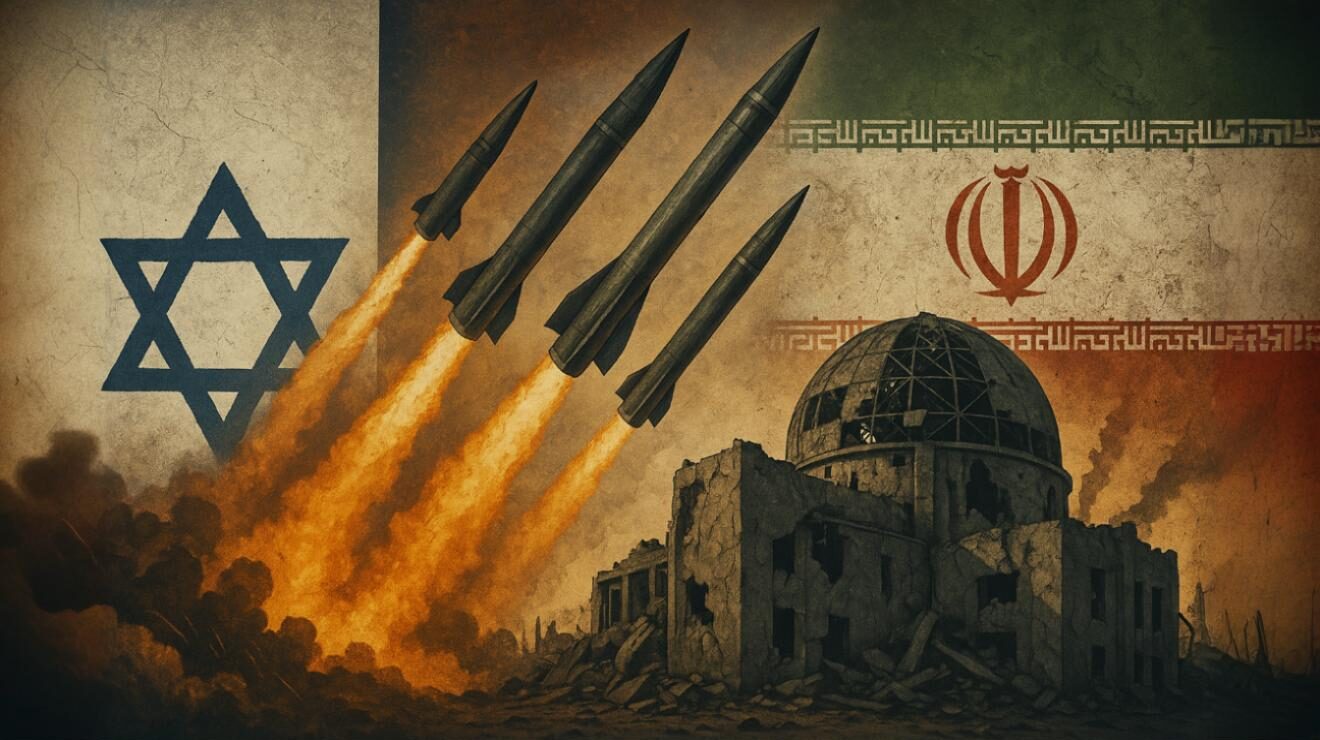
Missile Barrages, Nuclear Ruins, and Proxy Warfare Push Israel and Iran Toward Round 2
Iran’s slow nuclear rehabilitation, its expanding network of armed groups, and Israel’s warnings suggest the next phase of fighting may be approaching fast
Almost six months after Israel attacked Iran’s nuclear program, there are growing indications that a confrontation between the two rivals could take place in the coming months.
All fronts are still open
Speaking at a conference on Monday, Israeli Defense Ministry Director-General Amir Baram said “all fronts are still open” when referring to Iran and its efforts to regroup after the joint American-Israeli attack on its soil last June.
During an interview with the Israeli website Ynet, an unnamed senior European official said he believed Israel would choose to strike Iran within the next year, citing Iran’s continuous push to “double down on their efforts.”
Over a series of posts against the US and Israel last week, Ali Khamenei, Iran’s supreme leader, claimed Iran had won the war. “In the 12-day war, the US and the Zionist regime [Israel] came and perpetrated malicious acts. They took a beating and left empty-handed. That is, they didn’t achieve any of their objectives,” Khamenei wrote.
After the war, Israeli Prime Minister Benjamin Netanyahu warned that Israel would attack again if the nuclear threat resumes.
The war proved that the threat to Israel was not only a nuclear one.
According to the Israel Defense Forces (IDF), Iran fired more than 550 ballistic missiles at Israel. Sixty-three of them managed to penetrate Israel’s multilayered air defense systems, killing 29 Israelis and wounding more than 3,000. High-rise apartment buildings were struck and collapsed, forcing over 15,000 Israelis to seek shelter elsewhere. For many in the country, it was a wake-up call that ballistic missiles in the hands of a hostile regime pose a major threat.
“There is no question we will see a second round of confrontation,” Beni Sabti, an expert on Iran at the Institute for National Security Studies, told The Media Line. “It is a matter of timing and legitimacy.”
There is no question we will see a second round of confrontation
Israel launched its preemptive attack on Iran in June under the pretense of thwarting the imminent fruition of Tehran’s nuclear aspirations. The 12-day offensive, which was later joined by American forces, is believed to have dealt a debilitating blow to Iran’s nuclear program.
“Iran’s nuclear program has been destroyed to the level that it has zero functionality,” Maj. (ret.) Alex Grinberg, a former Israeli military intelligence officer and an expert on Iran at the Jerusalem Institute for Strategy and Security, told The Media Line. “Resumption of the program requires immense resources that Iran does not have at the moment.”
Iran is in the midst of a deepening socioeconomic and energy crisis. Its economy has exhibited virtually no growth. Despite vast oil and gas reserves, decades of infrastructure neglect, underinvestment, mismanagement, and the diversion of funds to terrorist organizations around the world have caused energy production and distribution systems to break down. International sanctions against the Islamic Republic have only exacerbated the situation. Frequent blackouts and water shortages have affected not only industry but also the general public.
While Iran may put its nuclear ambitions on the back burner, it is still believed to possess thousands of ballistic missiles.
Give the gift of hope
We practice what we preach:
accurate, fearless journalism. But we can't do it alone.
- On the ground in Gaza, Syria, Israel, Egypt, Pakistan, and more
- Our program trained more than 100 journalists
- Calling out fake news and reporting real facts
- On the ground in Gaza, Syria, Israel, Egypt, Pakistan, and more
- Our program trained more than 100 journalists
- Calling out fake news and reporting real facts
Join us.
Support The Media Line. Save democracy.
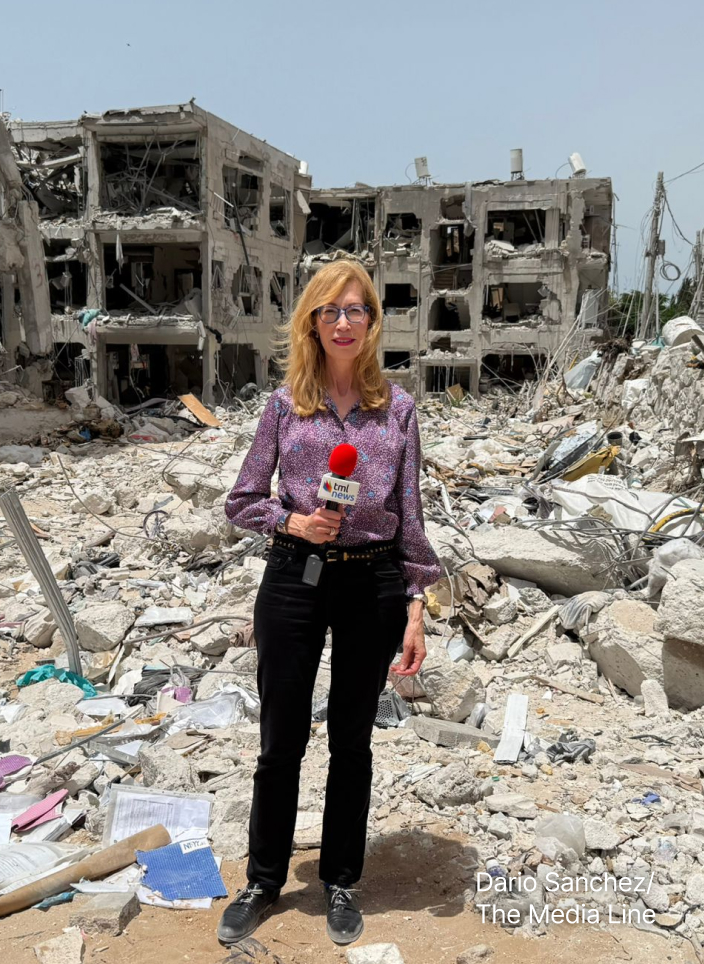
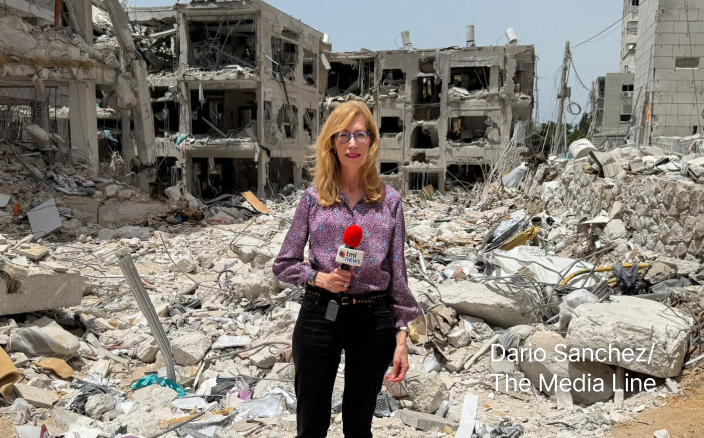
“The question is whether Israel needs the nuclear card as a reason to attack,” Sabti said. “The decision depends on the discourse between Israel and the US. Lacking the nuclear card, Israel will seek legitimacy to attack based on the ballistic threat.”
The assessment of Sabti and other experts is that an Israeli attack could occur within the next six to eight months.
Satellite imagery analyzed by the Center for Strategic and International Studies (CSIS) in October of this year shows construction at the Pickaxe Mountain site, apparently building a security wall around its perimeter. CSIS has reached similar conclusions regarding other nuclear sites in the Islamic Republic.
“The Iranians are very, very slowly trying to rehabilitate their nuclear sites. The sites have been rendered completely dysfunctional as a result of the attacks, but they are trying to fix the roads and tunnels that lead to those sites, mainly dealing with the logistical aspects,” Sabti said. “All this is happening under the very watchful eye of the Israelis and Americans.”
“Iran is trying to portray business as usual and is likely to improve its ballistic capabilities,” said Grinberg.
As part of the attacks against Iran, the IDF said it targeted central Iranian army bases and 35 ballistic missile manufacturing sites, including major sites in Tabriz, Kermanshah, and Hamadan.
“The missiles can be rehabilitated,” Grinberg added. “But it is important to note that the launch of a ballistic missile is easily detectable by Israel, making a surprise impossible.”
“There are still many targets to hit,” said Sabti. “Twelve days is nowhere near enough to tackle such a huge country as Iran; the war could have gone on longer. Iran is already trying to rebuild everything, including taking small steps to repair nuclear sites that were incapacitated.”
Experts on the Iranian regime have always struggled to decipher its intentions.
Since it took over the country in 1979, Iran’s leadership has adopted a long-standing practice of sending mixed and often contradictory messages to the international community, a tactic analysts say is designed to preserve strategic ambiguity while appeasing competing rivals both at home and abroad. In the past, during periods of negotiations with Western powers on a possible nuclear agreement, senior officials have simultaneously issued defiant statements rejecting Western pressure, while others signaled openness to negotiations in return for sanctions relief and regional de-escalation. This rhetorical tactic has complicated diplomatic efforts and has been a source of frustration for Western governments and United Nations bodies such as the International Atomic Energy Agency.
“This is a tradition that goes back thousands of years,” said Sabti, who was born and raised in Iran until escaping to Israel. “The chatter that we see now is a testament to an Iranian wish to actually prevent an attack against them.”
Mixed messaging also allows Tehran to test reactions while maintaining domestic narratives of victory, superiority, resistance, and sovereignty.
Some analysts believe a conflict with Israel would be a welcome diversion for the Iranian regime.
“It could be beneficial to initiate a conflict with Israel,” said Grinberg. “Iran may be much weaker than Israel militarily, but they are much better than Israel in manipulations, propaganda, and information warfare.”
A conflict between the two archrivals may not necessarily begin as a direct one.
For decades, Iran has cultivated a web of proxy organizations to engulf Israel with terrorist threats on its borders. It focused most of its efforts on the Lebanese-based Hezbollah terrorist organization, which was supposed to deter Israel from directly attacking Iran through a massive arsenal of missiles and tens of thousands of well-trained terrorists ready to infiltrate northern Israel at Iran’s behest.
Hezbollah joined in attacking Israel days after the Gaza-based Hamas organization launched a surprise offensive against the Jewish state on October 7, 2023. In response, Israel embarked on a war against Hezbollah, including a ground offensive, which ended exactly a year ago. Hezbollah was severely damaged during the war and, while it is still believed to possess a substantial number of missiles, its ability to threaten Israel has been diminished.
During the period in which Iran functioned as Hezbollah’s patron, it used Syria as the main pathway to funnel funds and weapons to Hezbollah in Lebanon. The fall of the Bashar Assad regime, followed by a blitz-like Israeli attack on Syrian army installations, all but obliterated that path. Yet it is now believed to be slowly coming back to life, used by Iran to rearm Hezbollah.
Tensions between Israel and Hezbollah have been rising in recent weeks, causing speculation that a preemptive strike by Israel against the terrorist group’s efforts to regroup is imminent.
Senior Iranian officials have warned that an Israeli attack on Hezbollah will not go unanswered by Tehran.
“Iran is showing no signs of relenting and is working on building networks of influence around the world,” said Grinberg. “Iran appears to be funneling funds to Hezbollah, despite the difficulties to do so.”
According to a report by the Meir Amit Intelligence and Terrorism Information Center on Hezbollah, a year after the ceasefire with Israel, Iran has transferred $1 billion to Hezbollah in recent months for rehabilitation. There are also reports that Iran is helping Hezbollah resume its domestic production of components for precision weapons systems and is dispersing its weapons stockpiles into smaller, more concealed warehouses to avoid detection.
Israel usually doesn’t make empty statements
Half a year after Israel’s strike on Iran’s nuclear program, Tehran appears to be working on reconstituting both its ballistic missile arsenal and Hezbollah’s capabilities, fueling concerns that the next round of conflict is a matter of when, not if. Israel has vowed to prevent this.
“Israel usually doesn’t make empty statements,” Sabti concluded.
