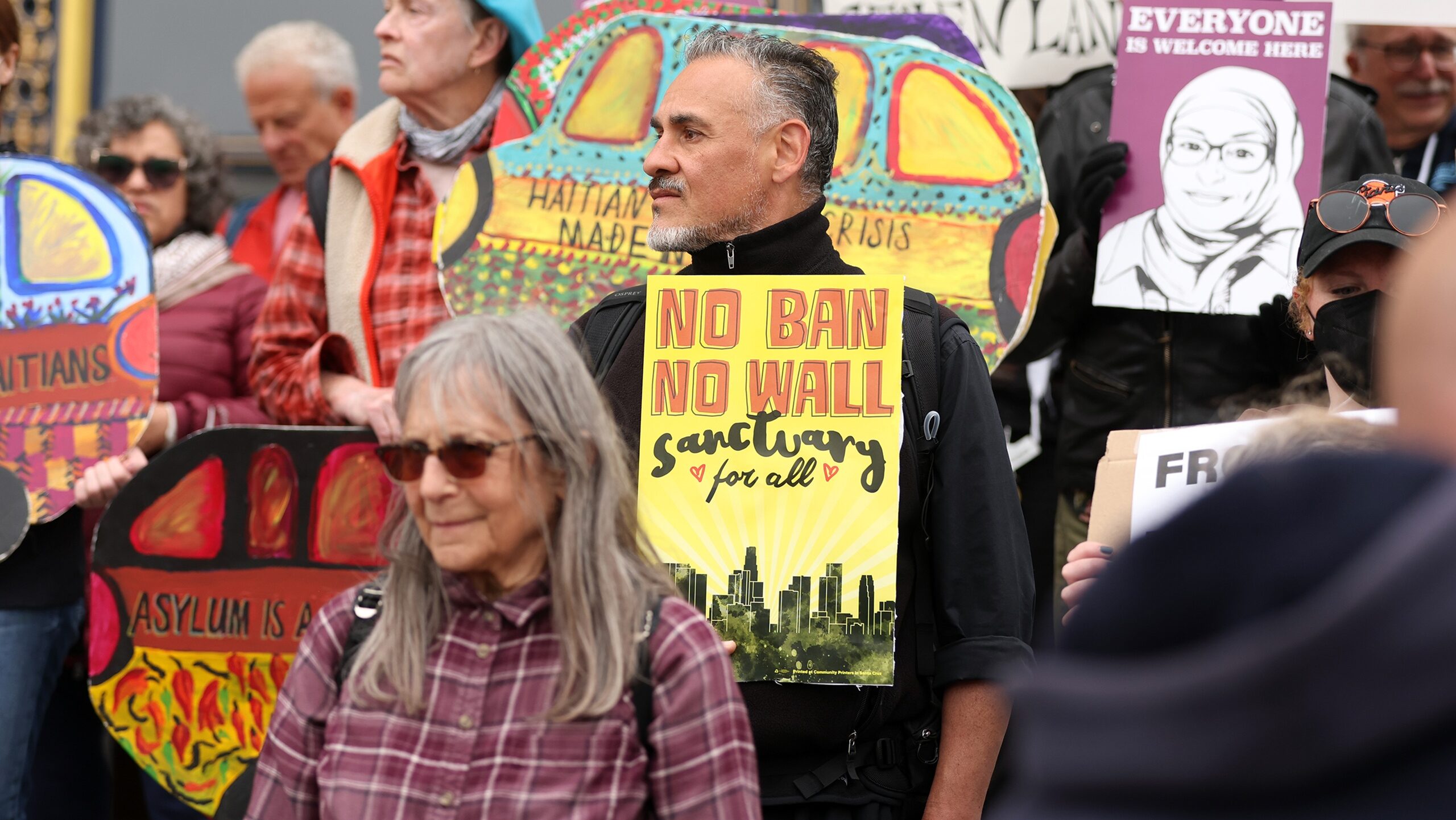
President Trump’s Visa Ban Splits Americans on Security, Freedom of Travel
New restrictions widen the list of blocked countries and target Palestinian travel documents
The Trump administration has expanded US entry restrictions for foreign nationals, widening a travel ban framework first reinstated in mid-2025 and broadened again on December 16, 2025. The move comes as the administration links immigration controls to a heightened security climate and renewed concern across Western societies about radicalization, extremist networks, and the challenge of identifying threats before violence occurs.
We must now re-examine every single alien who has entered our country from Afghanistan under Biden
This latest proclamation arrives in a period marked by high-profile incidents and intensified public anxiety. After the late-November shooting of two US National Guard members in Washington, DC, President Donald Trump publicly framed the attack as “an act of terror” and said: “We must now re-examine every single alien who has entered our country from Afghanistan under Biden.”
President Trump has also pointed to the Bondi Beach terror attack in Sydney to argue that Western governments must confront “radical Islamic terrorism,” describing the incident as “purely antisemitic,” and urging countries to stand together “against the forces of evil and against radical Islamic terrorism.”
The current restrictions are built on Proclamation 10949, issued on June 4, 2025, which established a two-track model: “full” restrictions for one set of countries and “partial” restrictions for others.
Under the June 2025 baseline, the White House fact sheet identified 12 countries as subject to the strictest limits: Afghanistan, Burma, Chad, the Republic of the Congo, Equatorial Guinea, Eritrea, Haiti, Iran, Libya, Somalia, Sudan, and Yemen. The updated December fact sheet said partial restrictions would continue for Burundi, Cuba, Togo, and Venezuela, while the scope for Turkmenistan was adjusted, lifting non-immigrant bans while keeping the immigrant suspension.
In the December proclamation, the administration expanded the list again. The White House said five additional countries were moved into the “full restrictions” category: Burkina Faso, Mali, Niger, South Sudan, and Syria. Laos and Sierra Leone, previously under partial restrictions, were also placed under full restrictions. The same materials list 15 countries newly placed under partial restrictions: Angola, Antigua and Barbuda, Benin, Cote d’Ivoire, Dominica, Gabon, Gambia, Malawi, Mauritania, Nigeria, Senegal, Tanzania, Tonga, Zambia, and Zimbabwe.
The December proclamation also applies full restrictions to “individuals holding Palestinian Authority-issued travel documents.” In its public explanation, the White House links this category to its assessment of the West Bank and Gaza security environment, arguing that US authorities cannot reliably vet individuals traveling on documents “issued or endorsed” in that framework under current conditions.
This expansion is unfolding alongside a more aggressive enforcement posture, including documented deportation activity.
In 2025, multiple deportation waves involved Iranian nationals. Iran’s foreign ministry said in early December that 55 Iranian nationals were being deported from the US in a second wave, following a prior flight described as carrying 120 people in September.
These developments have amplified legal and humanitarian concerns about removals to authoritarian states, particularly when people have claimed fear of persecution. US courts have also weighed aspects of this risk in individual cases. Reports emerged of a federal judge’s decision ordering the release of an Iranian migrant after prolonged detention, noting the government had not shown a realistic prospect of third-country removal and highlighting the detainee’s expressed fear of persecution if returned to Iran.
Alongside country-based restrictions, Washington is also advancing an additional screening requirement, scheduled for 2026, that could affect millions of travelers entering under the Visa Waiver Program.
Under the Trump administration’s plan, many Visa Waiver Program travelers would be required to provide social media handles used over the past five years as part of the Electronic System for Travel Authorization process, alongside other expanded personal data collection. Industry groups warned the plan could deter visitors and create a chilling effect on travel. The requirement, as reported, is aimed at visa waiver travelers, not all foreign nationals universally, and aligns with the administration’s broader emphasis on ideological and security screening.
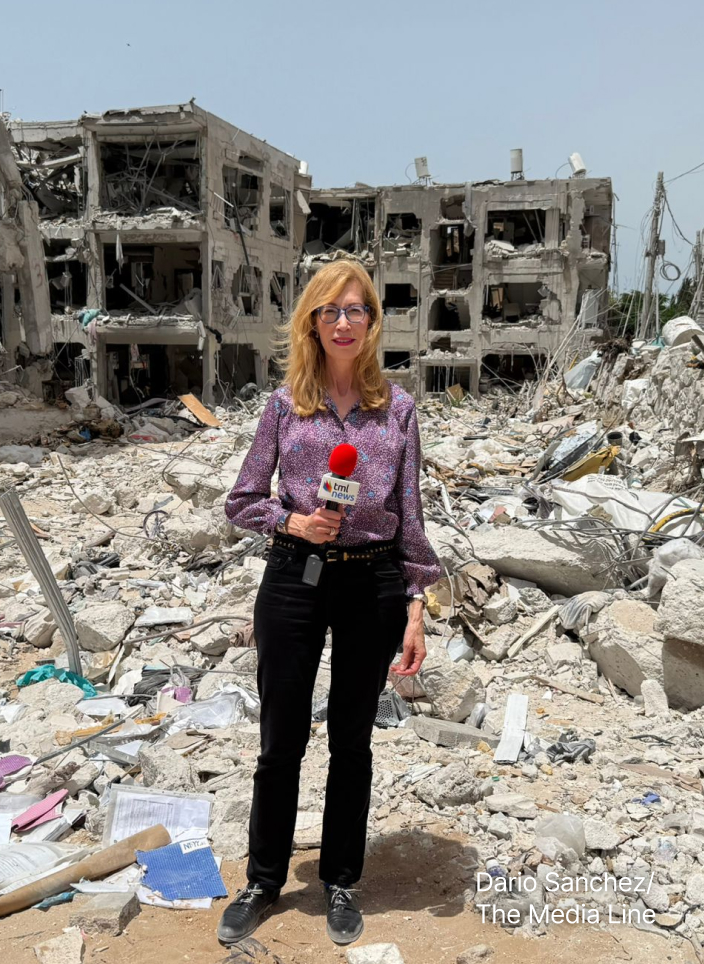
Two experts who spoke to The Media Line offered sharply different readings of the expanded travel ban, with one defending it as a necessary response to radicalization and state-level vetting failures and the other warning it risks sliding into sweeping, racially coded restriction and overenforcement.
Mansoor Hussain Laghari, a US Army veteran and founder and president of the Global Muslim-Jewish Youth Unity Project, said he supports the expanded ban as a security measure rooted in institutional deficits rather than religious targeting, since most of the affected countries happen to be Muslim.
“I do support the US travel ban, including its expansion to the Palestinian Authority, Syria, and other countries with documented deficiencies in vetting, intelligence-sharing, and border controls. This position is not rooted in opposition to Islam or Muslims—I am Muslim myself—but in concern over the West’s continued failure to confront radical Islamist ideology honestly and early,” he told The Media Line.
Give the gift of hope
We practice what we preach:
accurate, fearless journalism. But we can't do it alone.
- On the ground in Gaza, Syria, Israel, Egypt, Pakistan, and more
- Our program trained more than 100 journalists
- Calling out fake news and reporting real facts
- On the ground in Gaza, Syria, Israel, Egypt, Pakistan, and more
- Our program trained more than 100 journalists
- Calling out fake news and reporting real facts
Join us.
Support The Media Line. Save democracy.
Laghari argued that Western governments have often waited until after attacks to act, saying that Western governments have confused tolerance with permissiveness for too long.
“Radical political ideologies have been allowed to grow inside democratic societies under the protection of free speech, weak enforcement, and fear of being labeled discriminatory. The result is that action is taken only after violence occurs, rather than addressing ideological radicalization upstream,” he noted.
Laghari acknowledged the bluntness of broad country restrictions but framed them as a response to repeated screening and cooperation failures.
“The travel ban should be understood as a defensive security measure. It is a blunt tool, yes, but it responds to real and repeated failures in screening, identity verification, and cooperation from certain authorities,” he said, adding that it also sends a necessary signal that ideological extremism and institutional negligence have consequences.
Citing Australia as an example of what he sees as a delayed confrontation with extremist ecosystems, Laghari said recent events there are a clear example of this broader Western weakness.
“That attack was not an isolated incident; it reflects years of reluctance to confront radicalization networks, extremist preaching, and online indoctrination within otherwise open societies. When ideology is ignored, and only acts of violence are condemned, the problem metastasizes,” he said.
Laghari emphasized that he does not view collective targeting of faith communities as legitimate and framed the measure as protective. “This is not about collective punishment or targeting faith communities. It is about protecting democratic societies, safeguarding minorities, and also protecting moderate and reformist Muslims, who are often the first victims of radical Islam but the least heard,” he explained.
Neil A. Weinrib, founder and a US immigration attorney at NawLaw, differed in his interpretation of the potential impact of the travel ban, describing the policy trajectory as unusually aggressive, both in the travel-ban scope and in its downstream enforcement effects.
Weinrib said broad-brush assumptions risk distorting a more complex reality. “The vast majority of people from Muslim countries are not involved in acts of terror in the [United] States, obviously,” he told The Media Line.
As somebody who’s been involved in US immigration for close to 40 years, I’ve never seen a time of such extreme restriction
He added that the present moment feels unprecedented in its scale and intensity. “As somebody who’s been involved in US immigration for close to 40 years, I’ve never seen a time of such extreme restriction,” he said.
Weinrib argued that the restrictions are already affecting behavior across categories of travelers, including people with secure legal status, because of heightened scrutiny at entry points and the prospect of expanded monitoring.
“I have inquiries from American citizens and green card holders afraid to travel abroad now because they’re concerned about social media vetting at ports of entry. We have people, including American citizens and green card holders, honestly afraid to travel right now,” he noted.
You’re talking about security versus free speech. That’s what it really comes down to.
He said the new screening push centers on a tension that is not easily resolved in a democracy. “Look, you’re talking about security versus free speech. That’s what it really comes down to,” he said.
Weinrib also said he views the expanded country list as a warning sign in itself. “When you look at the list … obviously the majority of the list are African countries or Middle Eastern ones … and, you know, again, it’s obviously very racially profiled,” he commented.
He went further, arguing the political direction behind the shift reflects a deeper ideological change. “White supremacy appears to be back in vogue. And it’s a return to very racist policies and regulations that will certainly discriminate against Africans, Asians and non-white people.”
Weinrib linked the travel restrictions to the broader enforcement posture, especially deportations and asylum policy, warning that removals can carry profound consequences when individuals are returned to authoritarian states.
Discussing legal cases, Weinrib said his Iranian clients were generally well educated but on the verge of being deported. “Quite a few were sent back by the US for various reasons, such as ‘criminal issues,’ which can also translate into traffic violations, which is super minor,” he noted.
He also described what he called a major shift in US asylum policy, sending certain asylum seekers to third countries through agreements with governments in Africa. “We have an asylum client from Africa, from Guinea, and they want to deport him to Uganda … and that’s ridiculous,” he explained.
“The US was a safe haven for people from many countries, and now Trump wants to expel them and send them to countries which are not even safe,” he added.
Beyond enforcement, Weinrib warned that broader restrictions could reshape US competitiveness, especially if students and skilled workers are deterred by heightened screening and delays.
“We know that many of the Nobel Prize winners in the US, over 30%, were born abroad. We’ve relied on foreign nationals for science, medicine, engineering, all the STEM occupations and professions,” he said. “It’s going to inhibit talented foreign nationals from coming to the US. They’re going to go instead to Canada, England, Germany, China, and other countries, resulting in a brain drain,” he noted.
Weinrib said immigrants generally find work quickly, whether in agriculture, manufacturing, home care, health care, or other occupations, and begin contributing to the US economy almost immediately. For that reason, he believes that banning immigrants will turn out to be counterproductive.
With the expanded travel-ban structure and additional screening procedures planned for 2026, the administration is putting in place a system built around deterrence, expanded data collection, and broader judgments about state-level vetting capacity and cooperation.
The debate now is whether this architecture can address genuine security threats without widening the net so far that it disrupts legitimate travel, heightens fear among lawful residents, and accelerates deportations to environments where individuals claim their safety is uncertain.
That split between the two interviewees who spoke to The Media Line captures the tension. Laghari argues that the expanded restrictions represent a necessary defensive correction to Western permissiveness, while Weinrib contends that the travel ban constitutes a discriminatory overreach that hardens into ideology and risks sweeping integrated communities into a politics of suspicion.
