Shi’ite Cells in the Gulf Are Cooperating With Iran, Leaking Data and Coordinates
The clearest evidence of the presence of IRGC agents within some Gulf states is the filming of drone or missile strikes on their targets, even before the actual attack
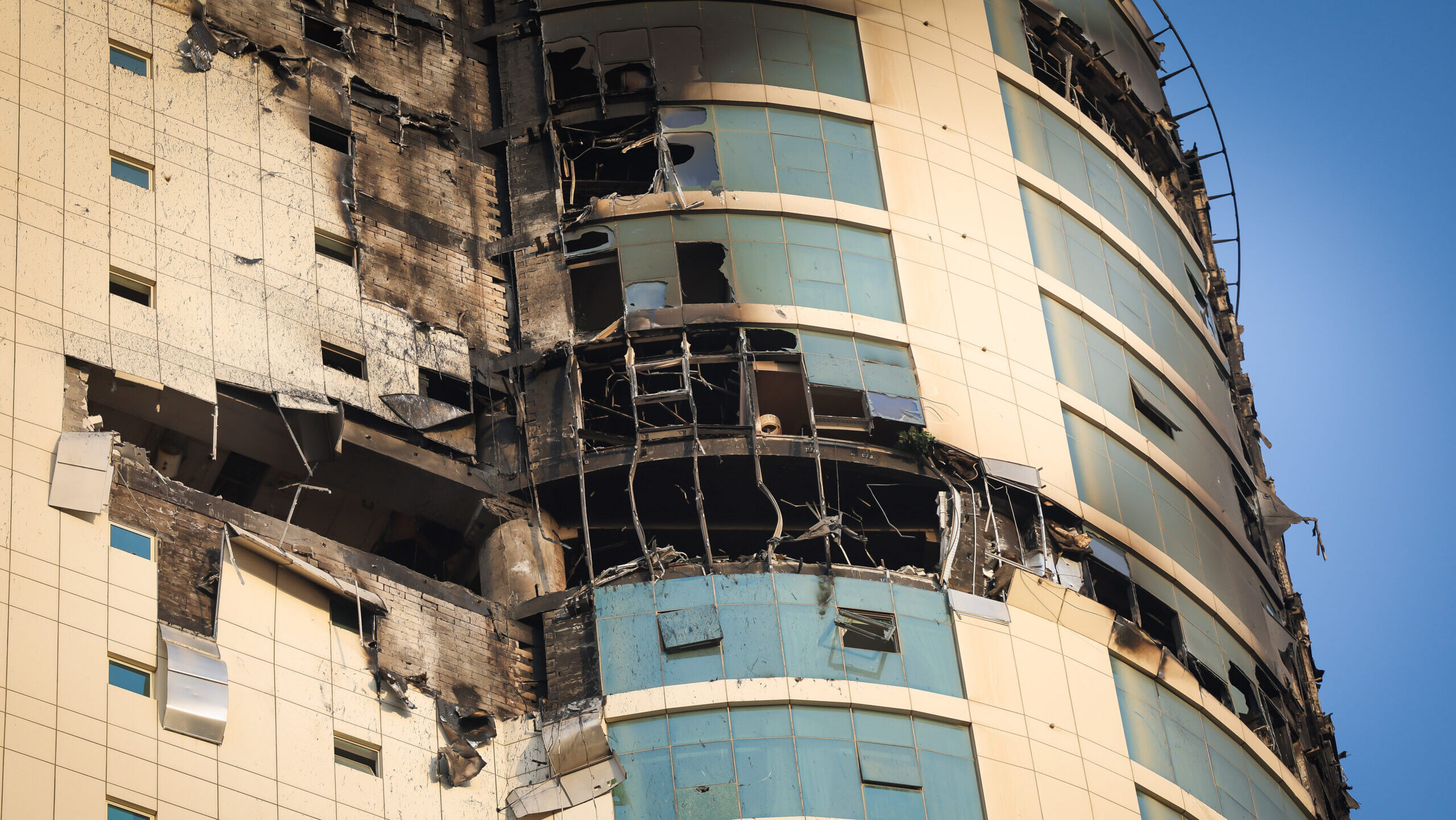
Iran’s recent drone and missile strikes on infrastructure in Gulf states have raised concerns that covert networks inside those countries may be assisting Tehran’s operations. Shi’ite cells have been active in the Gulf states prior to the war. They provide Tehran with coordinates of military sites, film defensive military activities, and document operations carried out by Iranian ballistic missiles and drones.
A well-informed military source, who declined to be named or identified, confirmed to The Media Line that “Iranian sleeper cells in the Gulf belong to several nationalities, including Arab and Asian nationalities, as well as Sh’ite citizens of the Gulf.”
The source confirmed that among these nationalities are “Indian, Pakistani, and Bangladeshi, in addition to several citizens of Algeria and Tunisia.”
The clearest evidence of the presence of Islamic Revolutionary Guard Corps (IRGC) agents within some Gulf states is the filming of drone or missile strikes on their targets, even before the actual attack.
Numerous videos have circulated, clearly showing the moments of the strikes even before the drones or missiles reach their destinations. These videos are uploaded to apps like X and Instagram immediately after the strikes, even before official authorities announce any such attack.
These videos, some filmed with smartphones and others with professional cameras, indicate prior intelligence about the targeting of these locations, and this intelligence was not leaked from surveillance cameras. Since the start of military operations against Iran, hundreds of accounts have been created on X, Instagram, and other platforms that publish similar videos live, along with rumors and other misleading information.
Such incidents have occurred in Bahrain, Kuwait, Qatar, and the United Arab Emirates, particularly in several Gulf cities.
The Gulf Interior and Defense Ministries in Kuwait, Qatar, Bahrain, the UAE, and Saudi Arabia issued several statements warning against filming the aftermath of Iranian attacks, or even talking about their locations. These ministries also warned against filming anti-aircraft or missile sites, combat operations, or other videos related to the events.
Numerous accounts affiliated with the Bahraini opposition, which are verified and have been speaking on their behalf for several years, have published photos of what they call “electronic operations rooms” containing masked individuals.
Their mission, according to these accounts, is to “support the Islamic Republic of Iran.” These accounts, announced by the Bahraini opposition, publish photos of the attacks and attempt to spread numerous rumors that are subsequently refuted.
Simultaneous investigations are currently underway in the Gulf states … to uncover all espionage and support networks operating on behalf of Iran in the Gulf
“Simultaneous investigations are currently underway in the Gulf states, and cooperation is taking place in these investigations to uncover all espionage and support networks operating on behalf of Iran in the Gulf,” the source continued.
These Iranian cells leaked the coordinates of military installations and oil refineries in Saudi Arabia, Bahrain, the UAE, Kuwait, and Qatar, in addition to several important military and civilian buildings.
Give the gift of hope
We practice what we preach:
accurate, fearless journalism. But we can't do it alone.
- On the ground in Gaza, Syria, Israel, Egypt, Pakistan, and more
- Our program trained more than 100 journalists
- Calling out fake news and reporting real facts
- On the ground in Gaza, Syria, Israel, Egypt, Pakistan, and more
- Our program trained more than 100 journalists
- Calling out fake news and reporting real facts
Join us.
Support The Media Line. Save democracy.
They also leaked the locations of some members of the American community in Bahrain, Qatar, the UAE, and Kuwait, which led to attacks on residential buildings, hotels, and other properties. Information about important and sensitive economic sites, banks, oil refineries, and other significant economic facilities and factories also changed hands.
Many Sh’ites residing in the Gulf states have not only remained neutral but have also expressed sympathy for Iran and justified its attacks on the Gulf countries.
Mohammed Hassan, a Bahraini Sh’ite living in Iraq, told The Media Line, “We support the Islamic Republic of Iran. If it falls, Israel will swallow up all the Arabs, and we know that the missiles were launched from the Gulf states toward Iran.”
We must avenge everyone who contributed to the killing of Supreme Leader Ali Khamenei, and they must meet the same fate
He continued, “We must avenge everyone who contributed to the killing of Supreme Leader Ali Khamenei, and they must meet the same fate. We cannot remain silent, even if it is my country.”
F. A., a Gulf media figure who declined to reveal his nationality or full name, only giving his initials, told The Media Line, “We publish these videos to demonstrate Iran’s strength. It’s ridiculous to arrest people and accuse them of spying for Iran. Everything the military wants to know is available on Google Maps. This targeting of Shia citizens is simply an act of revenge.”
He continued, “This is unacceptable. Our opinions cannot be suppressed. We support the Islamic Republic of Iran, and that is our opinion. No one can confiscate it or accuse us of treason or being agents.”
Badr al-Aji, a Saudi military analyst, told The Media Line, “The Gulf states have known about the existence of such cells for some time, and some Gulf states have already taken steps, but the entire network only began to fall apart recently.”
The Gulf states have known about the existence of such cells for some time
He added, “The network is large and far-reaching, and it operates in a decentralized manner. Most of its members are known only to their leader, for fear that the rest of the network will reveal their identities if one of them is arrested.”
Al-Aji said, “These people are ideologically driven and consider Iran to be their spiritual father, and therefore they have no fear of punishment if they are arrested.”
These people are ideologically driven and consider Iran to be their spiritual father, and therefore they have no fear of punishment if they are arrested.
Abdullah al-Khalidi, a Gulf political analyst, told The Media Line, “Now they will try to exert pressure through more operations within the Gulf states, attempting to distract security efforts to achieve the greatest possible outcome from these security strikes.”
He continued, “Iran’s missile stockpiles will soon run out, but the focus will remain on the fifth column—Iranian agents in the region—who will seek to sabotage. However, the fall of Iran will certainly mean the fall of these agents as well, for they do not plan; they merely execute orders.”
Several Gulf states, including Bahrain, Kuwait, and Qatar, have arrested several cells and individuals on espionage charges. Qatar officially announced the arrest of two spy cells working for the IRGC. One cell possessed photos and coordinates of military sites, while the other was planning several bombings and hostile acts targeting vital installations and aiming to destabilize security and stability, according to the Qatar News Agency.
Kuwait, for its part, also announced in separate statements the arrest of several individuals accused of filming and disseminating footage of military movements and Iranian shelling of Kuwait.
The Bahraini Ministry of Interior also announces almost daily the arrest of individuals accused of filming and disseminating footage of Iranian missile and drone attacks on Bahrain, glorifying these actions that harm Bahrain’s interests, and publicizing military movements on the Gulf island.
The most striking announcement from the Bahraini Ministry of Interior was the arrest on Sunday of several individuals of Asian nationalities, including five Pakistanis and one Bangladeshi national, who had documented and disseminated information about the Iranian bombing of Bahrain and praised these actions.
On Thursday, March 12, the Bahraini Ministry of Interior announced the arrest of four Bahrainis and the identification of a fifth fugitive abroad, after they were found to be spying for the IRGC through terrorist elements located in Iran.
The Ministry of Interior statement listed the names of the four, aged between 22 and 36, including a woman named Sarah Abdulnabi. It indicated that they used high-resolution photography equipment and sent images and coordinates to the IRGC via encrypted software.
As the trials of those arrested by Bahrain began, the Bahraini Public Prosecution, in the first session held on Monday, March 9, charged the detainees with espionage for Iran and demanded the maximum penalties, which under Bahraini law can reach the death penalty. This is considered an aggravating circumstance due to the state of war. The hearings will continue until a final verdict is reached.
The laws of the Gulf Cooperation Council countries generally stipulate the death penalty for espionage or the leaking of important information, especially during times of war. Therefore, it is expected that these individuals will receive what is called the maximum penalty, which is execution, as the Gulf states are currently considered to be in a state of war.
.
.
