Snub or Strategy? Unverified Claims Swirl Over Pakistan’s Role in Trump’s Gaza Talks and Saudi Jet Negotiations
Pakistani officials and regional analysts point to a lack of public confirmation from Washington or Riyadh as competing narratives spread around troop participation and defense procurement
[ISLAMABAD] Unverified reports have recently circulated claiming that US President Donald Trump sidelined Pakistan at the first Gaza Board of Peace meeting, snubbed its top leadership, and pressured Saudi Arabia to halt a potential purchase of Pakistani-made fighter jets.
One line of reporting suggesting Pakistan was sidelined is tied to the country’s decision not to deploy troops as part of the Gaza International Peacekeeping Force.
Neither claim has been confirmed by officials in Washington, Riyadh, or Islamabad, and despite extensive coverage, neither the White House nor the Saudi government has publicly addressed the allegations.
Officials familiar with the Trump administration’s thinking have long described Pakistan as an important participant in President Trump’s Gaza peace plan, with Islamabad credited in regional diplomacy for persuading key Muslim countries to engage with the initiative.
When questions arose about deploying Pakistani troops as part of an international peacekeeping force in Gaza, Pakistan stated that its forces would not take any action to disarm Hamas.
Instead, Pakistani officials argued that responsibility for disarming Hamas should lie with the Palestinian authorities themselves.
Pakistani officials also told US counterparts that, given widespread pro-Palestinian sentiment at home and ongoing insurgent violence inside the country, Pakistan would be unable to commit troops to Gaza without significant domestic repercussions.
Those officials point to Pakistan’s diplomatic role as evidence that unverified media reports about President Trump sidelining Islamabad or pressuring Saudi Arabia may reflect competing narratives rather than confirmed policy developments.
In public statements, President Trump has praised Prime Minister Shehbaz Sharif and Field Marshal Asim Munir, a tone that officials in Islamabad describe as strong support.
Prime Minister Sharif, I like this man, of Pakistan. … And your field marshal general, great general, great field marshal, a great guy.
During his speech at the inaugural Gaza Board of Peace ceremony, President Trump said, “Prime Minister Sharif, I like this man, of Pakistan. There was some fighting going on when I got to know him and your field marshal general, great general, great field marshal, a great guy.”
Against that backdrop, the public praise contrasts with claims that Washington is downgrading Pakistan’s role in the initiative.
Islamabad-based diplomats, speaking to The Media Line on condition of anonymity, argued that the reports might reflect efforts by Indian lobby groups to shape perceptions following the May 2025 India-Pakistan escalation.
“One official said. “Each time President Trump references the May episode and mentions Indian losses in the conflict, it creates discomfort in New Delhi,” one official said. “There is significant activity, particularly in the United States, aimed at reshaping that narrative.”
Give the gift of hope
We practice what we preach:
accurate, fearless journalism. But we can't do it alone.
- On the ground in Gaza, Syria, Israel, Egypt, Pakistan, and more
- Our program trained more than 100 journalists
- Calling out fake news and reporting real facts
- On the ground in Gaza, Syria, Israel, Egypt, Pakistan, and more
- Our program trained more than 100 journalists
- Calling out fake news and reporting real facts
Join us.
Support The Media Line. Save democracy.
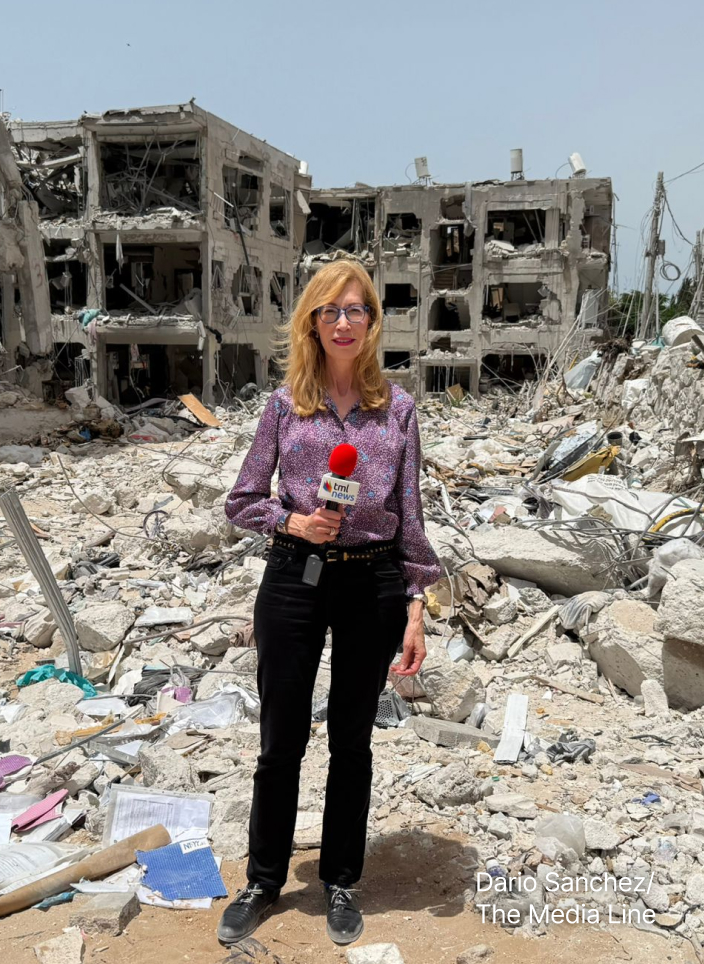
At the Gaza Board of Peace meeting, President Trump repeatedly positioned himself as a key broker in easing tensions between Pakistan and India after the May 2025 escalation, portraying himself as instrumental in brokering a ceasefire—a characterization others, including Indian officials, have disputed.
Some officials suggested that the alleged pressure on Saudi Arabia not to buy Pakistani jets could be part of a similar narrative contest rather than a confirmed policy stance, noting that without official statements from Riyadh, the story remains unverified.
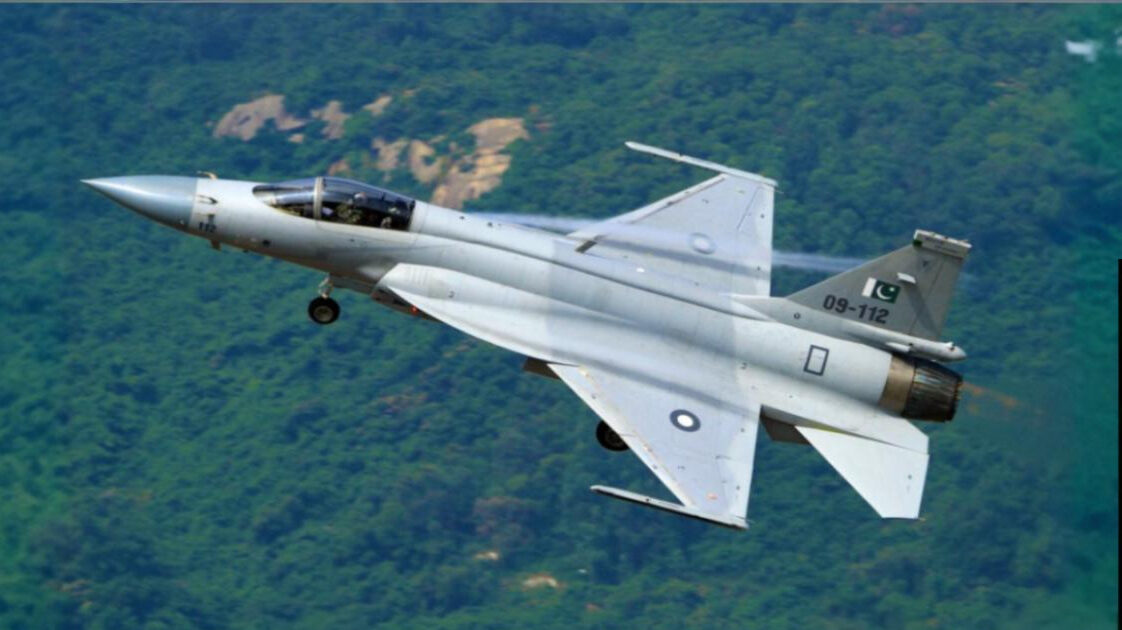
In January 2026, reports emerged that Pakistan and Saudi Arabia were in talks to convert roughly $2 billion in Saudi loans into a deal for JF-17 multirole combat aircraft, a move aimed at strengthening military cooperation just months after the two countries signed a mutual defense pact in 2025.
That defense agreement came after regional military escalation that rattled the Gulf and intensified debate about deterrence and air defense.
Still, there has been no official confirmation of a finalized JF-17 purchase agreement between Pakistan and Saudi Arabia.
As a result, the narrative suggesting President Trump is displeased with Saudi leadership over this issue rests on speculation.
To evaluate the situation, The Media Line spoke with leading Saudi and Pakistani experts.
Mohammed Alhamed, a Saudi geopolitical analyst and the head of Saudi Elite consultancy firm, dismissed suggestions that the US president is pressuring Riyadh to abandon a potential JF-17 deal, framing the reports as a misreading of broader defense dynamics.
Such baseless geopolitical claims do not accurately reflect the reality of US–Saudi strategic engagement
He told The Media Line, “Such baseless geopolitical claims do not accurately reflect the reality of US–Saudi strategic engagement.”
Alhamed argued that Saudi procurement decisions are shaped less by bloc politics than by interoperability requirements, technology transfer considerations, and long-term industrial goals tied to Vision 2030.
He said consultations with Washington are part of routine coordination between security partners rather than coercion, and he portrayed Saudi Arabia’s diversification strategy as focused on capability optimization and industrial sovereignty rather than geopolitical realignment.
Dr. Maria Sultan, chairperson and president of the South Asian Strategic Stability Institute University and an adviser to Pakistan’s Defense Ministry on strategic and military affairs, described a shifting security environment in which traditional partnerships face sharper strains.
She told The Media Line, “In changing times amid global transformations where war and use of kinetic force has become the norm the threat to traditional alliance partners have become all the more vivid.”
Sultan framed Pakistan-Saudi defense ties as a pragmatic alignment based on shared interests and long-term collaboration, and she contrasted that with what she portrayed as a more interest-driven pattern in US-Saudi relations.
She argued that closer cooperation between Islamabad and Riyadh is not intended to come at Washington’s expense, but rather to strengthen Saudi preparedness through a partner she sees as more familiar with the region and its security dynamics.
Sultan also suggested that even if the relationship faces outside pressure, it reflects a “natural” strategic fit and is more resilient than alliances that falter under a first major crisis test, pointing to Qatar as an example.
Umar Karim, an associate fellow at the King Faisal Center for Research and Islamic Studies in Riyadh, told The Media Line that Pakistan and the United States “still maintain a cordial working relationship across almost all relevant matters and files,” dismissing suggestions of any cooling in bilateral ties as inaccurate.
Karim said he does not see any significant US displeasure over the reported sale of Pakistani fighter jets to Middle Eastern countries, particularly Saudi Arabia, noting that “at this stage, these remain largely rumors” and that there is no evidence of a concrete agreement.
He further argued that the Royal Saudi Air Force operates more advanced platforms than those currently offered by Pakistan, making it “highly implausible” that Riyadh would opt to induct Pakistani fighter jets.
In Karim’s view, the issue has been “somewhat overblown,” and US defense circles understand this, meaning it is unlikely to create friction between Washington and Islamabad.
Muhammad Shoaib, who teaches at the School of Politics and International Relations (SPIR), Quaid-i-Azam University, Islamabad, argued that Pakistan’s relevance to regional diplomacy has not diminished, even if its role in Gaza-related initiatives remains contested.
Pakistan remains an important player in the emerging Middle Eastern equation, but its position on the Palestine conflict and potential role in the stabilization force has been clear
He told The Media Line, “Pakistan remains an important player in the emerging Middle Eastern equation, but its position on the Palestine conflict and potential role in the stabilization force has been clear.”
Shoaib suggested that if Pakistan was sidelined, it may reflect political and operational considerations—possibly including Israeli objections—rather than a sudden shift driven solely by Pakistan’s stated red lines.
He added that the bigger strategic concern in Washington is not Pakistan itself but China’s footprint, particularly where Chinese systems intersect with US-origin platforms in Saudi Arabia’s defense ecosystem, including fighter aircraft.
As an example of how that dynamic can shape outcomes, Shoaib pointed to Turkey’s purchase of the S-400 and the fallout for Ankara’s participation in the F-35 program, arguing that even if American displeasure emerges, it would not necessarily end the possibility of a Pakistan-Saudi arms deal.
