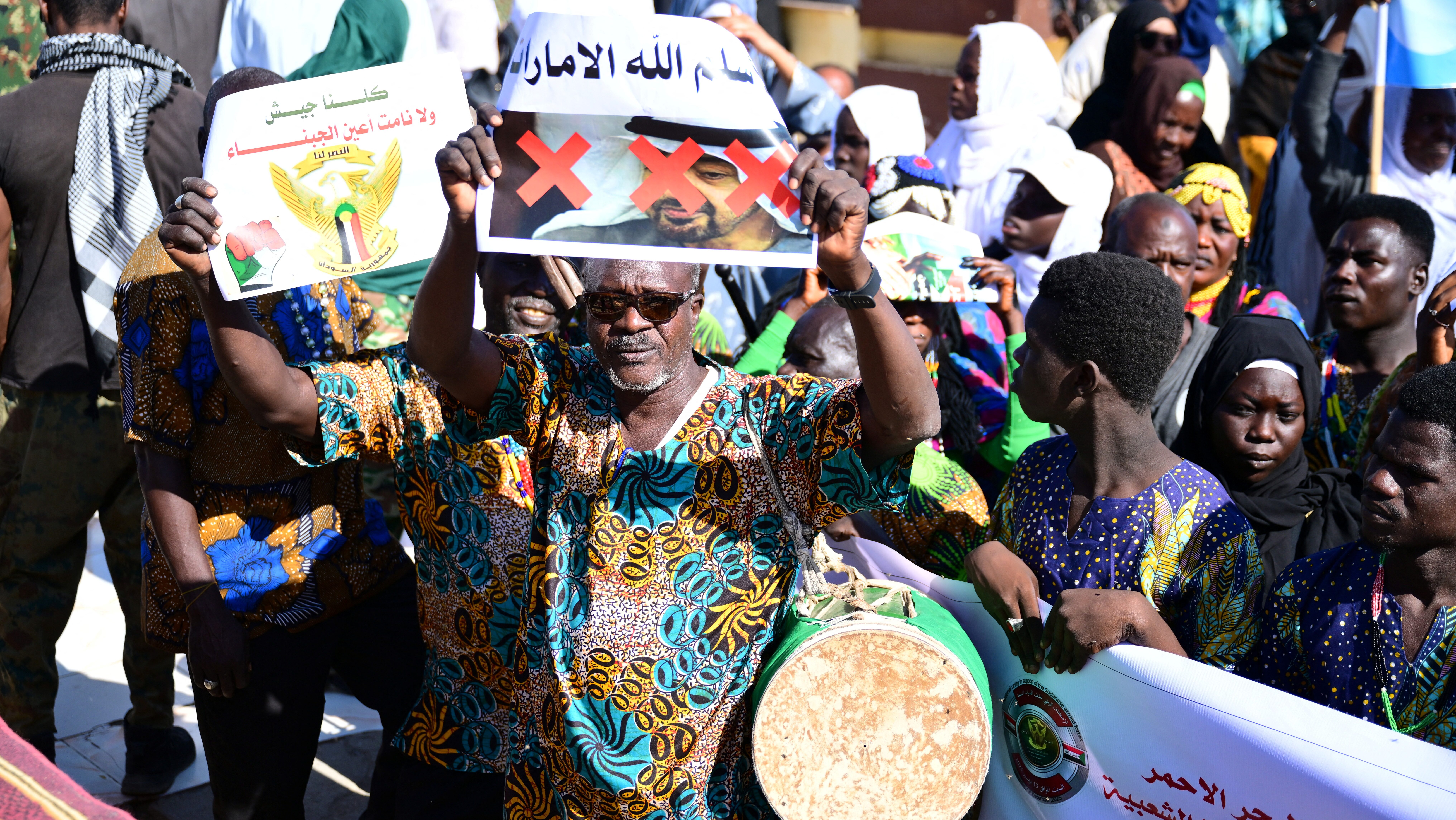
‘Sudan … Is Becoming an Arena of UAE-Saudi Rivalry, in Addition to the Yemen Issue,’ Political Analyst Tells TML
International reporting about Ethiopia hosting UAE-supported training facilities linked to the RSF, though still contested and politically sensitive, highlights how the conflict’s geography is expanding beyond Sudan’s borders
The war in Sudan is increasingly intersecting with a broader regional security architecture stretching across the Red Sea and the Horn of Africa. What initially appeared as a localized power struggle has gradually drawn in external actors, maritime interests, and competing stabilization strategies.
International reporting about Ethiopia hosting UAE-supported training facilities linked to the Rapid Support Forces (RSF), though still contested and politically sensitive, highlights how the conflict’s geography is expanding beyond Sudan’s borders.
The development matters less as an isolated military detail and more as part of a growing pattern: Neighboring states are becoming rear bases for the conflict, while Gulf powers are responding through different security approaches.
From a Saudi policy perspective, the conflict is not framed primarily as rivalry but as systemic instability along a critical maritime corridor.
Abdulaziz Alshaabani, a Saudi political analyst, explained this to The Media Line: “From a Saudi policy perspective, developments in Sudan and the Horn of Africa are primarily viewed through the lens of regional stability and Red Sea security rather than proxy rivalry.”
From a Saudi policy perspective, developments in Sudan and the Horn of Africa are primarily viewed through the lens of regional stability and Red Sea security rather than proxy rivalry
He stressed the information environment surrounding the war and the importance of verifying sources: “Reports about armed group movements or training locations should be treated cautiously unless confirmed by multiple credible sources, as the information environment around the Sudan conflict is highly politicized.”
For Riyadh, the priority is containment rather than competition with the UAE: “Saudi Arabia’s approach has generally emphasized de-escalation, mediation and containment of spillover risks, especially those affecting maritime routes and cross-border security,” Alshaabani noted.
“Riyadh’s priority is preventing state collapse and reducing fragmentation rather than entering competitive security arrangements,” he added.
Where Saudi analysis centers on containment, other analysts view the Ethiopian dimension as potentially operational.
Cyril Widdershoven, a political analyst at Strategy International in Cyprus, described the strategic interpretation, provided that there really is an RSF training camp in Ethiopia: “If the current reports are right, such as famous outlets reporting on a large camp in Benishangul-Gumuz, which is meant to train thousands of RSF fighters, the total is clearly operational support, not merely ‘containment,’” he told The Media Line.
“Reports are stating that there could be the option that these recruits will be sent to Sudan’s Blue Nile front. The total, when simply analyzing it, looks more like a situation that indicates power projection by proxy (as we should be looking at it all as using Ethiopian territory as depth),” he added.
Give the gift of hope
We practice what we preach:
accurate, fearless journalism. But we can't do it alone.
- On the ground in Gaza, Syria, Israel, Egypt, Pakistan, and more
- Our program trained more than 100 journalists
- Calling out fake news and reporting real facts
- On the ground in Gaza, Syria, Israel, Egypt, Pakistan, and more
- Our program trained more than 100 journalists
- Calling out fake news and reporting real facts
Join us.
Support The Media Line. Save democracy.


Widdershoven suggests that it may concern influence competition, since in this case there is alleged financing and training support linked to a Gulf actor.
The involvement of third countries indeed complicates the conflict’s geography. Sudan is no longer only a domestic arena; it is becoming part of a connected regional security belt linking Yemen, the Red Sea, and the Horn of Africa.
The UAE’s alleged involvement—consistently denied by Abu Dhabi—has become part of a wider debate about whether Gulf states are coordinating or diverging in Sudan.
“Again, it needs to be reiterated that it is alleged to be supported by the UAE. Some reports are now claiming that the UAE has been financing the camp, while others even state that it is providing trainers and logistical support. The UAE, especially Abu Dhabi, is denying the latter,” Widdershoven said.
Widdershoven added the conflict reflects broader strategic competition: “It is, however, clear that Sudan, with its immense coastline and strategic depth, is currently becoming an arena of Saudi-UAE rivalry. In addition to the Yemen issue, Sudan is at present part of the current diverging strategies of MBZ [Mohamed bin Zayed Al Nahyan, UAE president] and MBS [Mohammed Bin Salman, deputy crown prince of Saudi Arabia],” he said.
“Saudi Arabia at present is mainly interested in state ordering and de-escalation, as it holds very high interests and investment strategies in and around the Red Sea. Unrest in one of the main littoral states (Sudan) is impacting not only its international power and economic projections but also MBS’s domestic agenda (Vision 2030),” he added.
According to Widdershoven, there is no common Gulf Cooperation Council (GCC) “Sudan policy,” since Riyadh will do everything to protect its domestic and regional position. Meanwhile, Abu Dhabi is projecting its power in the Red Sea arena by working closely with non-state armed partners in order to gain leverage.
Alshaabani, however, framed the relationship differently, emphasizing differing tactics rather than strategic rupture: “Regarding Gulf dynamics, differences in tactics among regional actors may exist, but they do not automatically translate into strategic divergence. Each country assesses Sudan based on its own security and economic interests, yet there remains a broad shared concern about instability and extremist or militia expansion.”
Each country assesses Sudan based on its own security and economic interests, yet there remains a broad shared concern about instability and extremist or militia expansion
The emerging pattern resembles earlier developments in Yemen, where the Southern Transitional Council, forces alleged to be backed by the UAE, withdrew, while Saudi Arabia consolidated control over security arrangements, including key transport and logistical links such as routes connected to the island of Socotra.
Widdershoven connected the two theaters: “A relocation of proxy influence has been reported before, especially after the UAE withdrew from Yemen. Saudi Arabia at that time moved in to consolidate its own position. Still, it has been pushed by both parties until now as not a rivalry, but facts on the ground indicate something else,” he said.
Yet he cautioned the Horn is not a simple transfer of influence: “A clean relocation is also not in place, as the Ethiopia/RSF reporting, which has been denied by the UAE, is not yet proven or functional. However, it shows that there is a pattern of shifting influence tools at play in the Red Sea/Horn of Africa arena.”
For Saudi policy, the conflict’s importance is maritime, as Alshaabani explained: “For Red Sea interests, the main risks relate to shipping security, arms flows, irregular migration, and the potential internationalization of the conflict. This is why Saudi engagement has focused on diplomatic platforms and coordination frameworks rather than military positioning inside Sudan.”
Widdershoven described the same geography from a systemic security perspective and the maritime angle: “All of this complicates Red Sea stability because the corridor’s security is increasingly shaped by onshore conflict systems, which ultimately will become major media headlines, as it all feeds into maritime risk.”
He further warned that the conflict links multiple states and could form “escalation chains, as it is linked also to Somaliland/Somalia, Eritrea, Djibouti and Libya, while Israel-Turkey-Egypt are playing a role too.”
For Widdershoven, Egypt remains a decisive actor because Cairo evaluates Red Sea security through its own strategic calculations, making this conflict bigger than the Gulf’s arena.
The key analytical divide between the two perspectives lies in the interpretation of each Gulf actor. Saudi-aligned analysis underlines the goal of stabilization: “In the longer term, Saudi policy is more likely to favor conflict containment, negotiated arrangements and institution rebuilding over direct intervention. The objective is sustainable stabilization through regional and international coordination, not dominance inside the Sudanese arena,” Alshaabani said.
By contrast, Widdershoven anticipated managed rivalry: “Yes, that is a simple answer. It only will be feeding the current simmering rivalry between Saudi and the UAE, which is still manageable. However, increased conflicts or power projections could lead to a fallout both don’t want.”
Increased conflicts or power projections could lead to a fallout both don’t want
Both analyses converge on one point: Sudan is now part of a wider system rather than an isolated conflict.
Widdershoven described the emerging architecture: “At present we definitely look at the setup of a ‘network security’ model (ports, airfields, training and intelligence).”
Alshaabani described Saudi policy as aimed at stabilizing the region through diplomacy, focusing on calming tensions and preventing the conflict from spilling over into maritime lanes and neighboring borders.
The Horn of Africa and the Red Sea are therefore evolving into a connected strategic corridor where local wars interact with maritime security, migration routes, and economic infrastructure. Whether the outcome becomes cooperative stabilization or structured competition may depend less on Sudan itself and more on how regional actors manage overlapping security priorities across multiple theaters simultaneously.
The Media Line contacted experts in the UAE for comment, but did not receive a response before publication.
