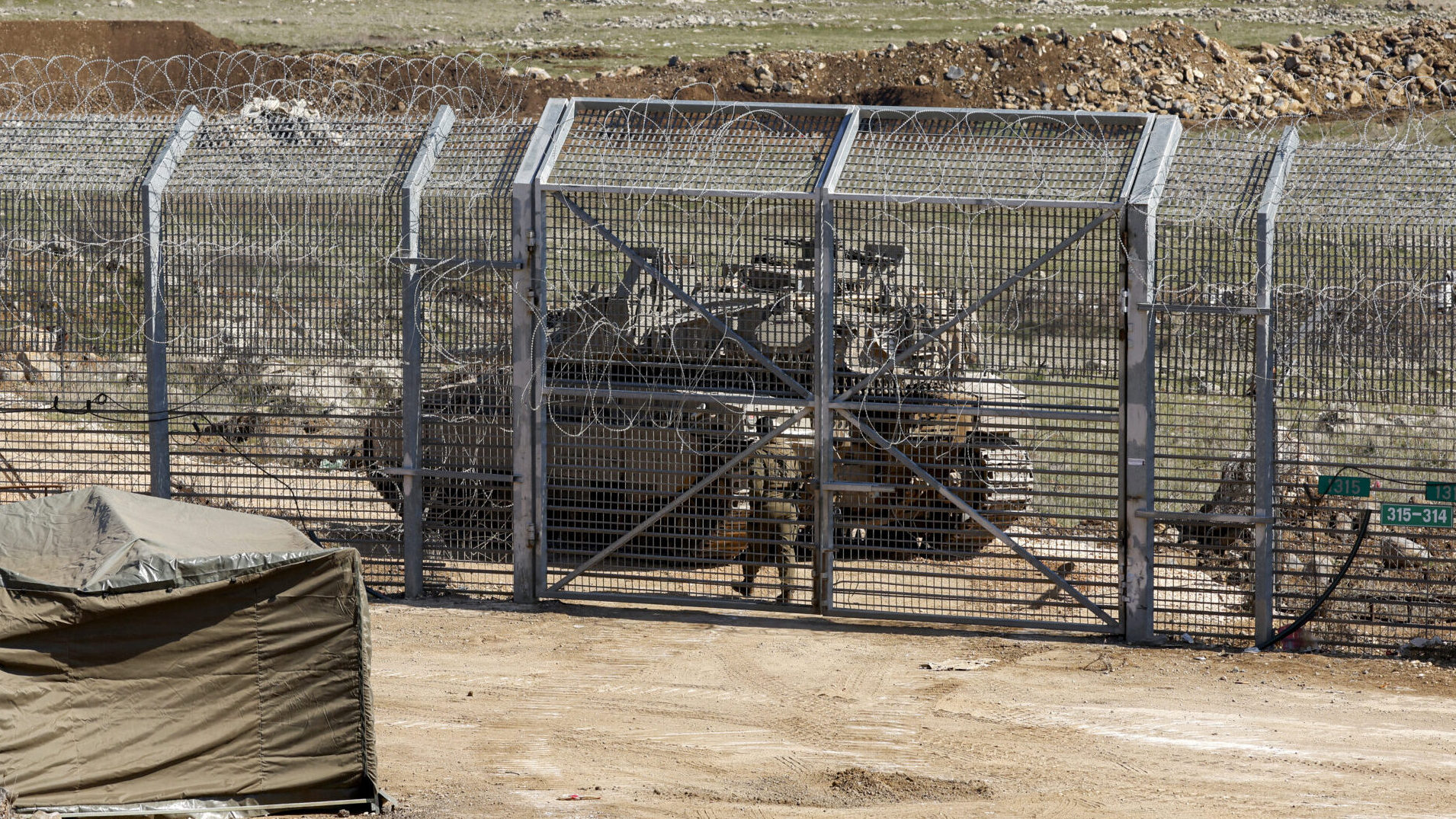
Syrian Military Analyst Believes Israel’s ‘Clear Objective’ Is To ‘Wear Down the Syrian Army’
Dr. Samer al-Tawil believes Israel’s deadly strikes reflect ‘a shift in the nature of operations’
[Damascus] Ten Syrian soldiers were killed and several others wounded in Damascus on Tuesday as a land mine explosion coincided with a series of Israeli drone strikes.
The back-to-back incidents have further heightened tensions on the ground and renewed questions about the trajectory of the conflict and Israel’s ongoing escalation inside Syrian territory.
In the town of Droujeh, north of Damascus, three members of the Syrian army’s 44th Division were killed while attempting to dismantle an old minefield.
According to military sources, several others were also wounded in the blast.
The magnitude of the explosion suggests that the mines were either planted in a sophisticated manner or recently modified
A field officer, speaking on condition of anonymity, told The Media Line: “The mission aimed to remove remnants of war to secure the area, but the magnitude of the explosion suggests that the mines were either planted in a sophisticated manner or recently modified.”
Moments later, the evacuation unit that rushed to aid the wounded came under attack by an Israeli drone, which targeted a tank and a military vehicle involved in the rescue. The strike killed four more soldiers.
Eyewitnesses told The Media Line that the strike was “precise and deliberate,” widely perceived as a clear message from Israel that it will target Syrian troop movements — even during humanitarian operations.
Hours later, in a separate incident, an Israeli drone struck a training site in the town of al-Kiswah, southwest of Damascus, during a tank drill. Three soldiers were killed and four others wounded.
A Defense Ministry media official told The Media Line that all the casualties were members of the Abu Bakr al-Siddiq Brigade of the 44th Division, emphasizing the heavy losses suffered by a single unit in just one day.
Syria’s Defense Ministry condemned the strikes as a “blatant violation of national sovereignty and international law,” urging the U.N. Security Council to intervene immediately to halt what it called “continuous aggression.”
Saudi Arabia, for its part, expressed full support for Syria in safeguarding its sovereignty, stressing that the attacks constitute a clear breach of the disengagement agreements signed after the 1973 Arab-Israeli War.
Give the gift of hope
We practice what we preach:
accurate, fearless journalism. But we can't do it alone.
- On the ground in Gaza, Syria, Israel, Egypt, Pakistan, and more
- Our program trained more than 100 journalists
- Calling out fake news and reporting real facts
- On the ground in Gaza, Syria, Israel, Egypt, Pakistan, and more
- Our program trained more than 100 journalists
- Calling out fake news and reporting real facts
Join us.
Support The Media Line. Save democracy.
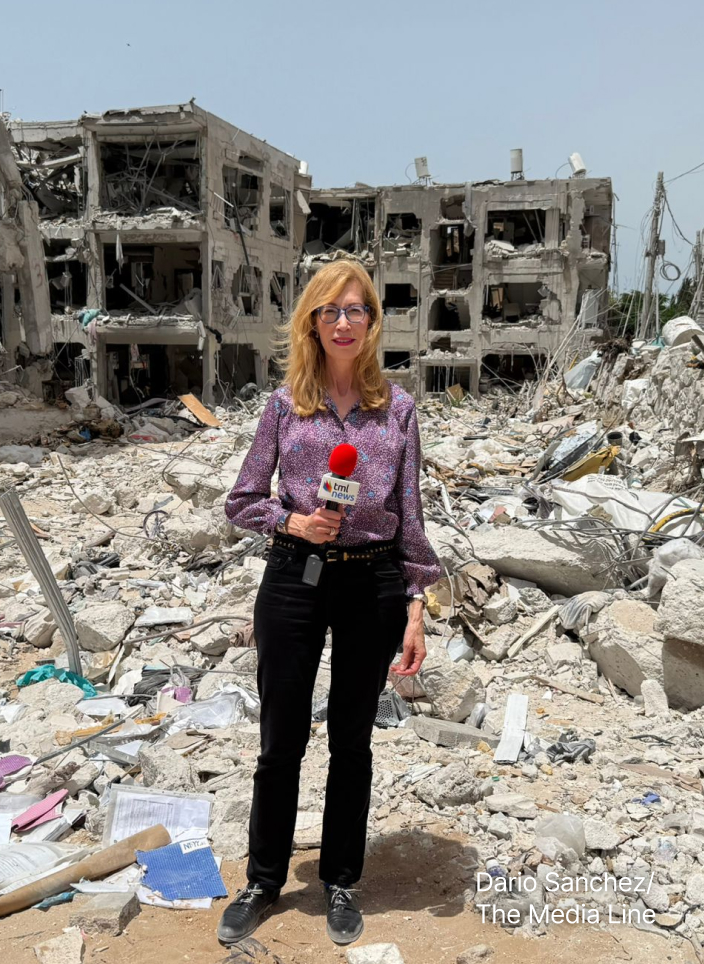
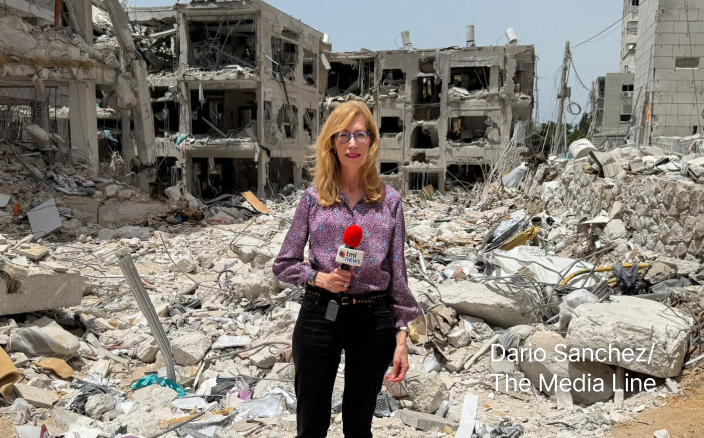
Military analyst Dr. Samer al-Tawil told The Media Line that the latest Israeli strikes reflect “a shift in the nature of operations.”
It is no longer limited to targeting weapons depots or strategic facilities, as in the past
“It is no longer limited to targeting weapons depots or strategic facilities, as in the past. Israel is now striking field units during routine missions — even rescue operations. The clear objective is to exhaust and gradually wear down the Syrian army,” he said.
He added: “The use of drones gives Israel an operational advantage, allowing precise strikes at lower cost and with minimal risk. This poses a serious challenge to Syria’s air defenses, which still rely mainly on conventional systems.”
Observers agree that these events mark an escalation in Israel’s military campaign in Syria, with growing frequency and an expanded scope of strikes. There are concerns that this new pattern of targeting could undermine efforts to stabilize areas around Damascus.
With major international players remaining largely silent, attention now turns to Moscow and Tehran — Damascus’ key allies — and whether they are prepared to respond to this qualitative shift in Israel’s military tactics.
A total of 10 Syrian soldiers were killed and several others wounded in the combined attacks. The casualties resulted from both Israeli drone strikes and a land mine explosion. Analysts warn that the incidents represent a new round of escalation that could spiral into a broader confrontation if not addressed diplomatically.
Israeli and Western reports on Aug. 24–25, 2025, pointed to progress in a potential security arrangement under discussion. The proposed framework reportedly involves reactivating the 1974 disengagement lines, keeping the Syrian Golan demilitarized, and preventing deployment of systems that threaten Israeli territory, in exchange for steps to politically and economically rehabilitate Syria under US-Arab sponsorship, with the UAE implicitly involved.
In parallel to the US-Arab channel, there have been reports of secret talks with Moscow that intertwine the Syria and Iran issues, including security arrangements in southern Syria. This track surfaced in July 2025.
Despite these “advanced” proposals, on-the-ground realities — including Israel’s continued presence inside the Syrian buffer zone — have undermined trust and provided hardliners with arguments to derail any deal.
At the same time, Israel’s involvement on other fronts, such as Gaza and the West Bank, and shifting Western positions are pushing toward a quick arrangement on the Syrian front. However, any regional explosion could upend the process entirely. Recent developments in Washington and Tel Aviv indicate a heightened diplomatic tempo that directly impacts the northern front.
Ahmad Hussein al-Sharaa, also known as Abu Mohammad al-Jolani, formerly led Hay’at Tahrir al-Sham (HTS) before rising to Syria’s presidency following the fall of Bashar Assad’s regime in late 2024, according to multiple reports and analyses. His background leaves his international legitimacy deeply contested, particularly given HTS’s legacy as a designated terrorist organization by the US, EU and U.N.
In recent days, however, al-Sharaa has been quoted as expressing readiness to proceed with a security agreement or even peace “if it serves Damascus’s interests.” He has emphasized starting from the 1974 ceasefire lines and working toward arrangements that safeguard Syrian sovereignty. His rhetoric coincides with reports of progress in ongoing talks.
Positive signs include al-Sharaa’s public acceptance of the 1974 arrangements, engagement with multiple mediators, and an urgent domestic need to end Syria’s isolation and launch reconstruction. These factors serve as strong incentives for his potential commitment.
However, structural obstacles remain. The legacy of HTS and legal and financial hurdles complicate international recognition. There is also internal resistance within Syria’s military and security establishment to any demilitarization in the south. Meanwhile, Israel’s continued presence inside the buffer zone undermines mutual trust.
The true test of implementation will involve effective border control of local factions, a phased redeployment of forces, the full return of United Nations Disengagement Observer Force (UNDOF) with expanded authority, and internationally monitored humanitarian and economic corridors. Any breach — whether by air or ground — could rapidly derail this trial phase.
Overall, al-Sharaa can be described as a conditional pragmatist: prepared to trade strict southern security arrangements for international recognition and economic inflows. Yet his militant legacy and opposition from both domestic and external actors mean that any real commitment will depend on binding international guarantees and rigorous field monitoring.
The pattern of drone strikes on rescue missions and training sites suggests Israel is pursuing a strategy of gradual attrition that pressures Syria’s conventional air defenses and limits the army’s mobility around the capital.
At the same time, each new strike near Damascus erodes the fragile calm needed to finalize a revised 1974 framework. Progress depends on tangible restraint in Israeli air raids and verifiable Syrian commitments along the disengagement line.
Looking ahead, two realistic scenarios are emerging over the coming weeks. One possibility is conditional de-escalation, featuring step-by-step security arrangements, the reinstatement of UNDOF’s full role with additional monitoring posts, and initial economic aid for Damascus. The other is the risk of collision and escalation. A major border incident or a high-profile strike could collapse the negotiating track entirely, reverting to harsher rules of engagement around Damascus and the Golan.
With calls for urgent international intervention growing louder, Syria’s battlefield remains open to all possibilities — amid the absence of a clear political horizon and steadily mounting military tensions.
