
‘This Is the One Chance They Have to Reclaim Their Country,’ Iranian Canadian Activist Nazanin Afshin-Jam Tells TML
Two decades of advocacy link individual death-row cases to a broader campaign for women’s rights and political change in Iran
Nazanin Afshin-Jam MacKay lives far from Tehran now, in a rural pocket of Nova Scotia where the local hockey rink is as much a public square as any parliament hallway. That contrast—small-town normalcy set against the brutality she says is unfolding in Iran—has become the frame of her life’s work.
A Canadian activist and mother who was crowned Miss World Canada in 2003, Afshin-Jam MacKay has spent two decades turning public attention into political pressure, first on individual cases and later on what she calls the root problem: the Islamic Republic itself.
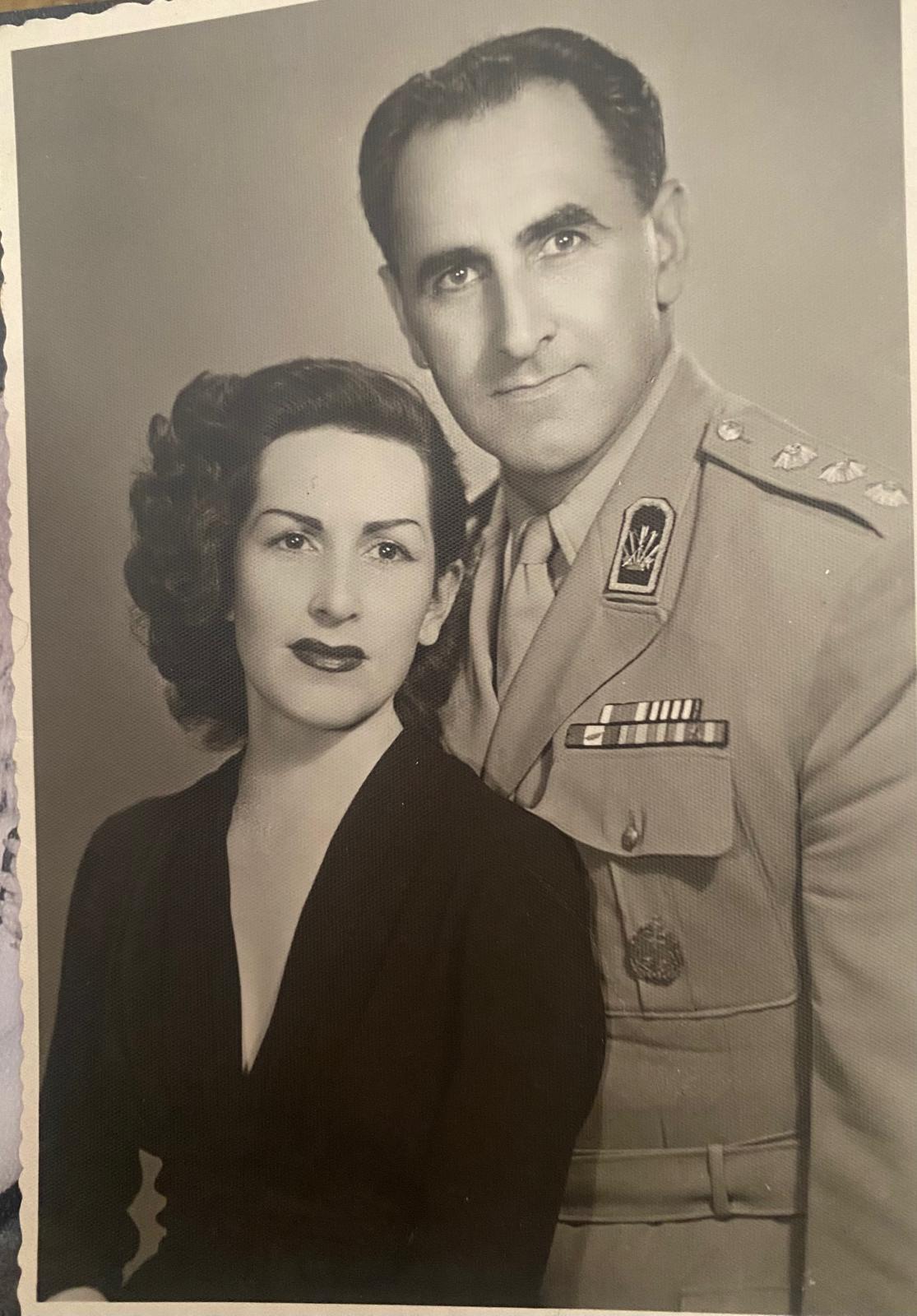
Nazanin Afshin-Jam MacKay’s parents. Her grandfather was a general in the Shah’s army. (Courtesy Nazanin Afshin-Jam MacKay)
Watching the current unrest, she described “a mix of emotions,” with grief and urgency layered over something rarer—hope. “On the one end, the nation is really mourning,” she told The Media Line, describing what she called mass killings, widespread injuries, and detainees she fears could face execution. She spoke of families searching for missing relatives and of stories so graphic they sound implausible until repeated by enough people: “We’ve never seen anything like we’ve seen in the past few weeks,” she said, describing accounts of protesters shot with military-grade weapons and claims of wounded people pursued inside hospitals.
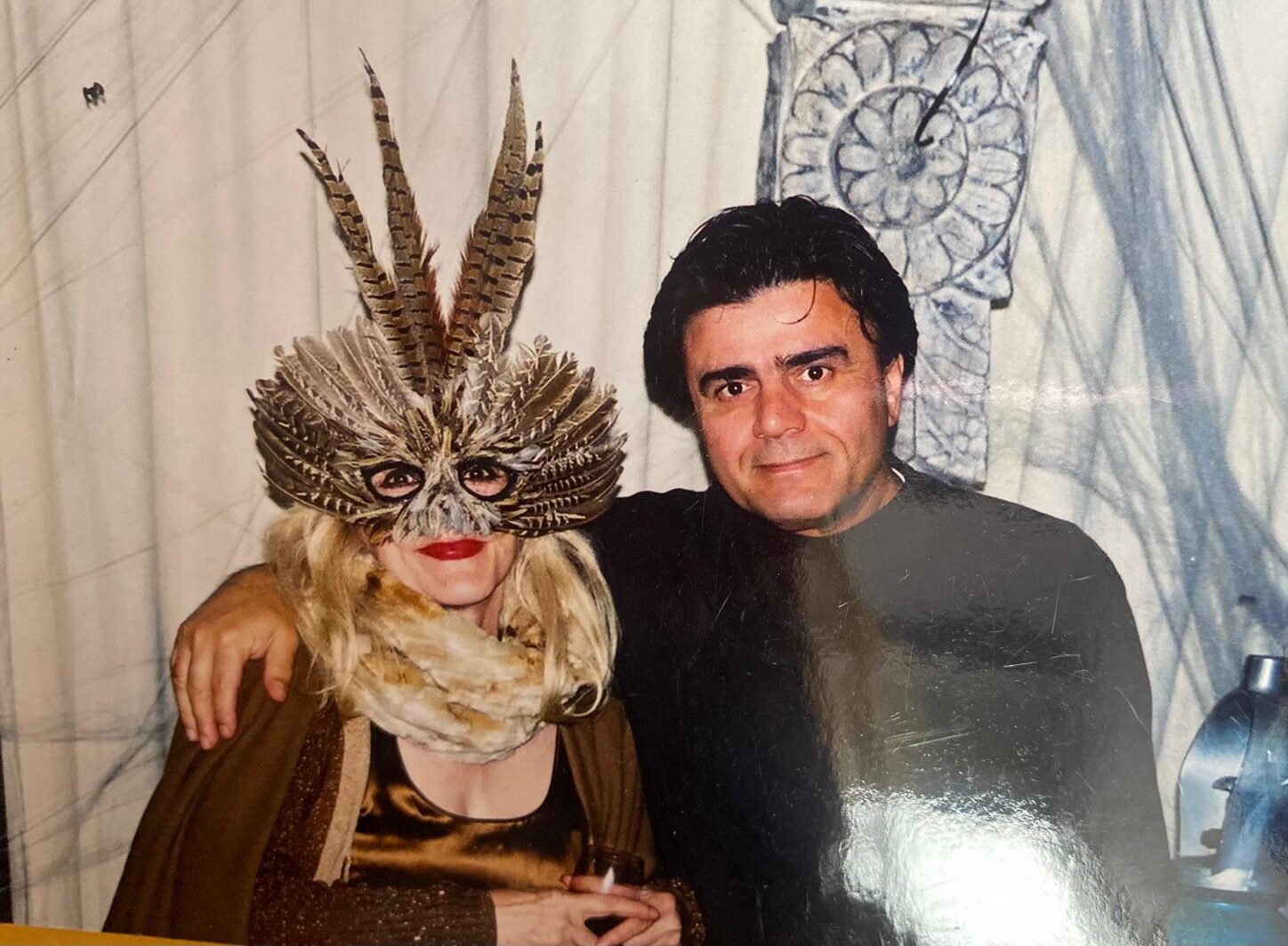
Nazanin Afshin-Jam MacKay’s parents. (Courtesy Nazanin Afshin-Jam MacKay)
We’ve never seen anything like we’ve seen in the past few weeks
Even as she relayed those reports, she kept returning to a single idea: that the scale of public defiance has changed the math. “There’s a glimmer of hope,” she said. “The Iranian people really feel like this is the one chance that they have to reclaim their country.” She pointed to the sheer size of demonstrations, to governments abroad hardening their posture toward Iran’s security apparatus, and to the possibility—however uncertain—of outside intervention. Canada has listed the Islamic Revolutionary Guard Corps as a terrorist entity.
For Afshin-Jam MacKay, the story is not abstract. It begins in 1979, in the disorienting days after the revolution, when her father was running the Sheraton Hotel in Tehran and kept operating as he always had—men and women mingling, alcohol served—before the new rules were fully understood. Revolutionary Guards, she said, arrested and tortured him and prepared to execute him. Her mother managed to secure his release pending a trial; the family took it as a narrow window to flee. “He was on the first plane ride to Spain after his wounds healed enough that he could actually sit down,” she said. They eventually made their way to Canada.
Her mother’s exile never truly ended. Afshin-Jam MacKay said she keeps her mother’s ashes at home, waiting for what she hopes will be a return—posthumous, but symbolic—to a free Iran. “I keep her ashes because I am so hopeful that Iran will be free soon,” she said, explaining that she wants to bury them near her mother’s ancestors. She spoke of old family photographs—parties, travel, miniskirts, a pre-1979 cosmopolitan ease—then of the rupture that followed. “That broken heart stayed with her until her very last days,” she said.
Give the gift of hope
We practice what we preach:
accurate, fearless journalism. But we can't do it alone.
- On the ground in Gaza, Syria, Israel, Egypt, Pakistan, and more
- Our program trained more than 100 journalists
- Calling out fake news and reporting real facts
- On the ground in Gaza, Syria, Israel, Egypt, Pakistan, and more
- Our program trained more than 100 journalists
- Calling out fake news and reporting real facts
Join us.
Support The Media Line. Save democracy.
Faith, she added, became her mother’s anchor. Asked whether her mother converted to Christianity, Afshin-Jam MacKay said yes, describing a teenage encounter with the Bible that turned into a lifelong spiritual commitment. Raised in that tradition, she called it “the best gift she ever gave me … introducing me to God.”
That blend of personal history and public advocacy is also why she recently traveled to Israel for Women Champions for Change, a regional network that brought together women from across the Middle East and North Africa to collaborate on social-impact projects. She described the trip as both spiritual and practical: “We were building synergy and speaking about our various projects,” she said, adding that participants began collaborating soon after.
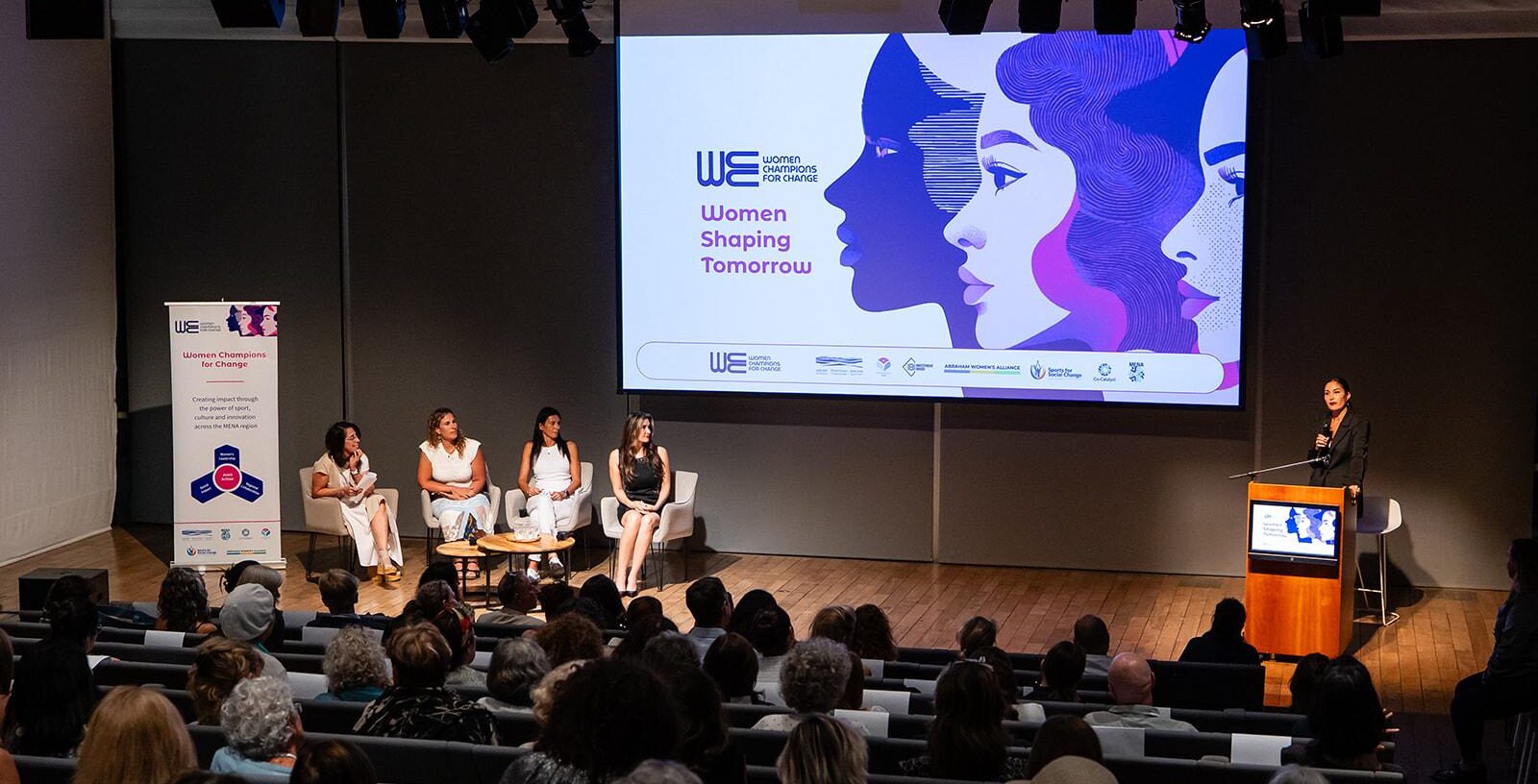
Nazanin Afshin-Jam MacKay speaks at the Women Champions for Change program in Israel. (Courtesy Nazanin Afshin-Jam MacKay)
Her critique, though, was aimed squarely at the all-too-familiar scene of Iran policy being negotiated without women in the room. She argued that diplomacy has repeatedly prioritized nuclear terms while sidelining the people living under the regime. “The very fact that Western liberal democracies—their leaders—are still ‘negotiating’ with a terrorist regime already deflates our spirit,” she said, listing past US administrations and questioning the premise that Tehran can be bargained with in good faith. “I don’t think anywhere in those negotiations were any talk of the innocent Iranian people who have been slaughtered in the past days,” she added. If talks happen at all, she argued, they should be conditioned on human rights protections—while acknowledging she does not trust the regime to comply. “We need more women at the table to start to inject some more humanity in these negotiations,” she said.

Nazanin Afshin-Jam MacKay and her family mark Remembrance Day in New Glasgow, Nova Scotia, Canada. (Courtesy Nazanin Afshin-Jam MacKay)
Her own activism began with a single name. In 2003, she learned about a teenage girl in Iran—also named Nazanin—who had been sentenced to death after defending herself against an attempted rape. Outrage turned into organizing: media outreach, meetings with officials, and a petition she said drew about 350,000 signatures. Under pressure, she said, the authorities granted a new trial, and the teen was ultimately freed. From there, she founded Stop Child Executions and later shifted toward democracy and accountability work through new networks in the diaspora.

Nazanin Fatehi on death row. (Courtesy Nazanin Afshin-Jam MacKay)
What still stuns her, she said, is how little of this reaches ordinary people—especially far from the foreign-policy capitals. “It’s been painful, Felice,” she said, describing conversations in Nova Scotia where neighbors had no idea what she believes is happening in Iran.
She compared the muted international response to Iran with the mobilization that followed atrocities elsewhere and accused parts of the activist ecosystem of selective outrage. “There’s been crickets on Iran. Why? Because it doesn’t fit in their narrative,” she said, arguing that Iran’s backing for groups such as Hamas and Hezbollah complicates political alignments and, in her view, discourages some from confronting Tehran. She also rejected claims that the unrest is foreign-orchestrated. “It is absolutely not. It is grassroots. It’s the Iranian people who are demanding this,” she said.
In the law, it’s written that women are worth half of a man
With International Women’s Day approaching, she sharpened the argument further: whatever language outside groups use—women’s rights, bodily autonomy, equality—she wants them to apply it to Iran without hesitation. She called the Islamic Republic “a gender apartheid regime” and cited laws and practices that restrict women’s travel, testimony, public participation, and dress. “In the law, it’s written that women are worth half of a man,” she said, describing a system that, in her view, is not merely discriminatory but structurally segregating.
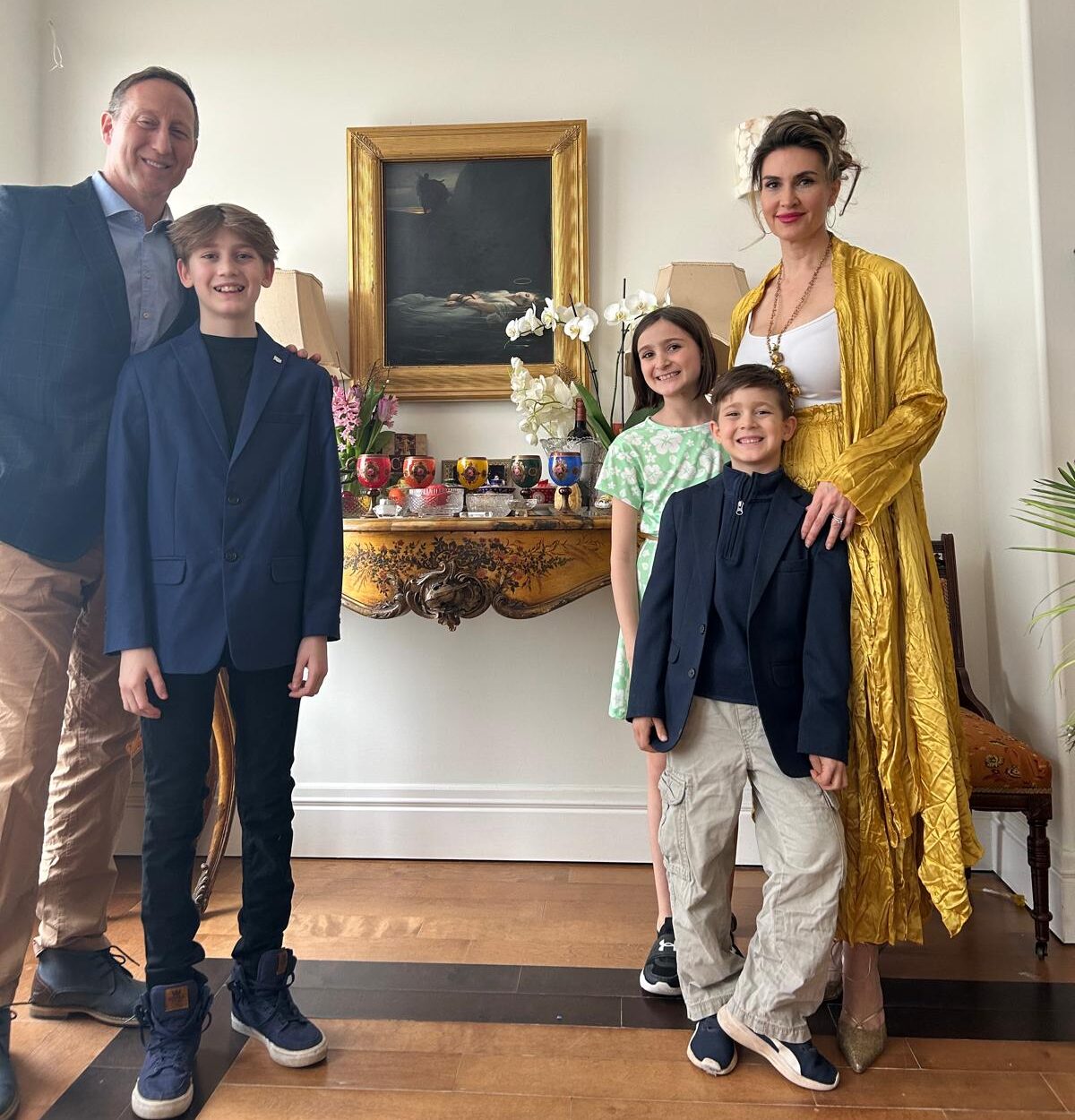
Nazanin Afshin-Jam MacKay celebrates Nowruz (the first day of spring) at home with her family. (Courtesy Nazanin Afshin-Jam MacKay)
Her closing request was simple and direct—less a pitch than a plea. “I hope your viewers will take a minute to do one simple act to help our Iranian people that are so desperate at this time,” she said.
